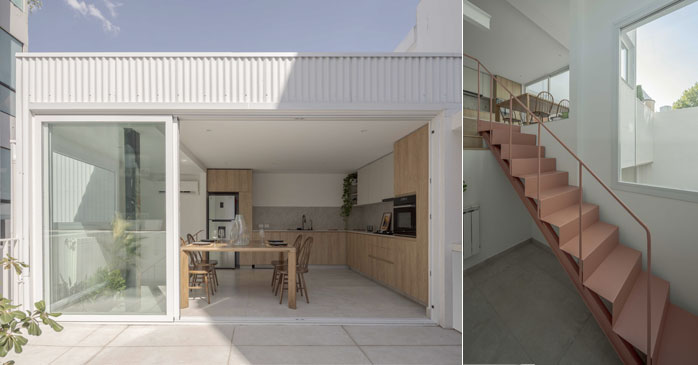
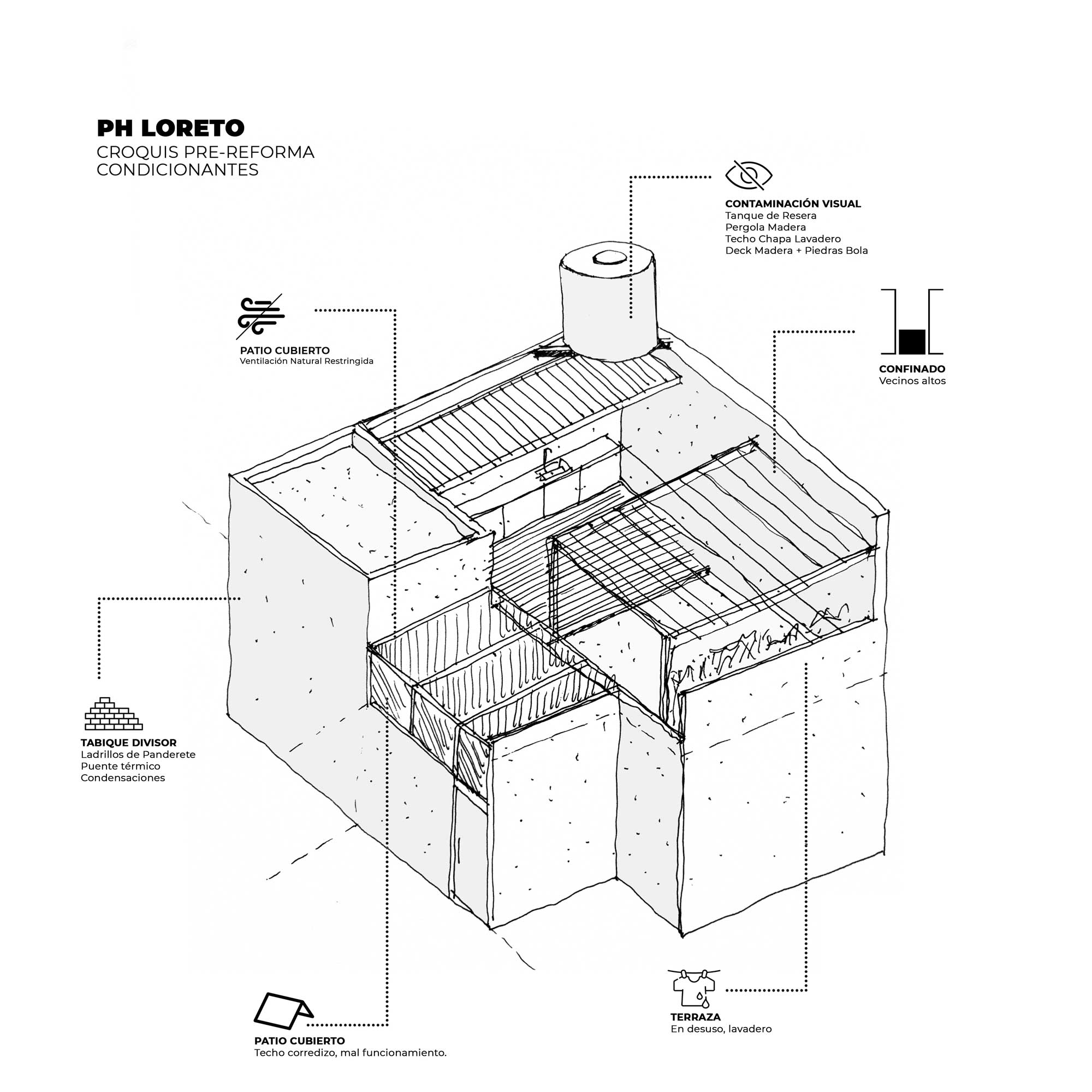
PH Loreto (Colegiales, Ciudad de Buenos Aires, Argentina) por OADD arquitectos. El proyecto PH Loreto corresponde a la reforma integral de una vivienda unifamiliar, la cuarta de cinco unidades funcionales que componen un conjunto tipo PH en el barrio porteño de Colegiales. Se trata de una construcción de mediados del siglo XX que, como tantas otras, había sido objeto de sucesivas intervenciones parciales orientadas a la ganancia de superficie cubierta, en detrimento de la calidad espacial, la iluminación natural y la ventilación cruzada.
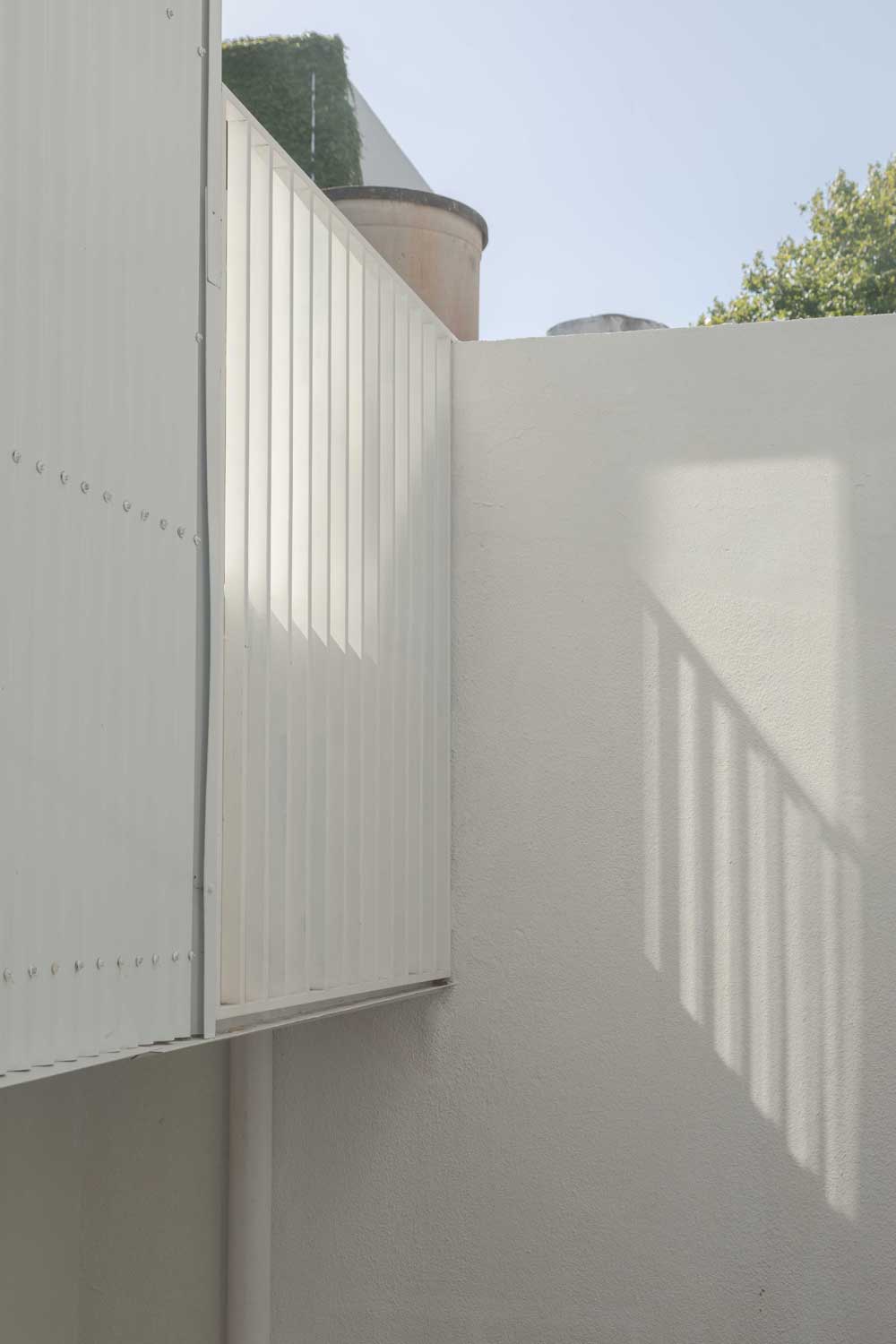
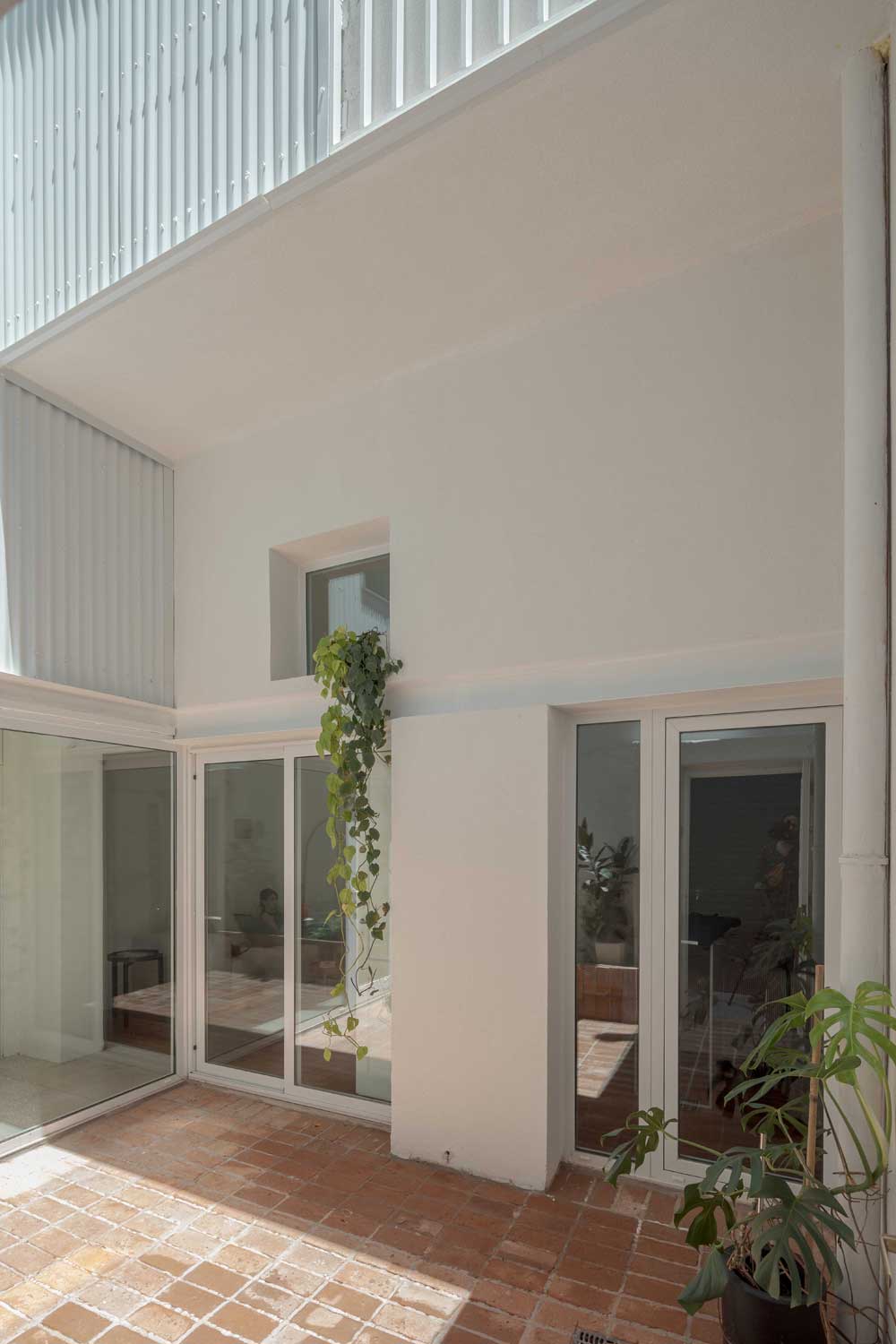
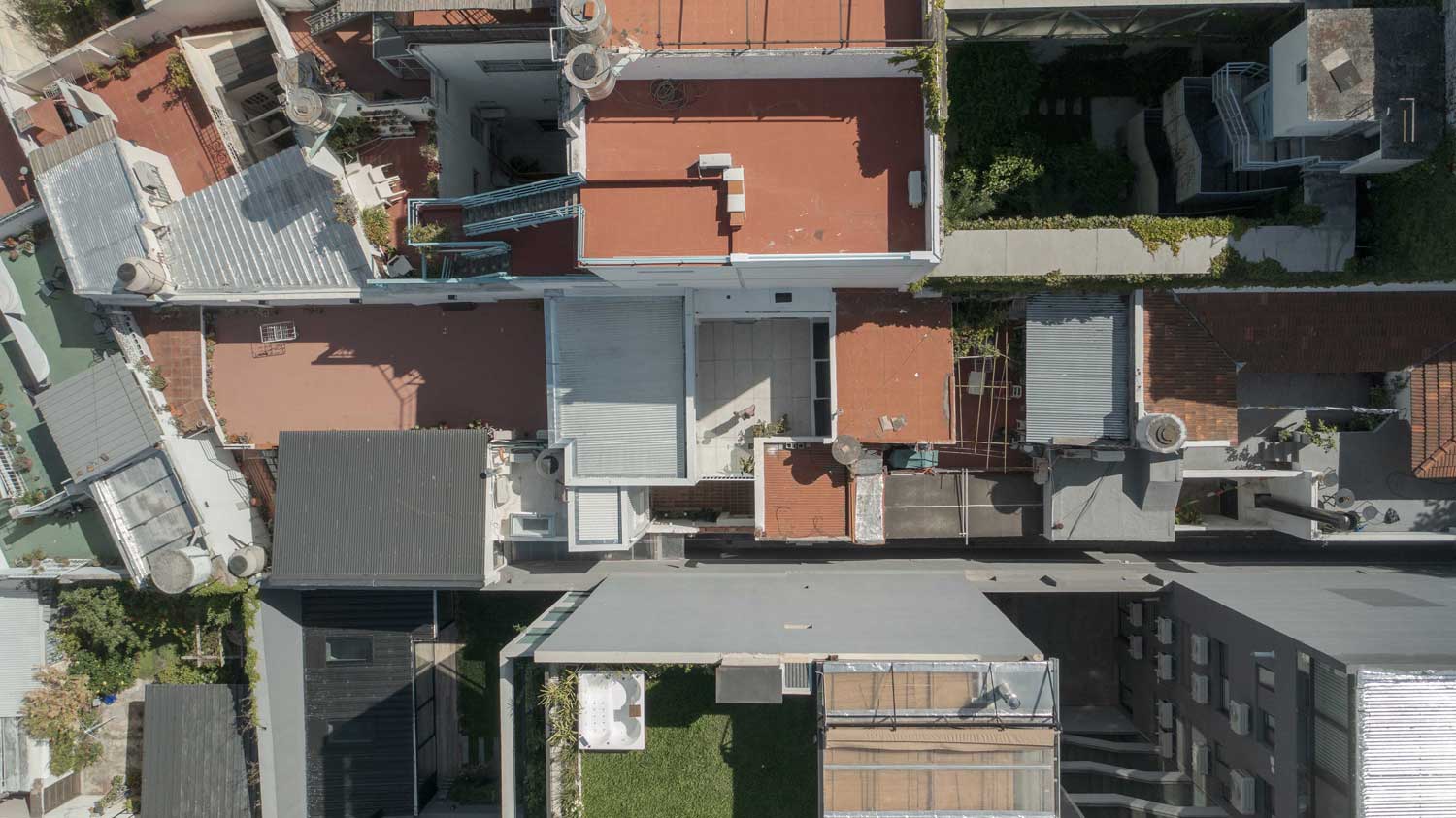
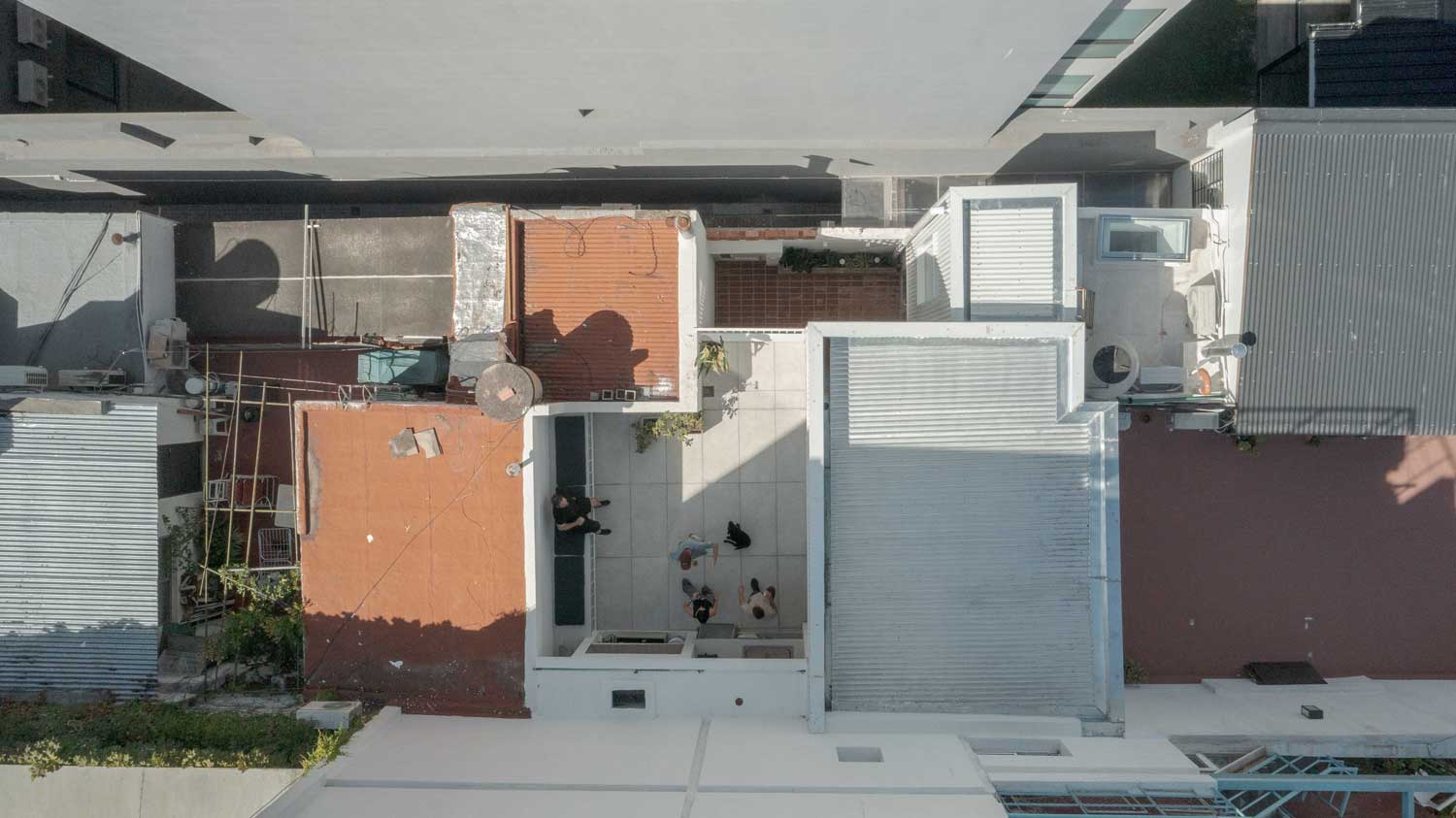
La intervención surge a partir de una demanda concreta de su propietaria: reorganizar la vivienda para responder a las dinámicas contemporáneas del habitar, integrando espacios diferenciados para vivir y trabajar, y recuperando la posibilidad de disfrutar del tiempo doméstico, de la luz y del aire. Frente a un tejido urbano consolidado y denso, el proyecto asume estas condiciones no como limitación, sino como un campo de operaciones arquitectónicas precisas.
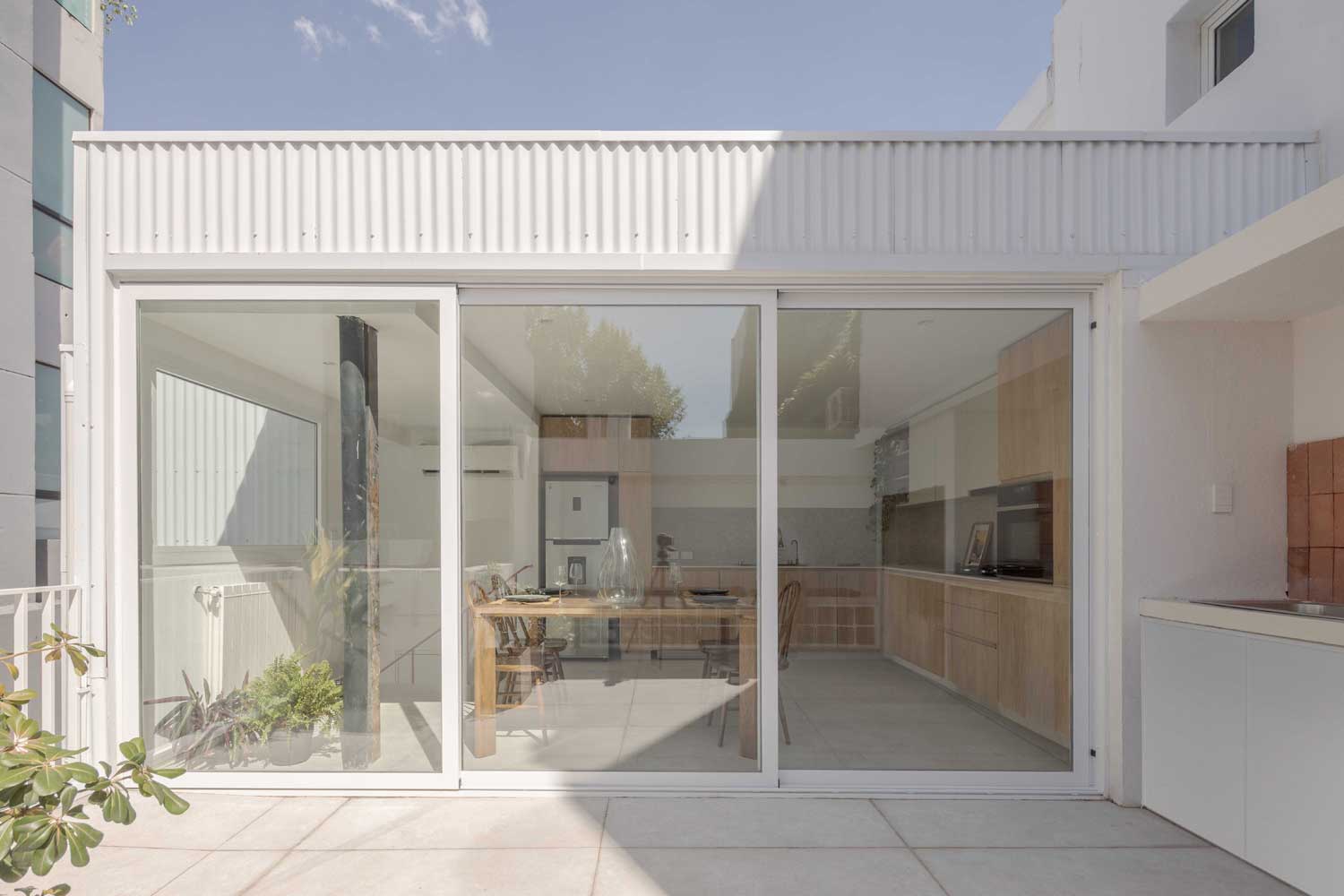
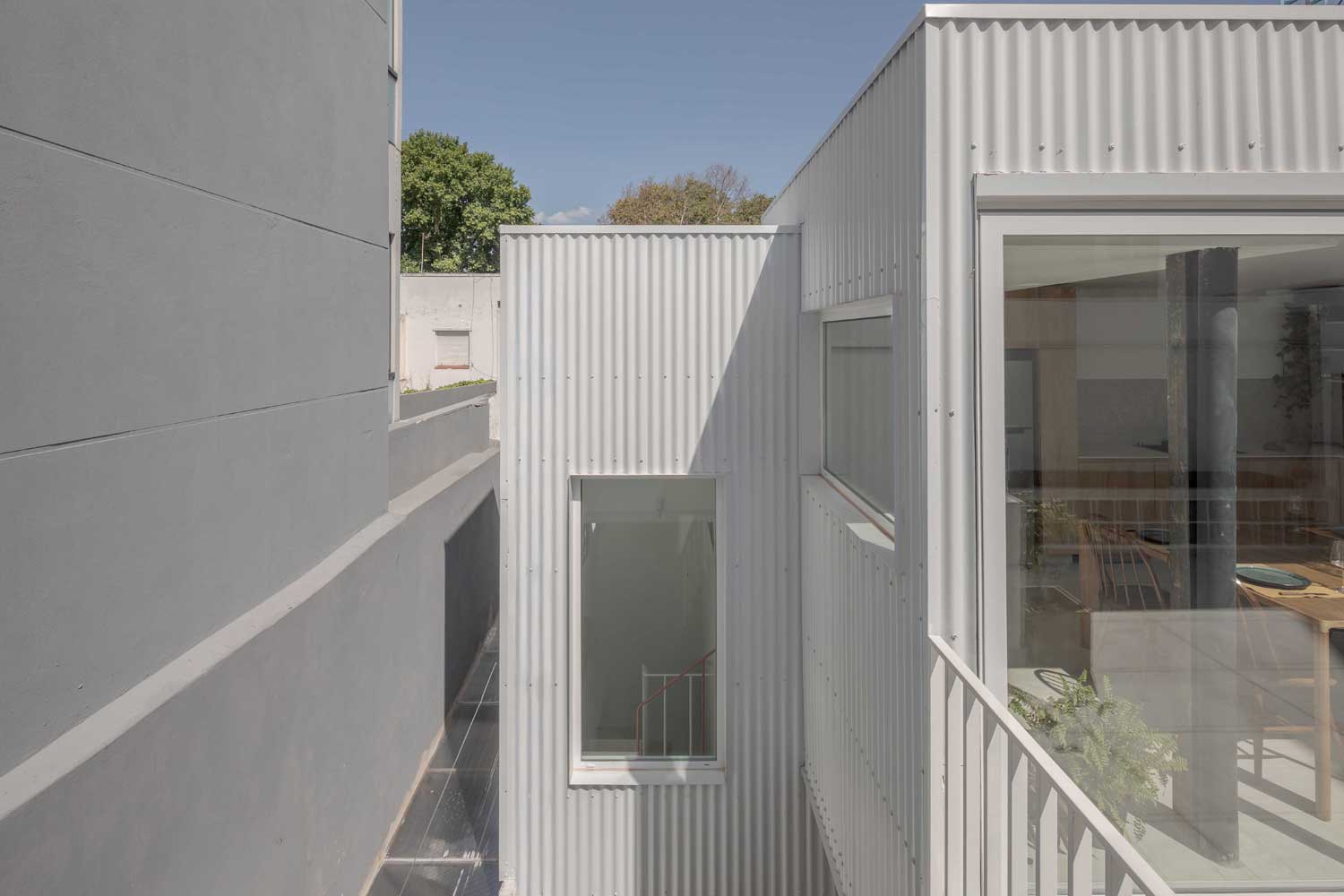
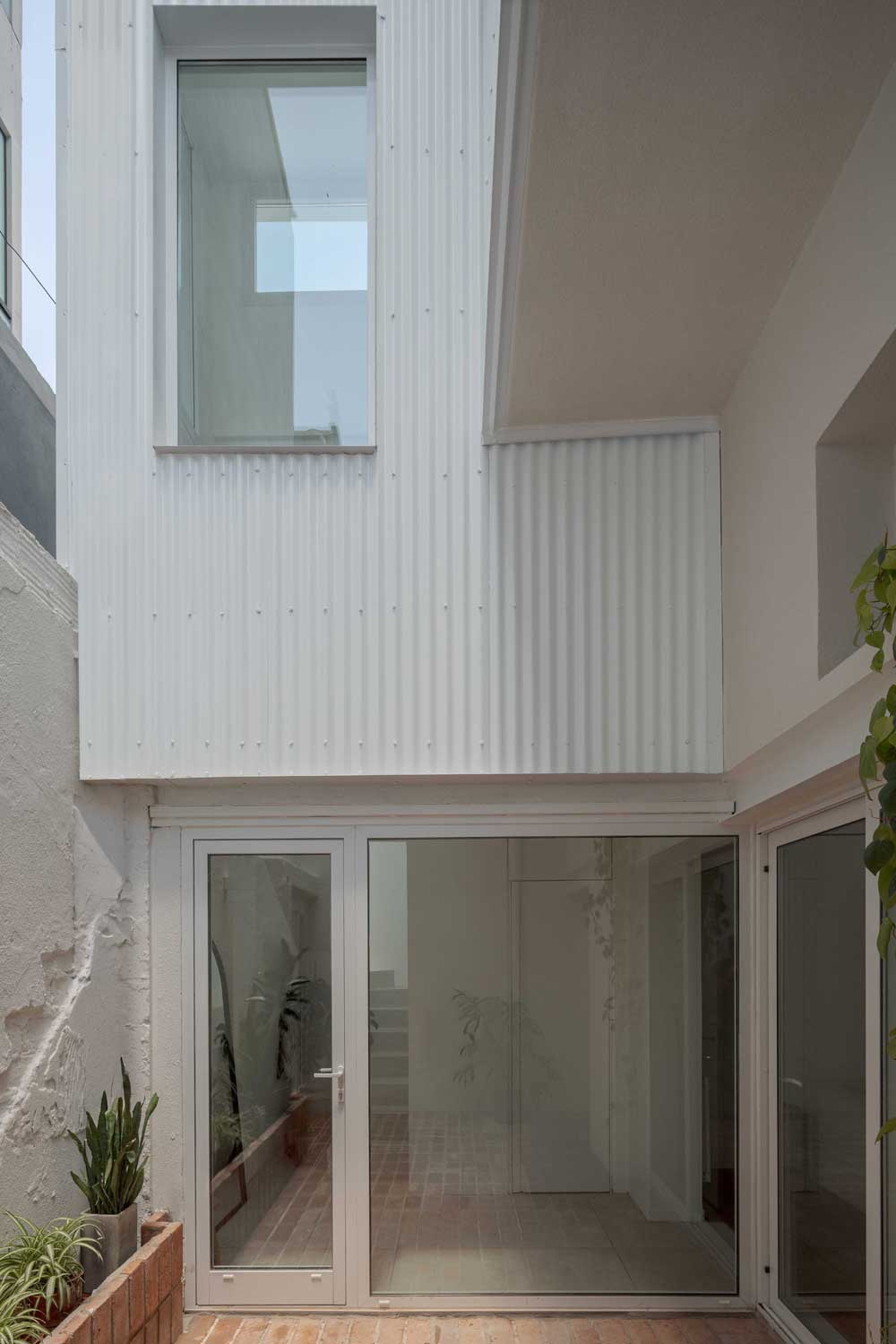
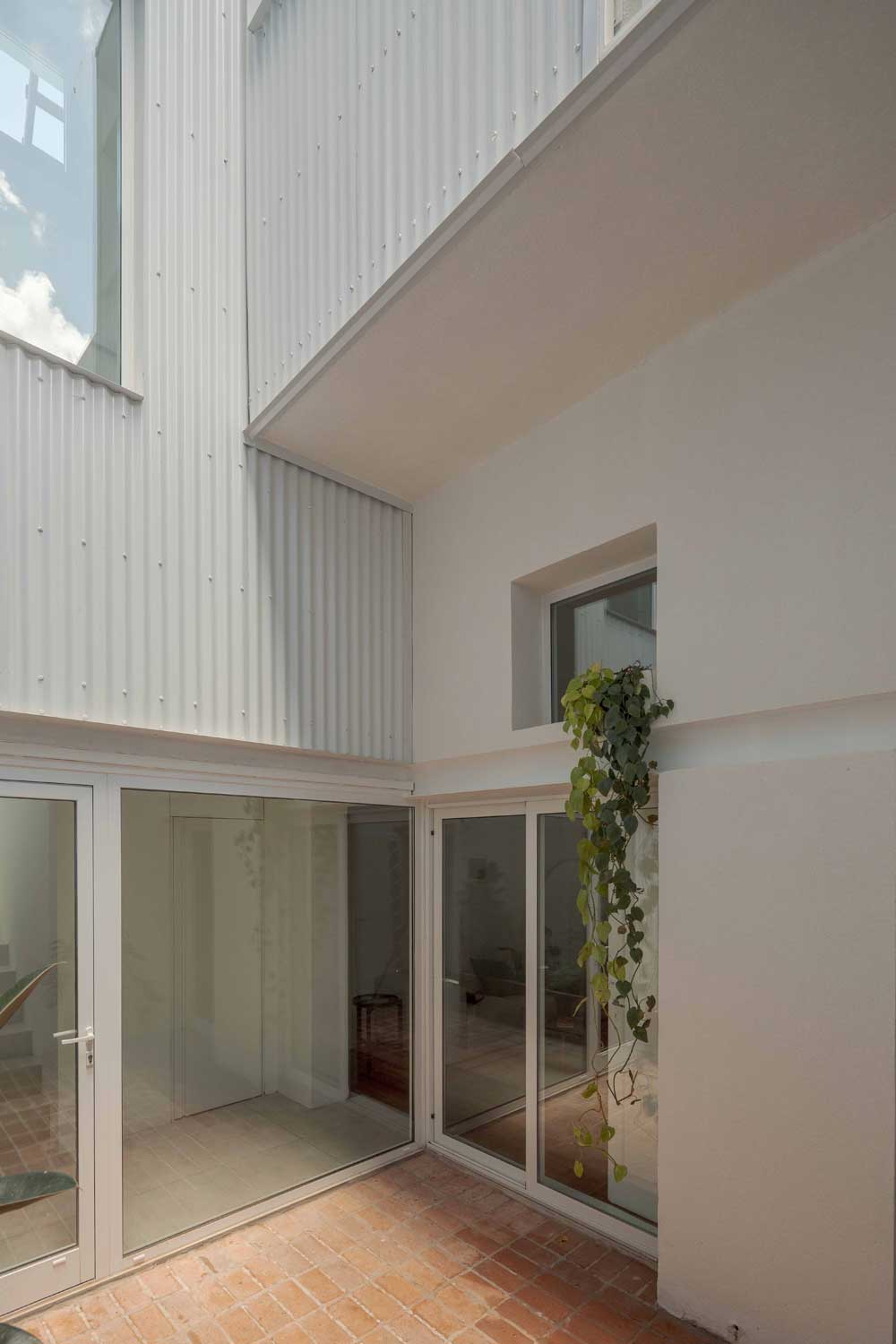
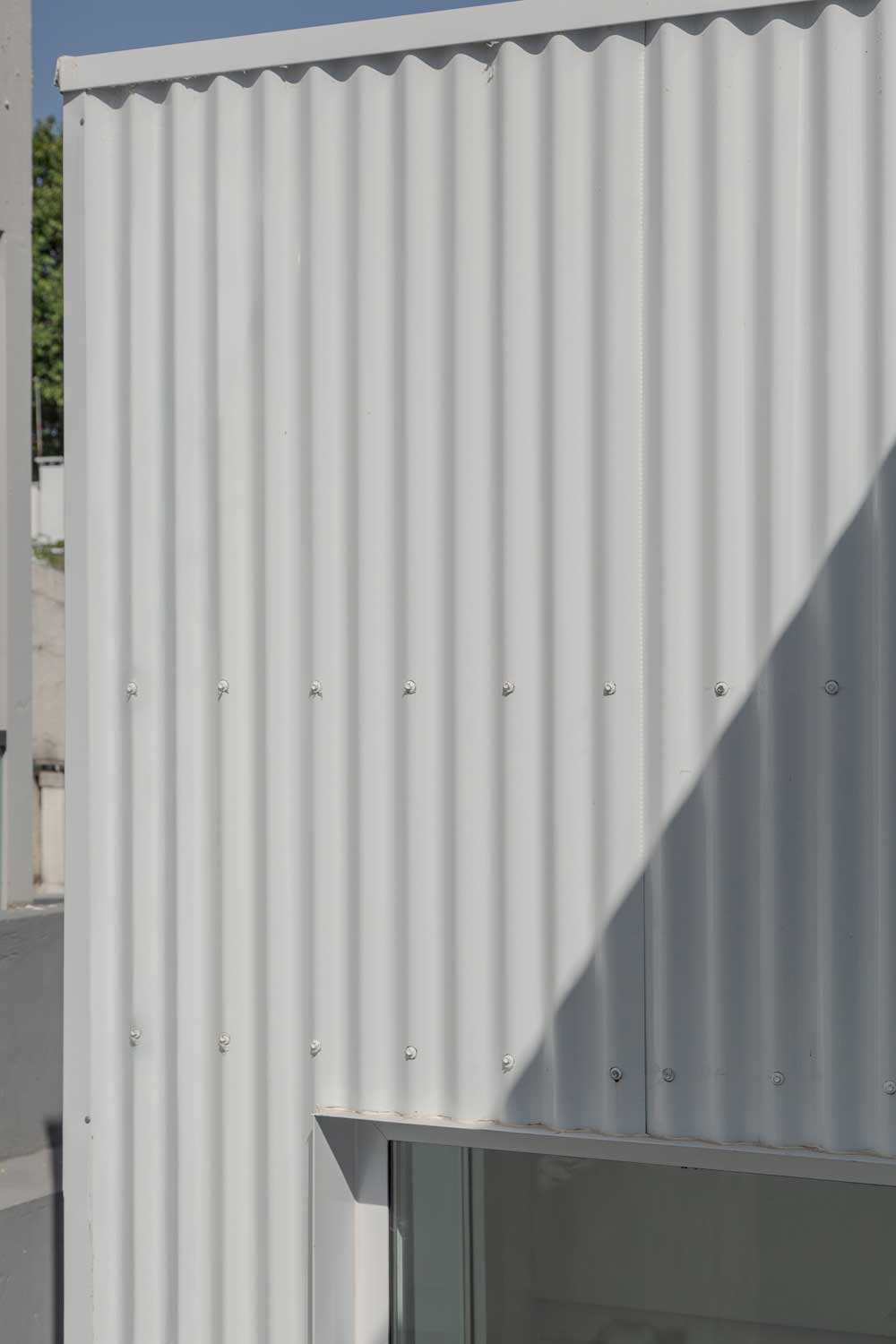
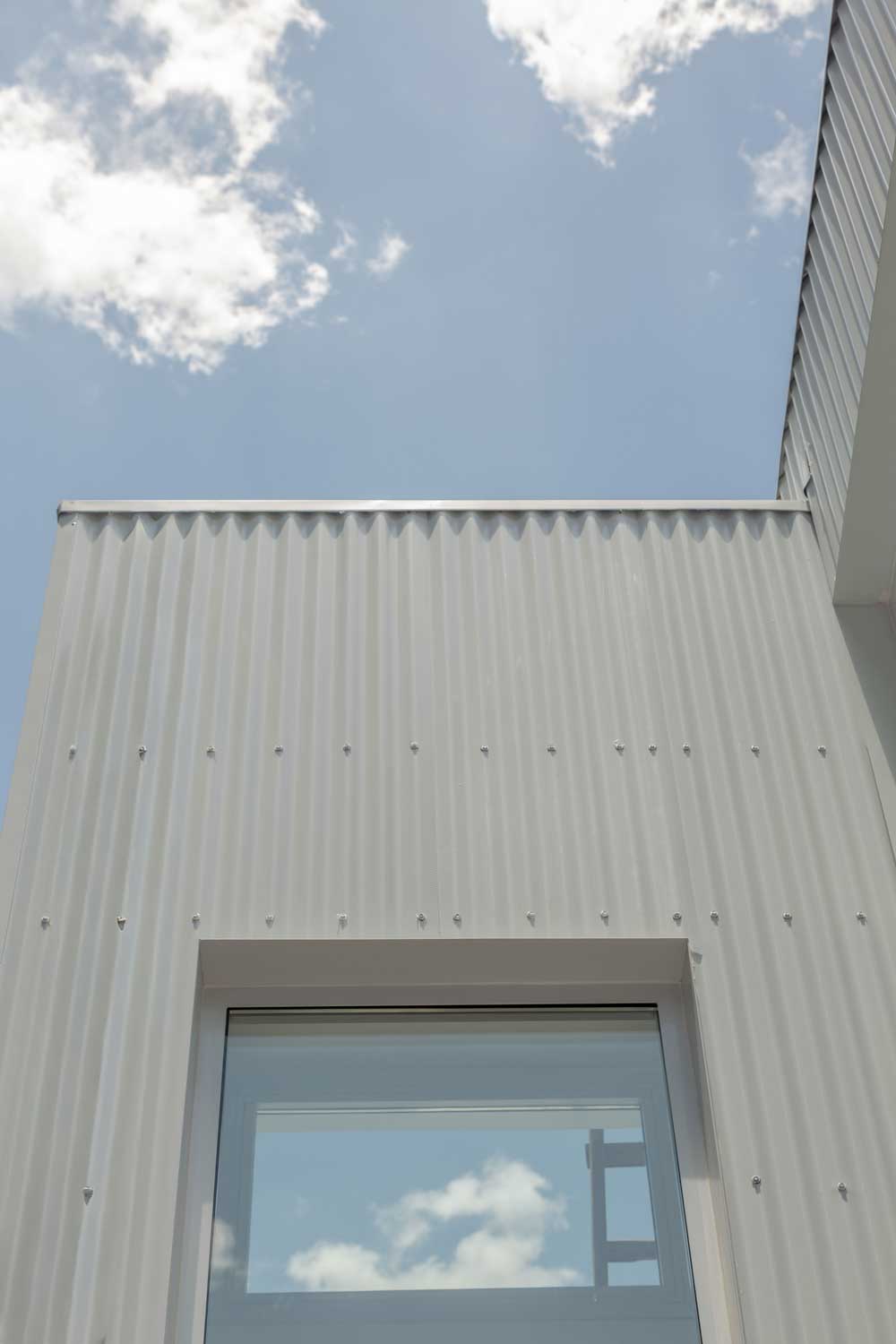
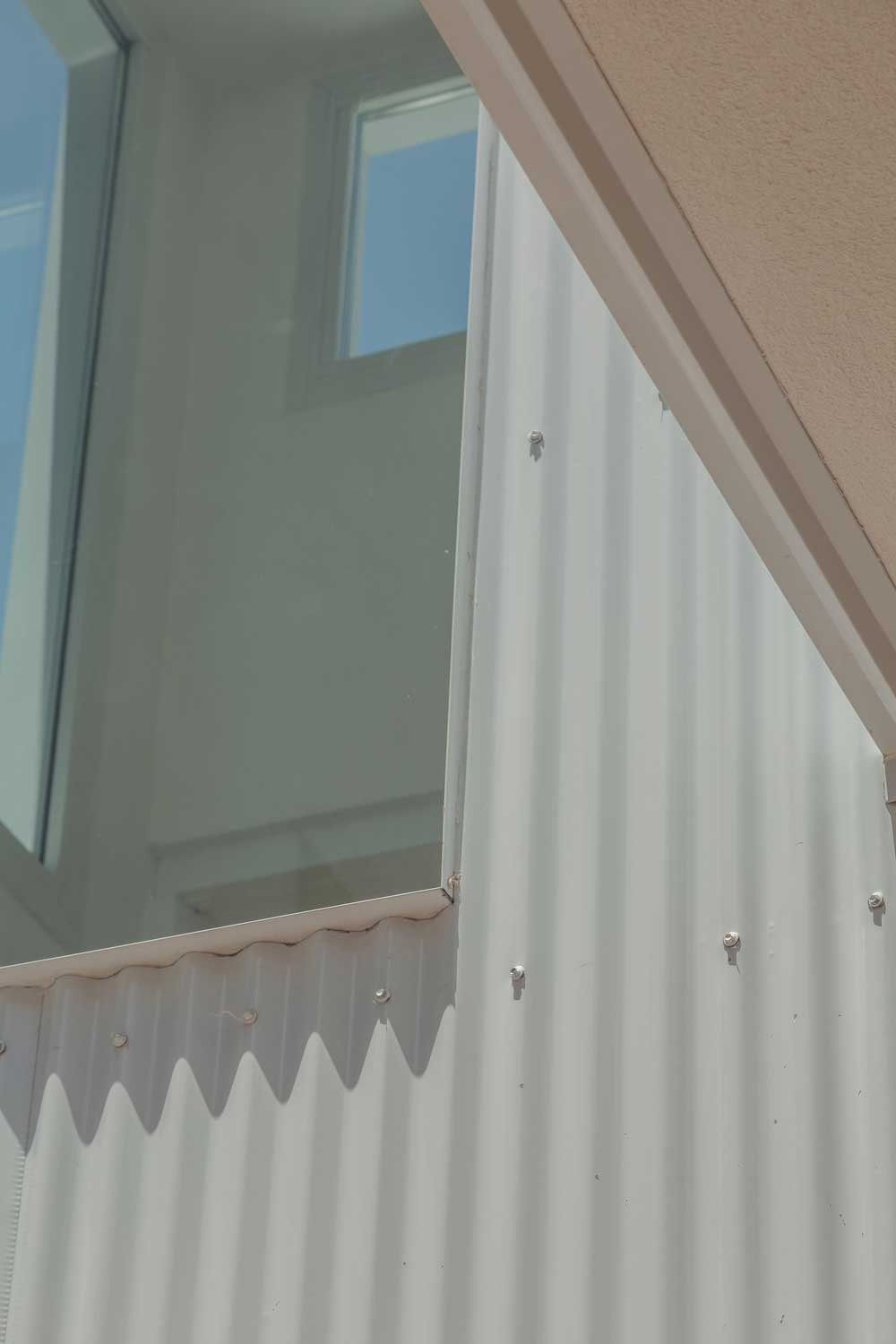
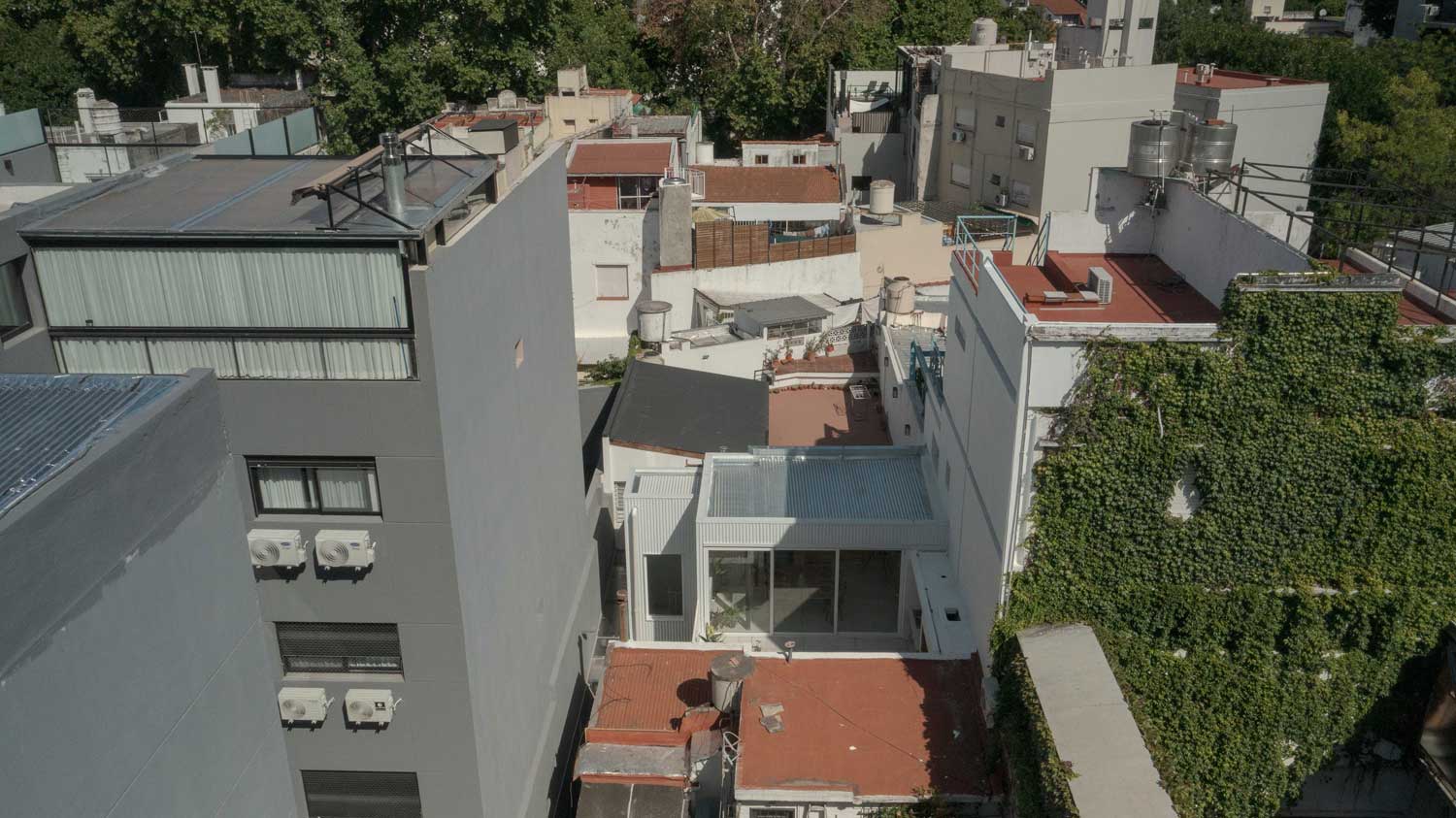
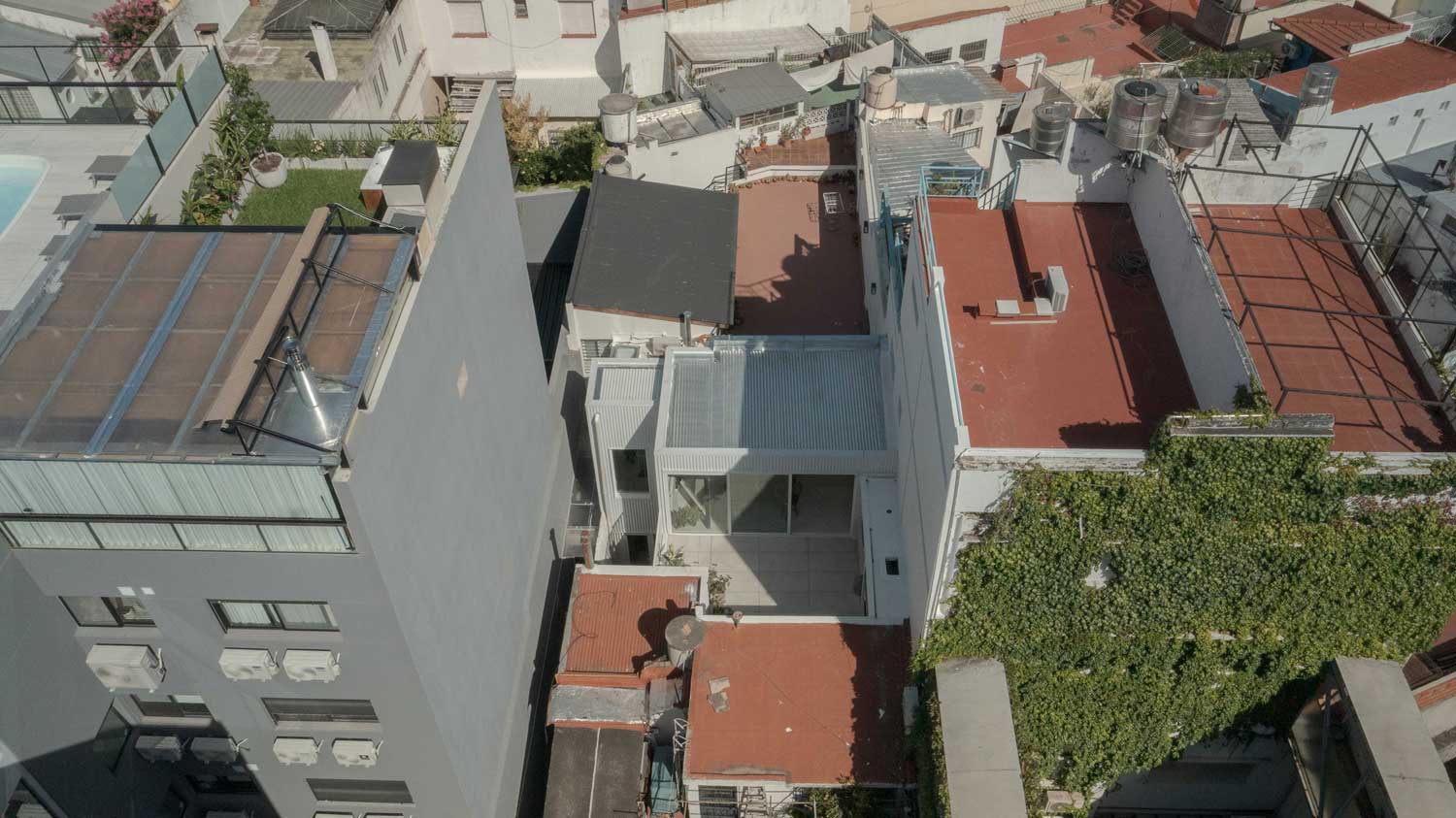
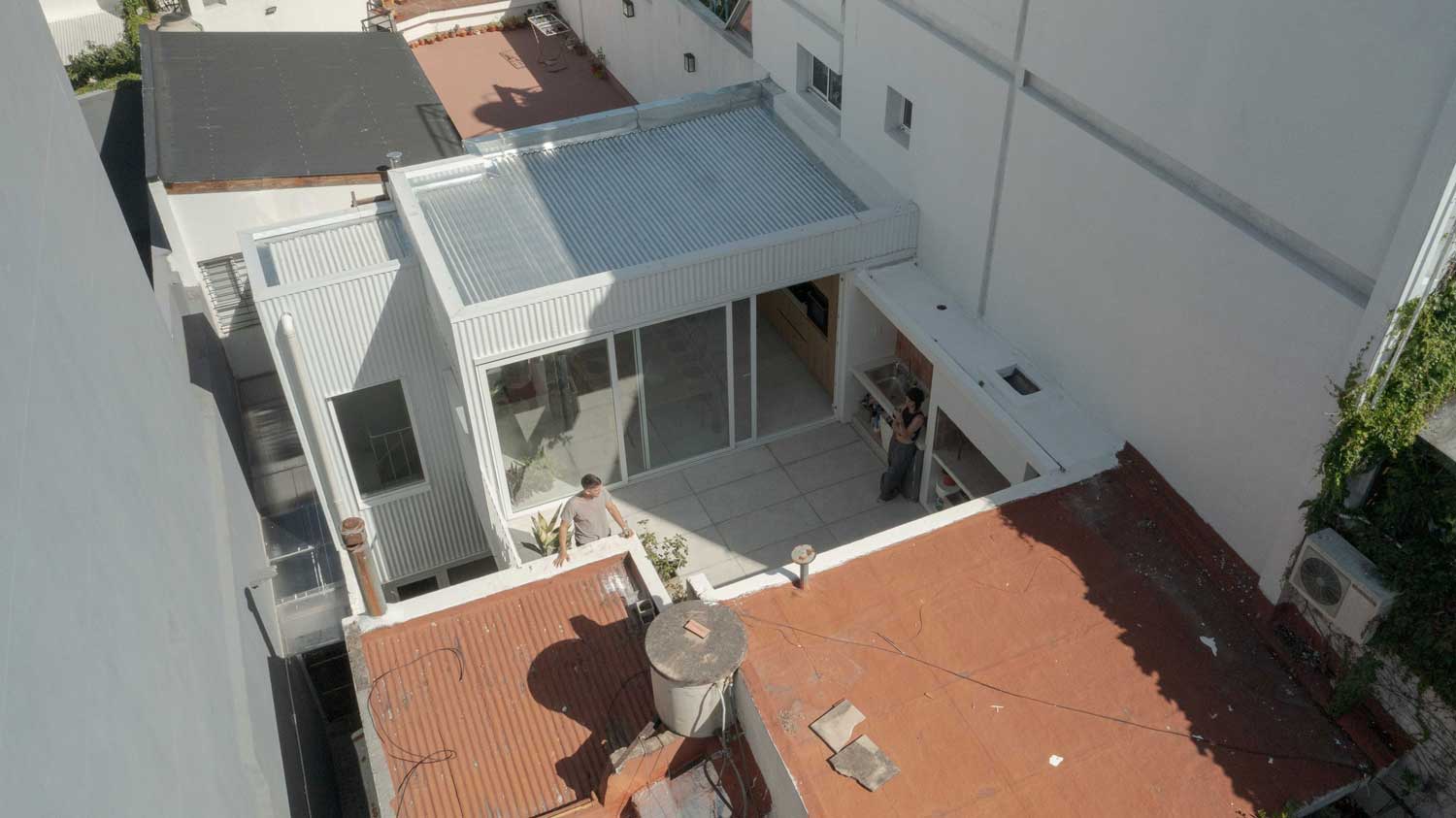
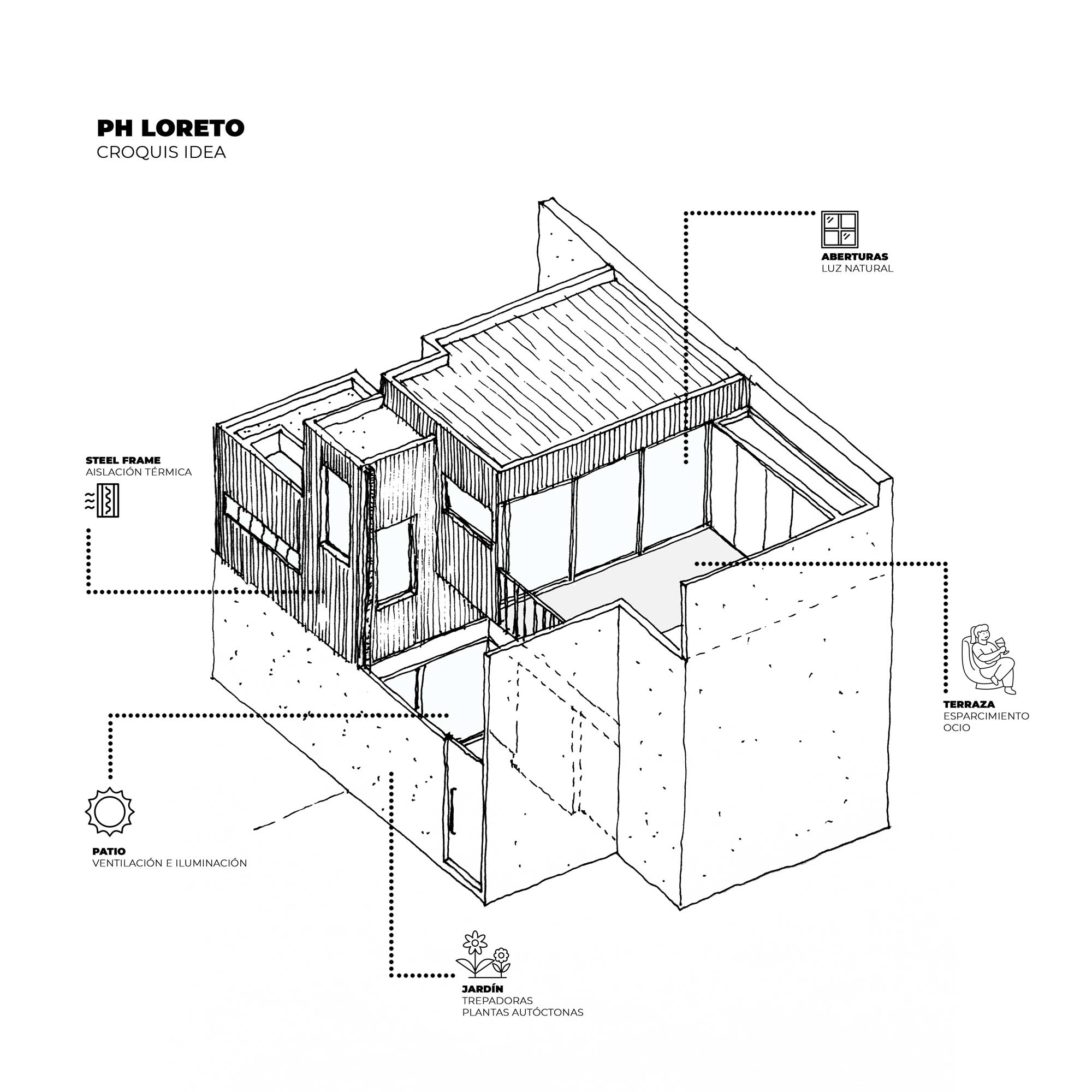
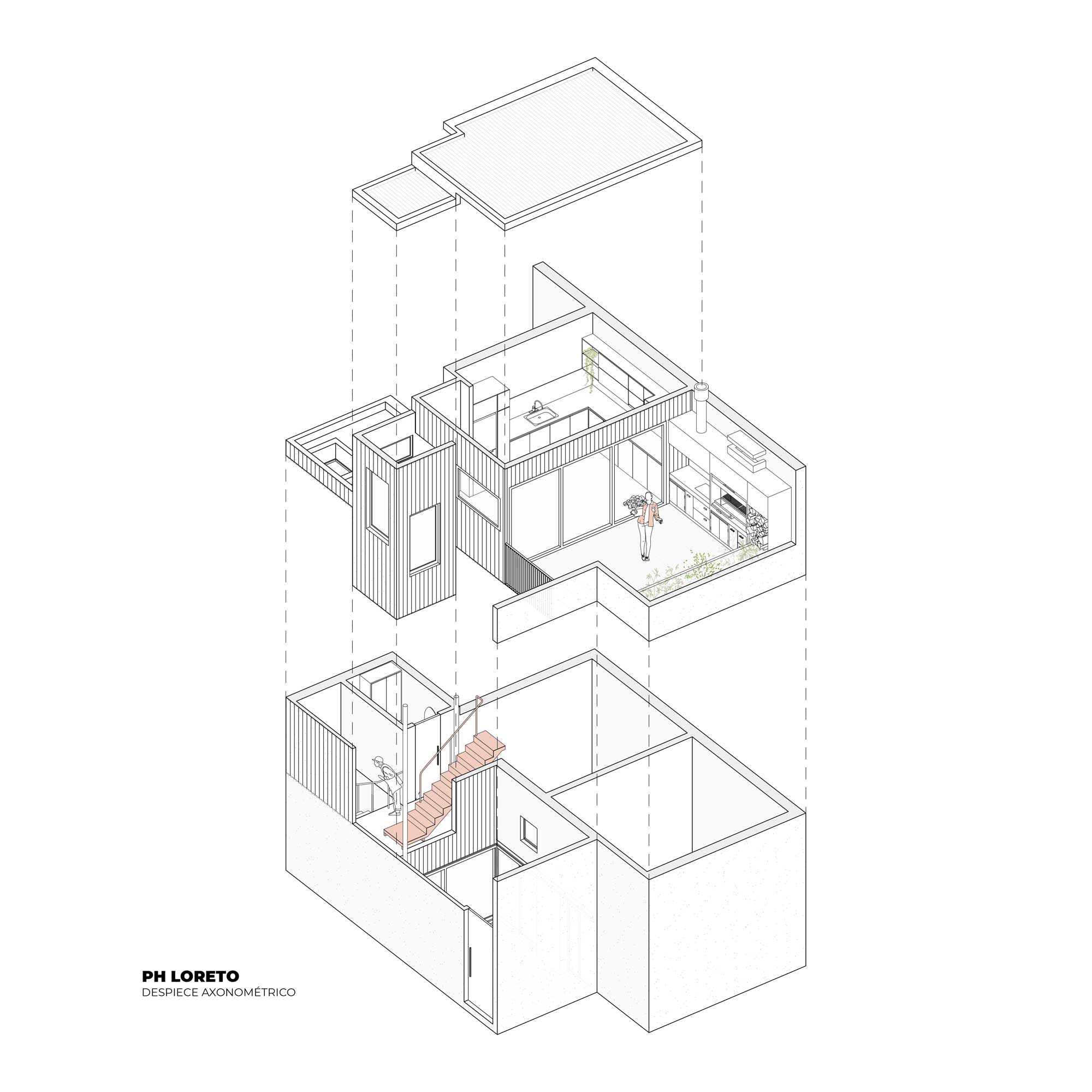
Desde su concepción estructural, la propuesta adopta una estrategia clara: superponer lo nuevo sobre lo existente con la mayor economía de medios posible. La ampliación se resuelve mediante una volumetría liviana ejecutada en steel frame, que se posa con precisión sobre la construcción original de mampostería portante. Esta decisión no solo responde a criterios técnicos y constructivos, sino que establece una relación consciente entre dos tiempos arquitectónicos. Lo nuevo se apoya sin imponerse, generando una dualidad donde la ligereza contemporánea potencia la solidez de lo preexistente.
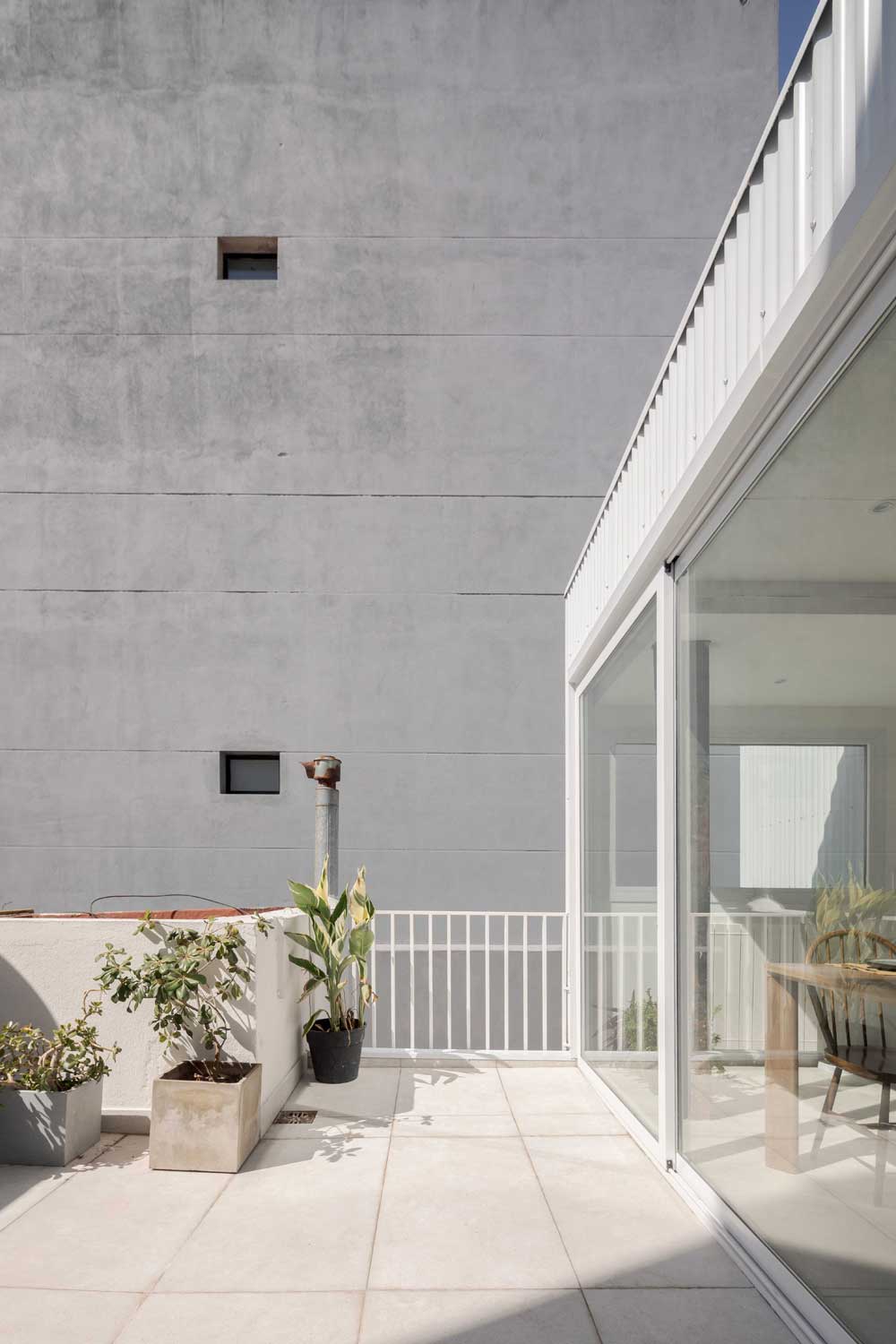
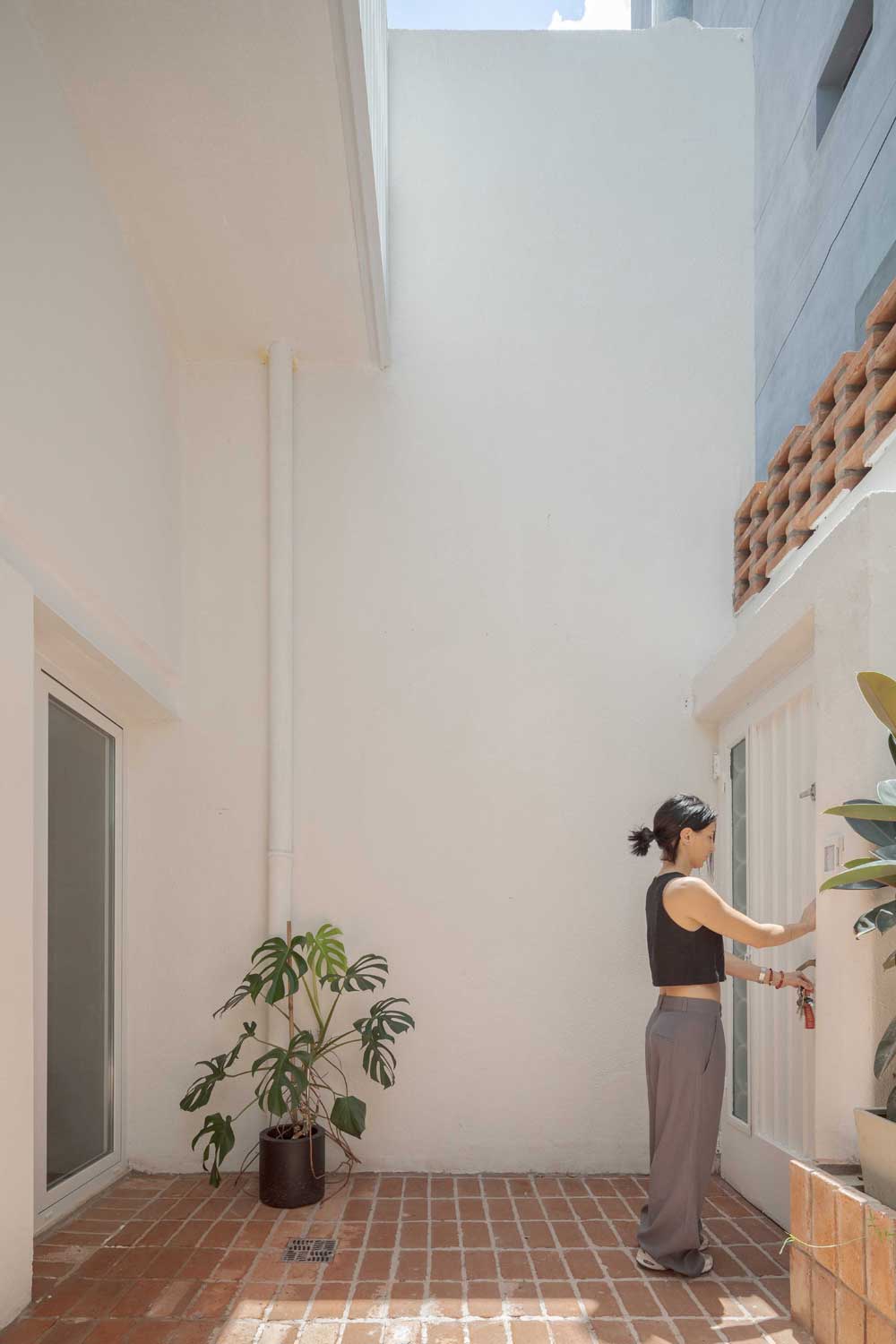
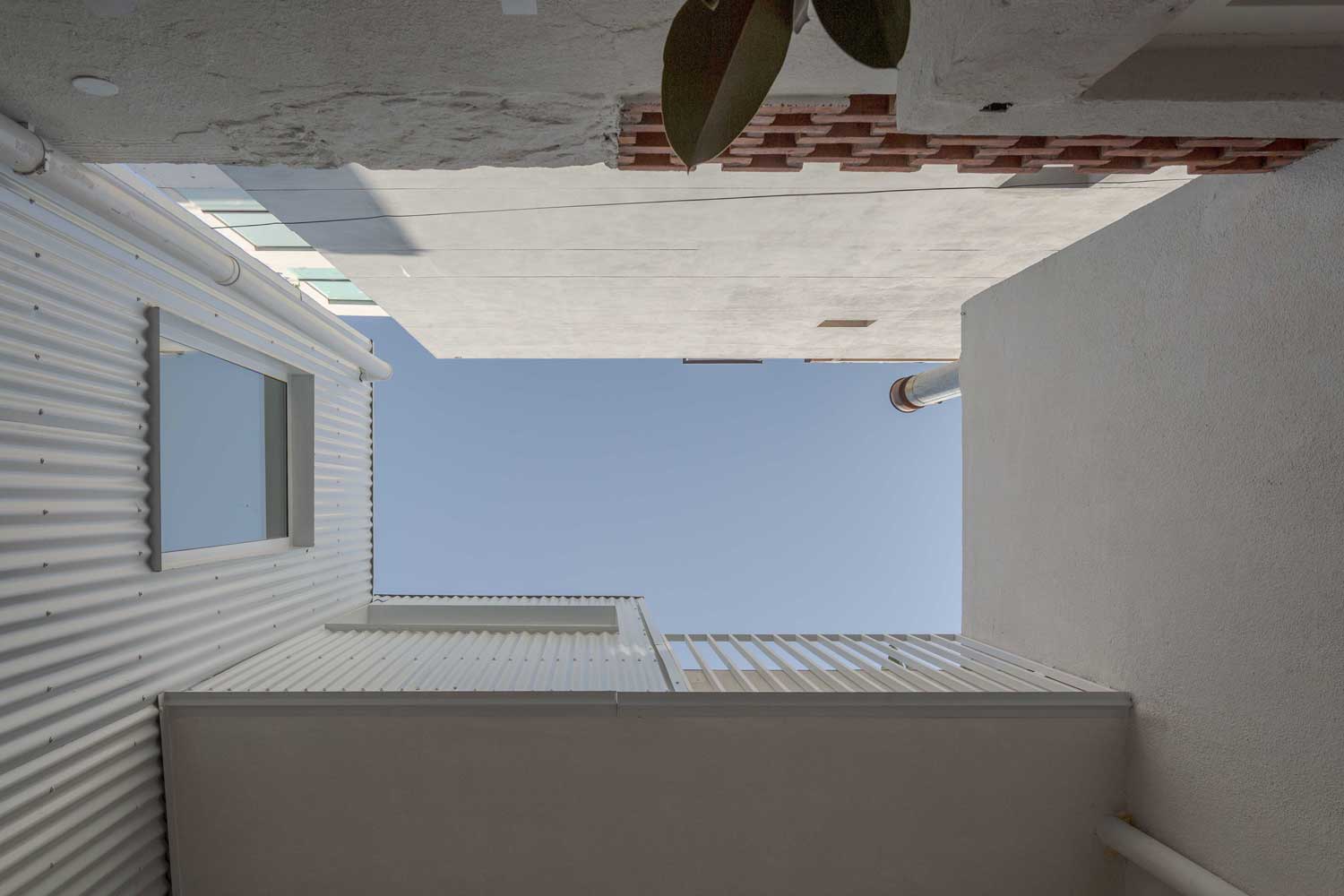
El contexto inmediato presenta dos situaciones contrapuestas: por un lado, la presencia de un edificio lindero de gran porte que actúa como un telón opaco sobre los accesos y circulaciones del conjunto; por otro, una enredadera sobre la medianera vecina, capaz de tamizar la luz y aportar una dimensión vegetal inesperada al interior del lote. Entre estas contingencias y oportunidades, la estrategia proyectual se articula en torno a una idea central: trabajar el vacío como materia arquitectónica.
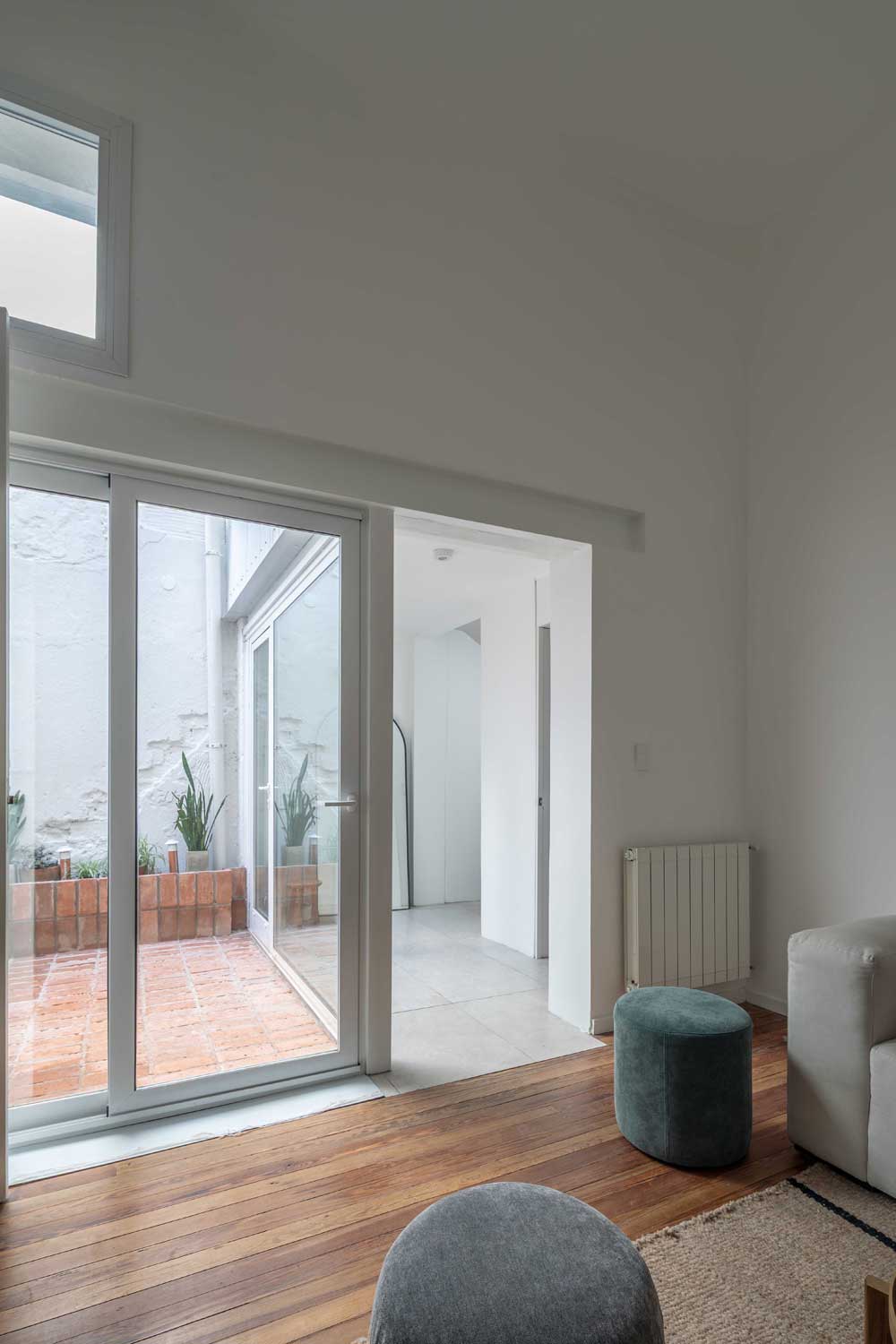
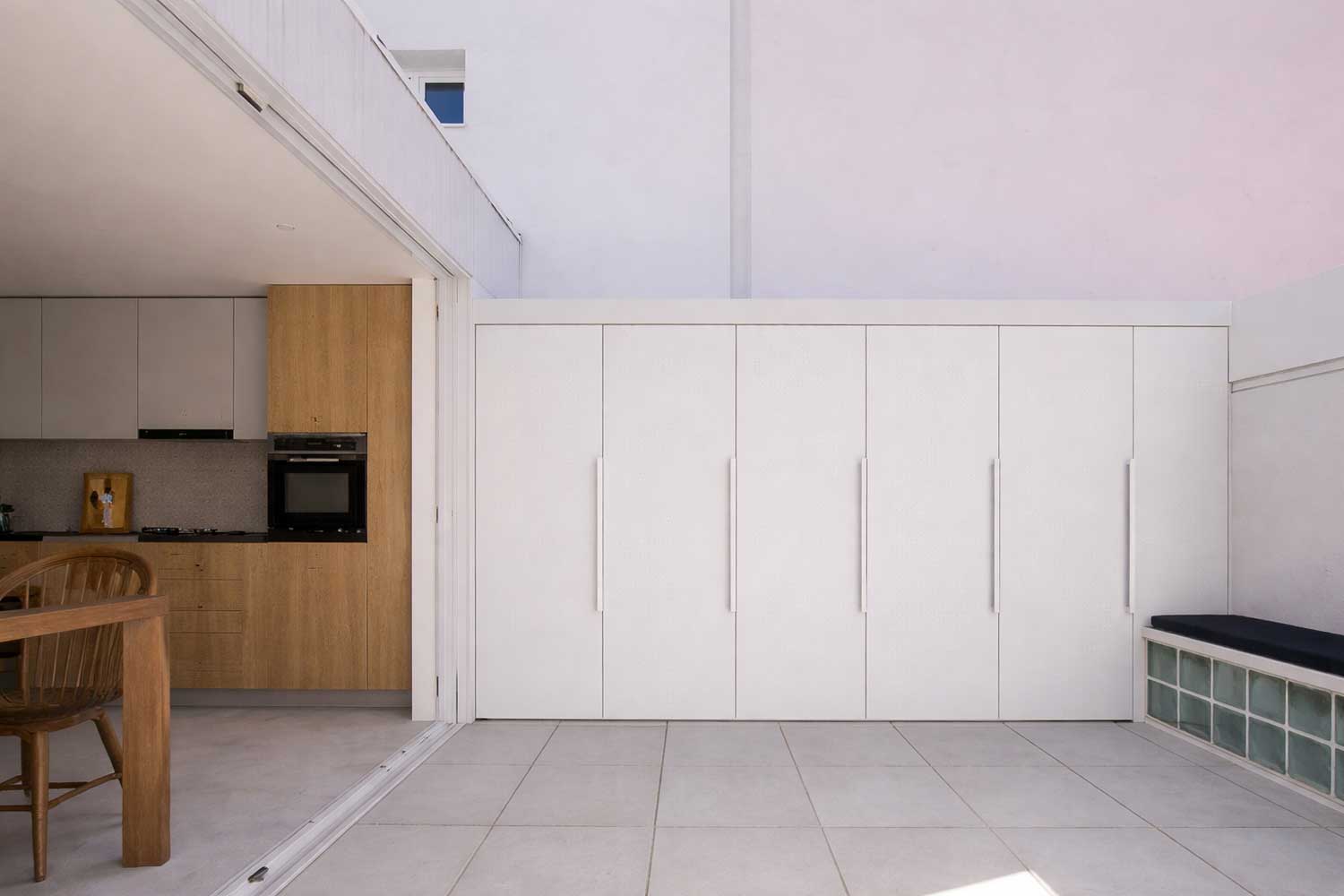
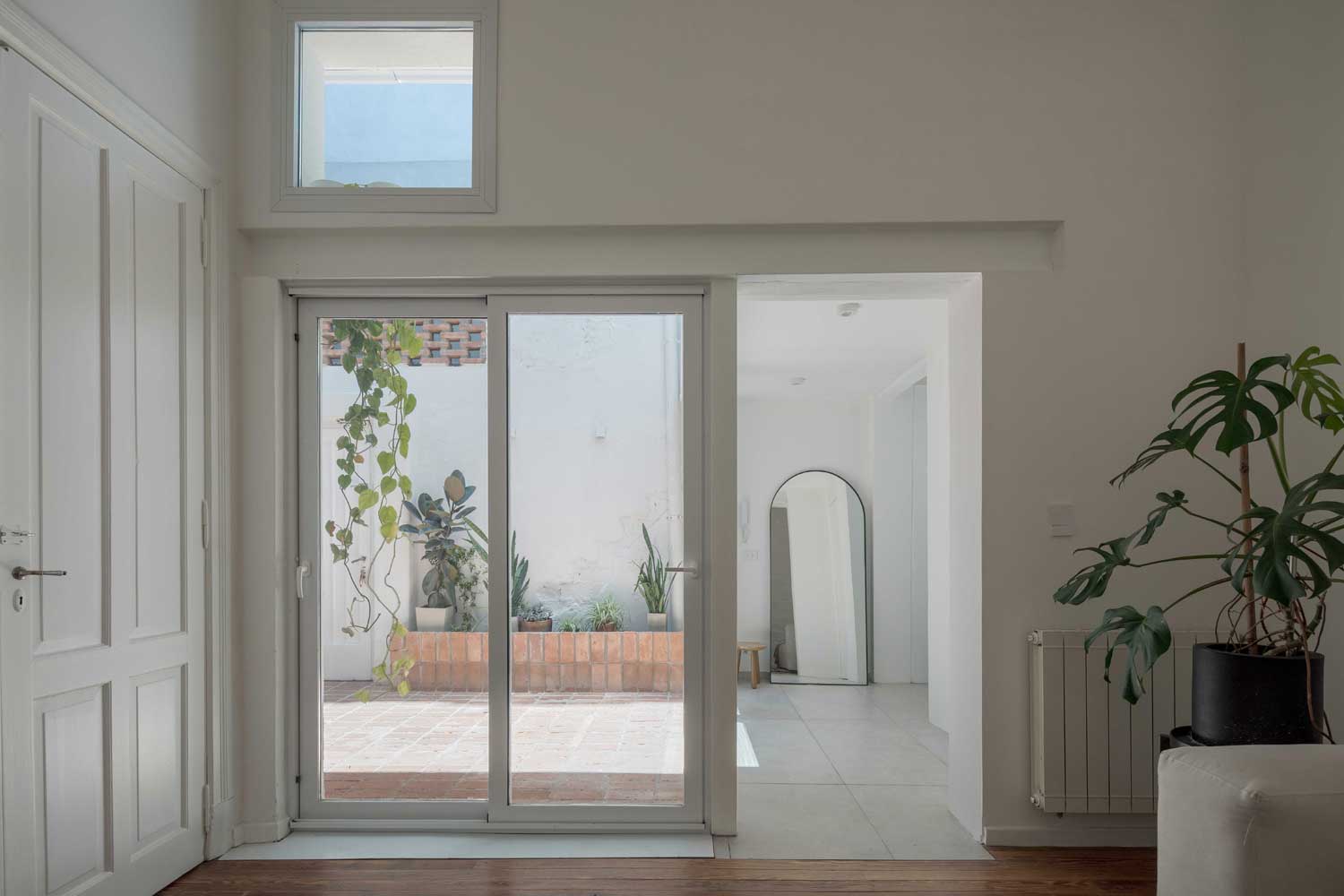
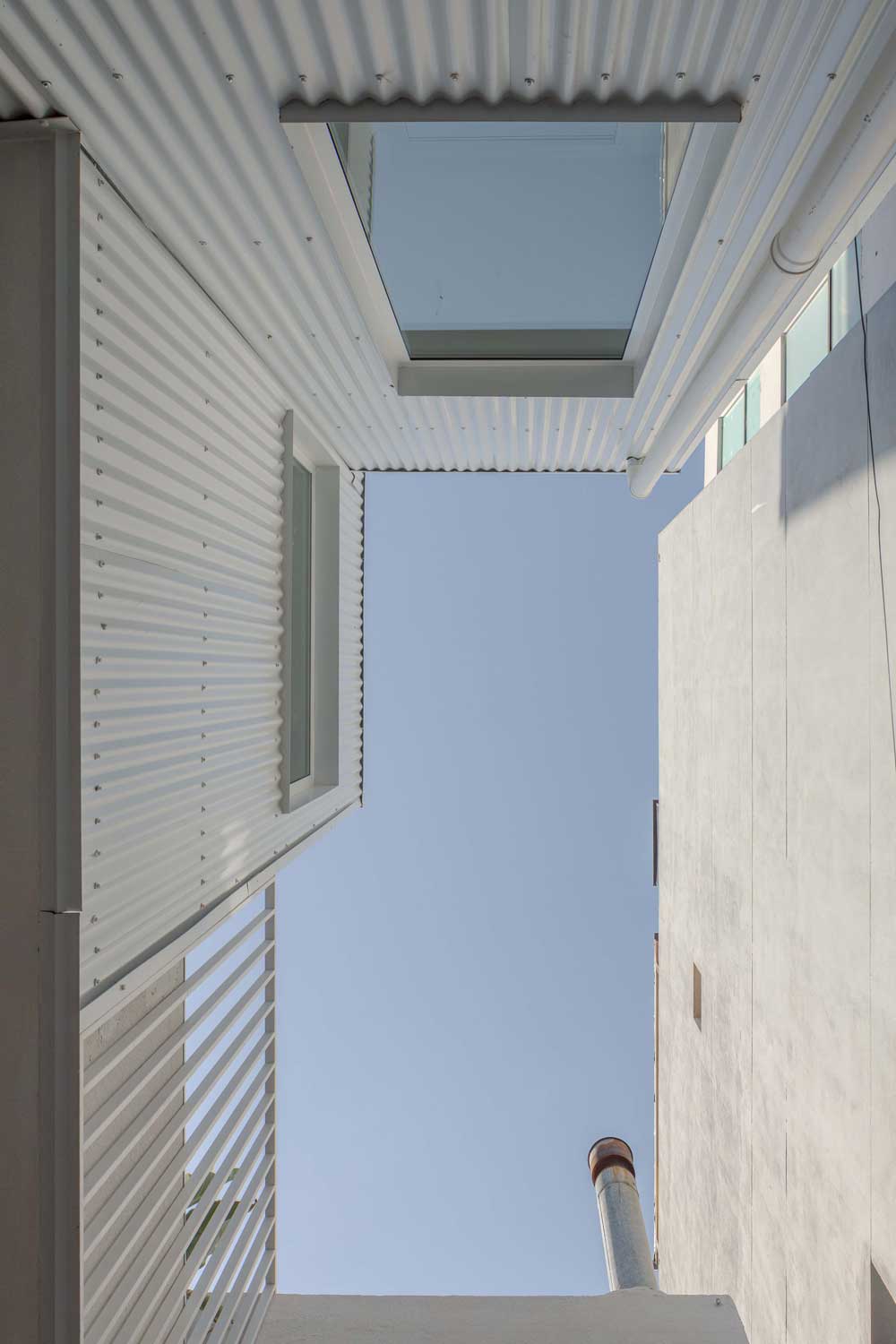
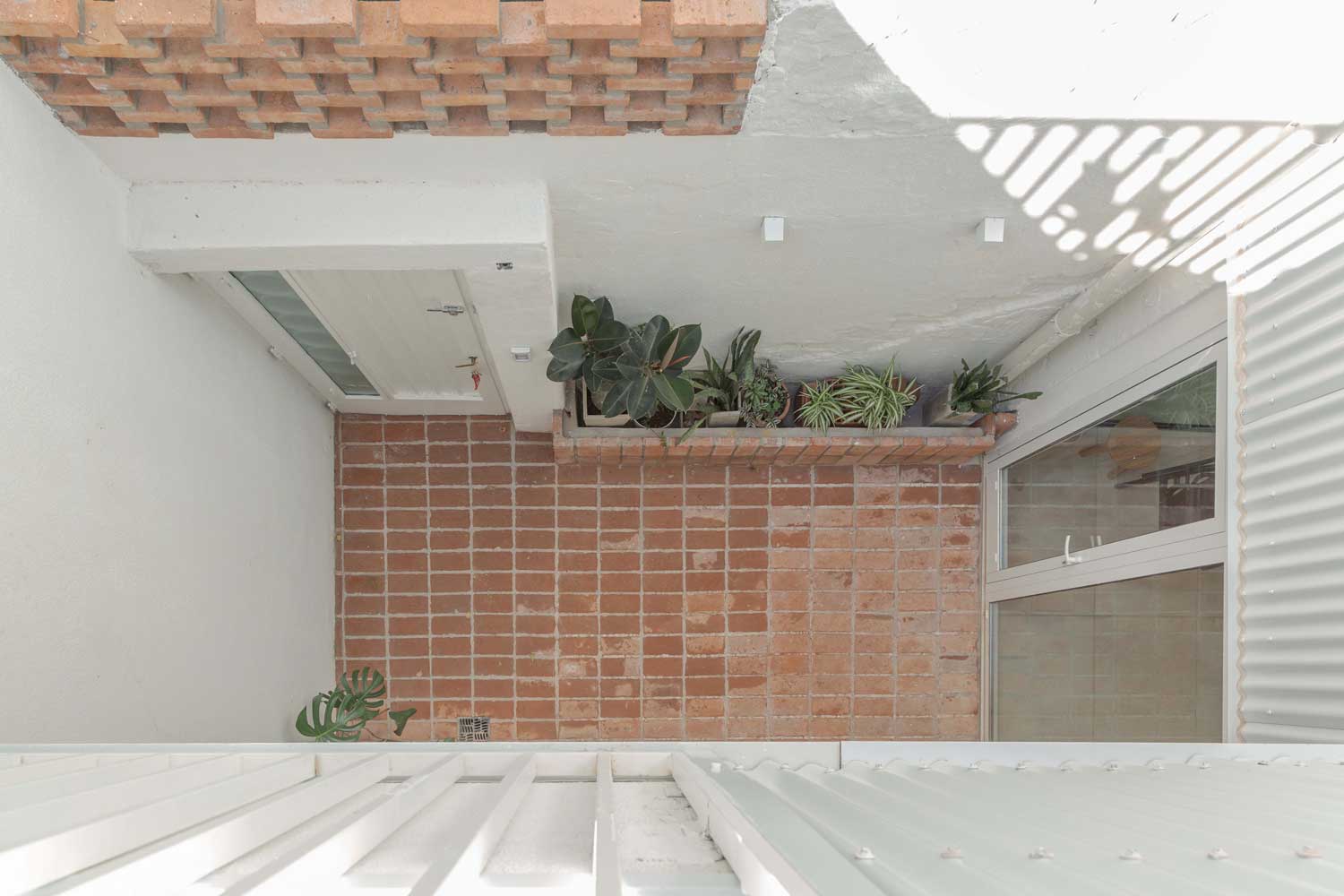
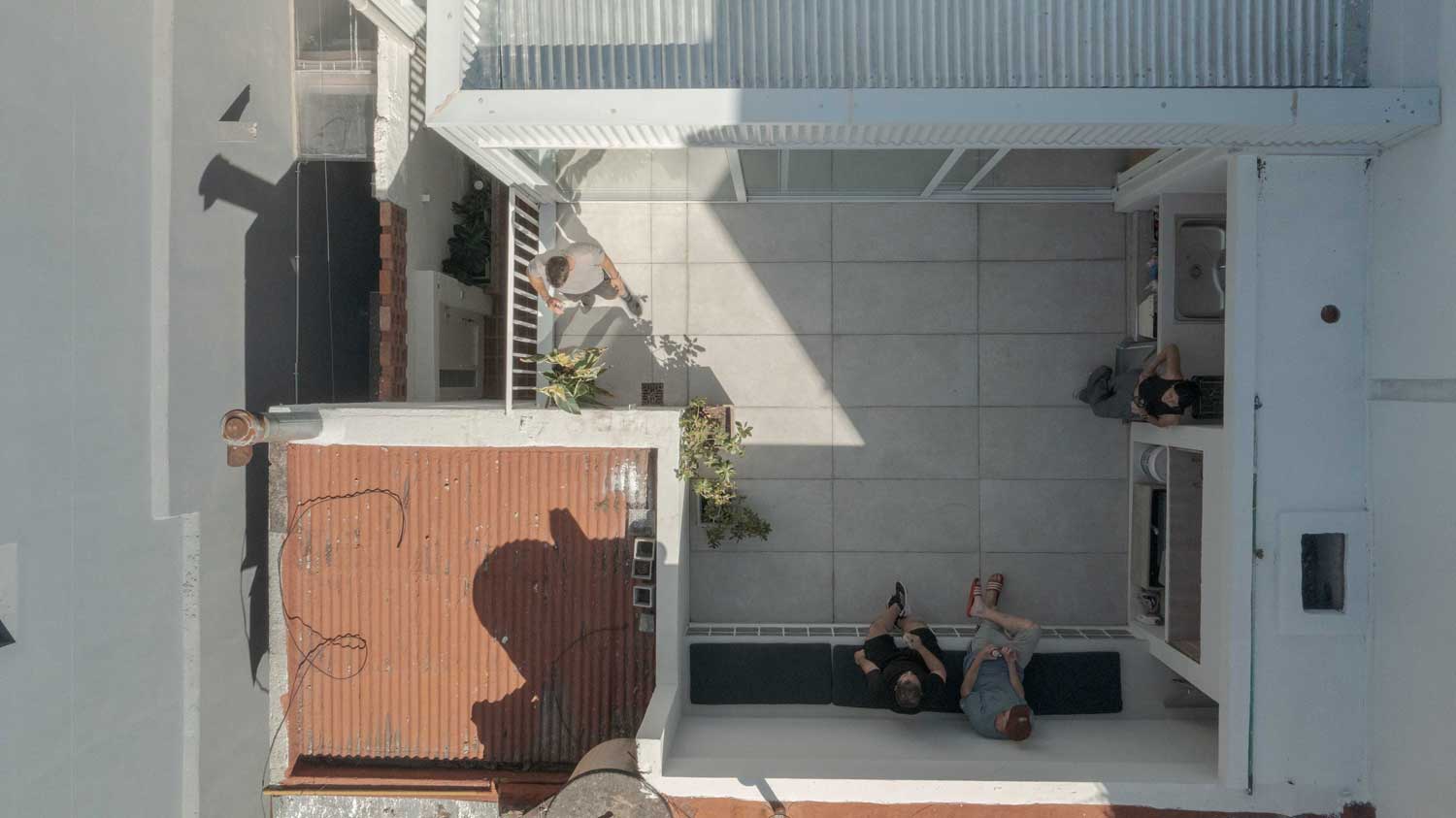
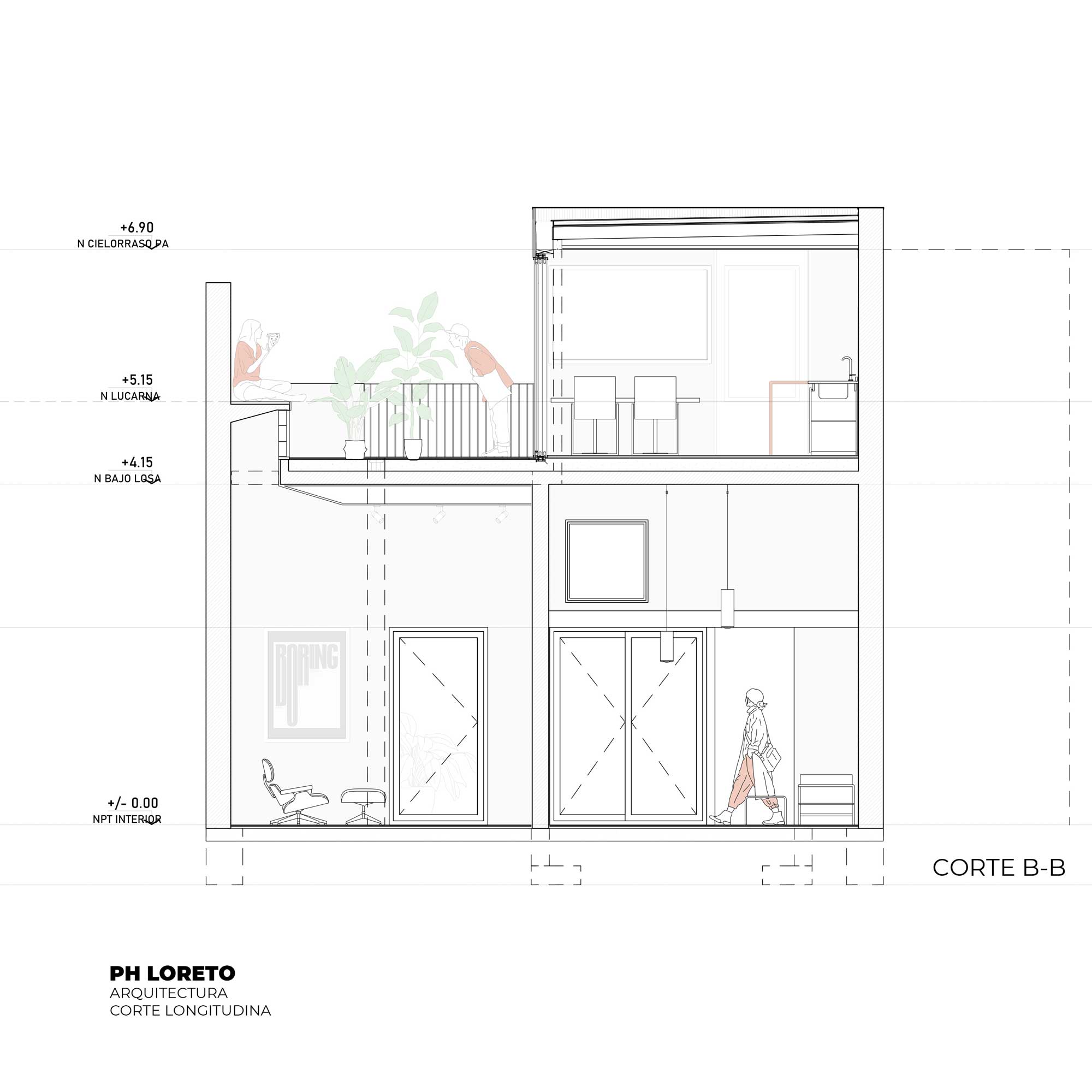
Las ventanas se conciben como elementos de continuidad visual, el patio como articulador espacial y climático de las distintas actividades, y la terraza como un nodo de expansión y esparcimiento. Esta secuencia de vacíos no solo organiza el programa, sino que establece una resistencia silenciosa frente a la hiperdensificación urbana y a la lógica de apilamiento de pequeñas unidades en torno a núcleos circulatorios cerrados. La reforma del PH se plantea, así como una afirmación sobre la calidad del hábitat metropolitano, una microcirugía que recupera aire, luz y escala doméstica allí donde habían sido anulados.
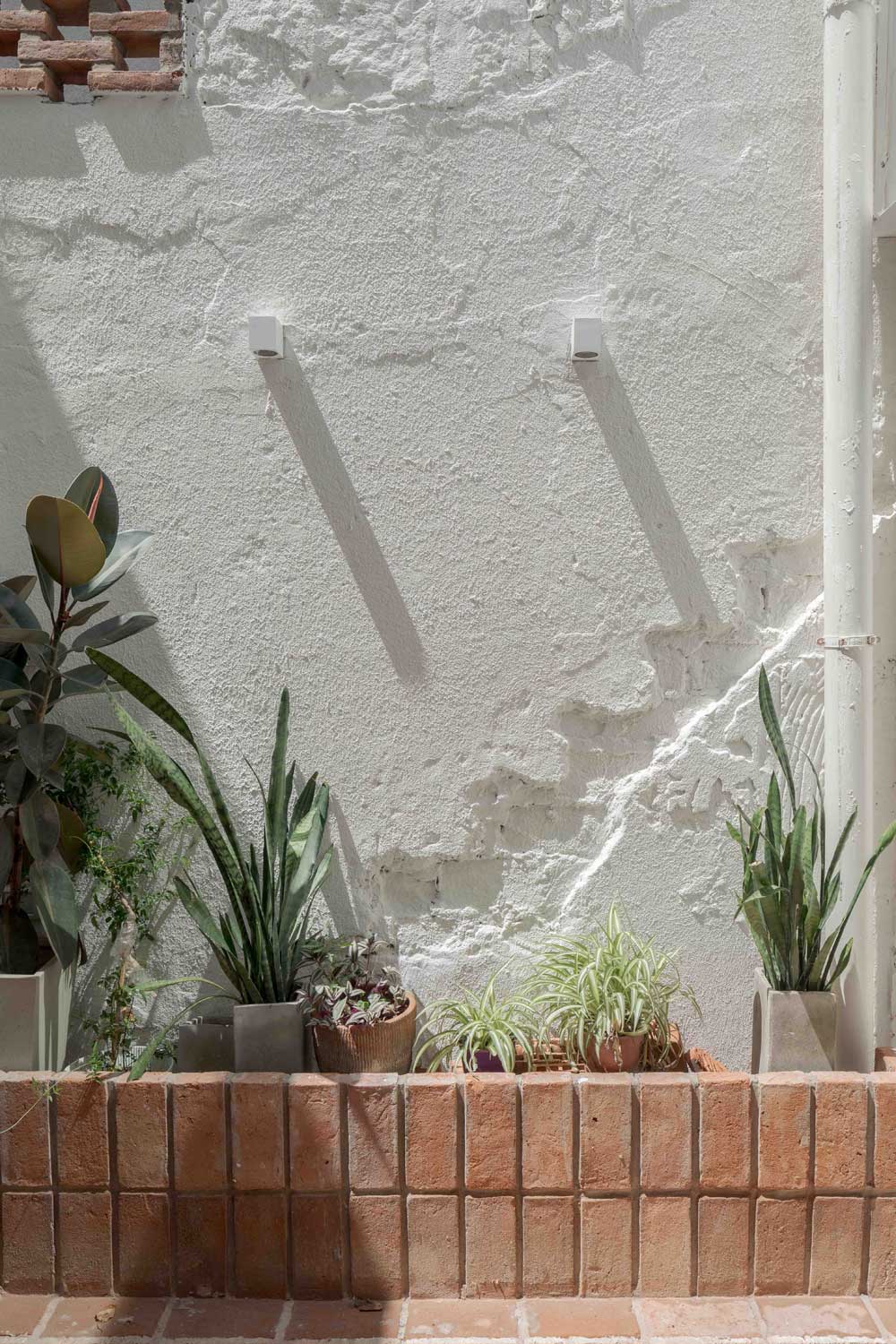
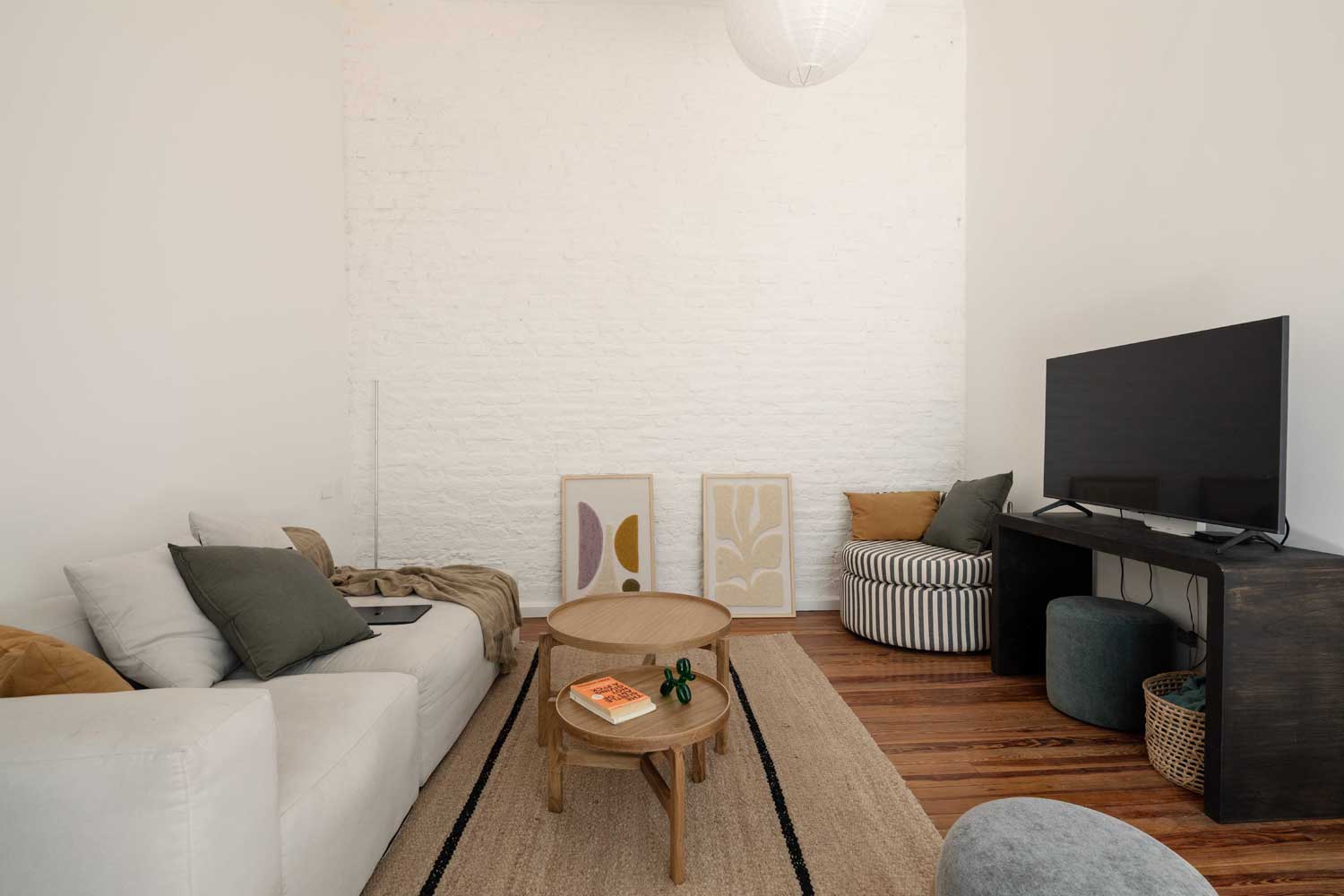
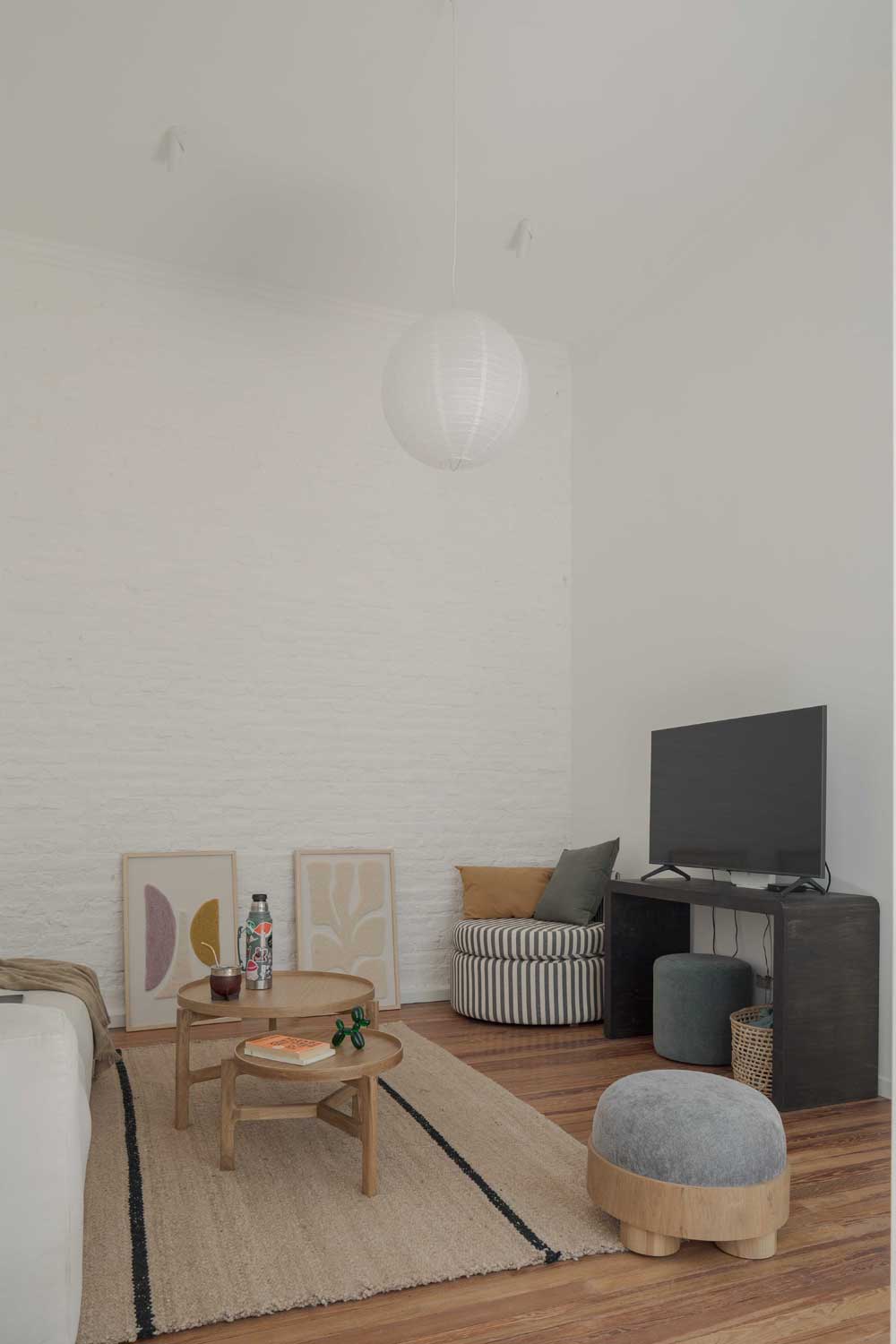
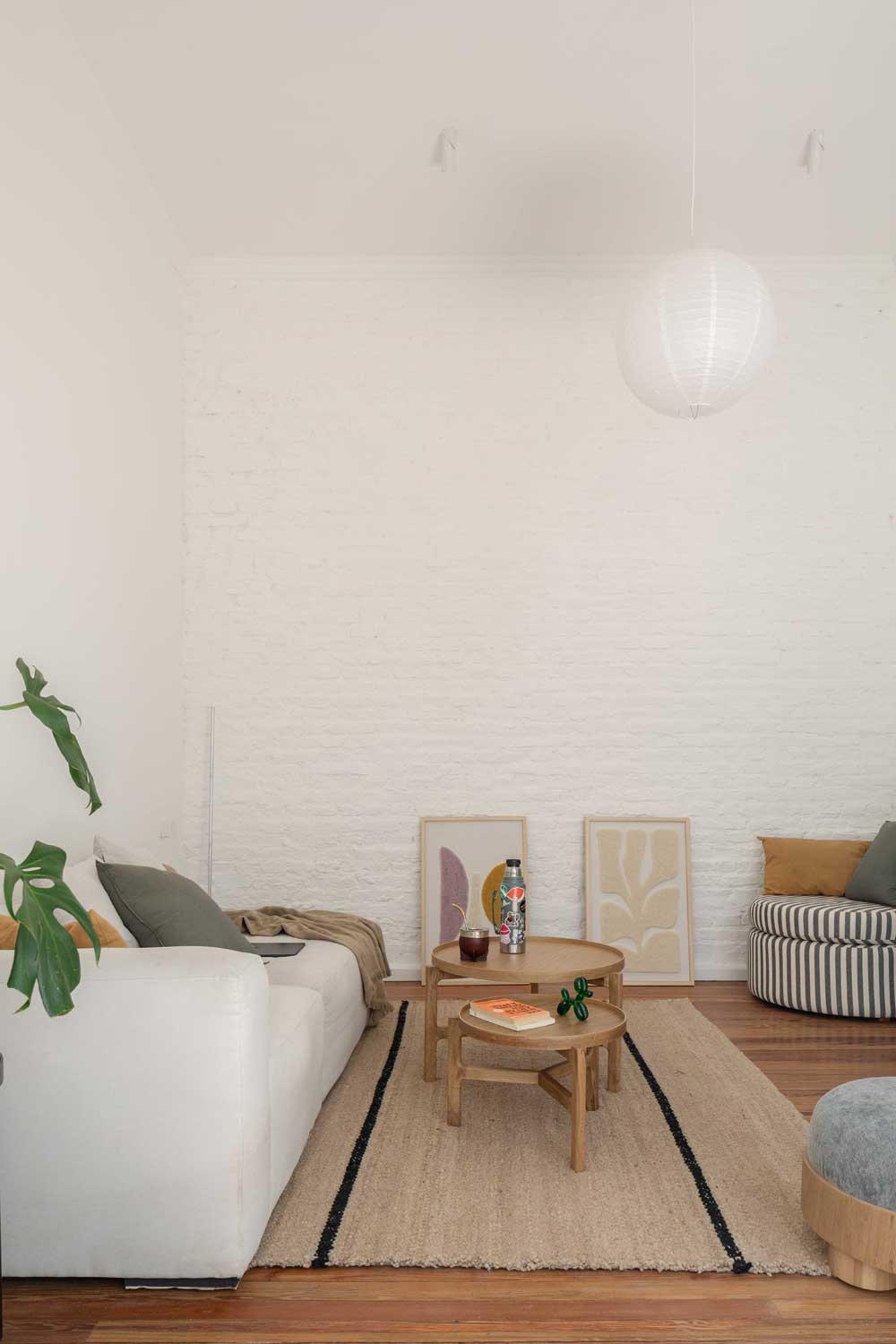
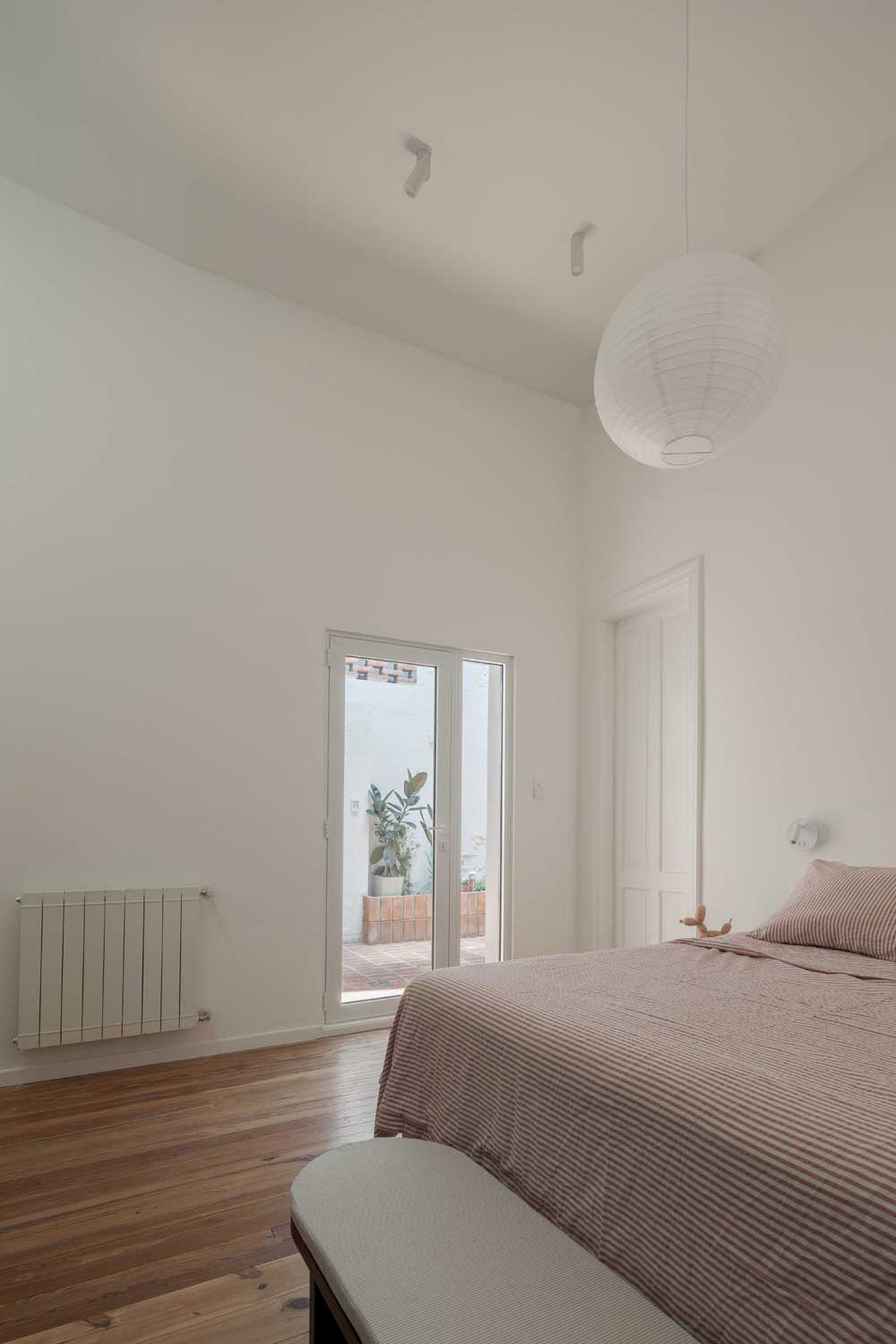
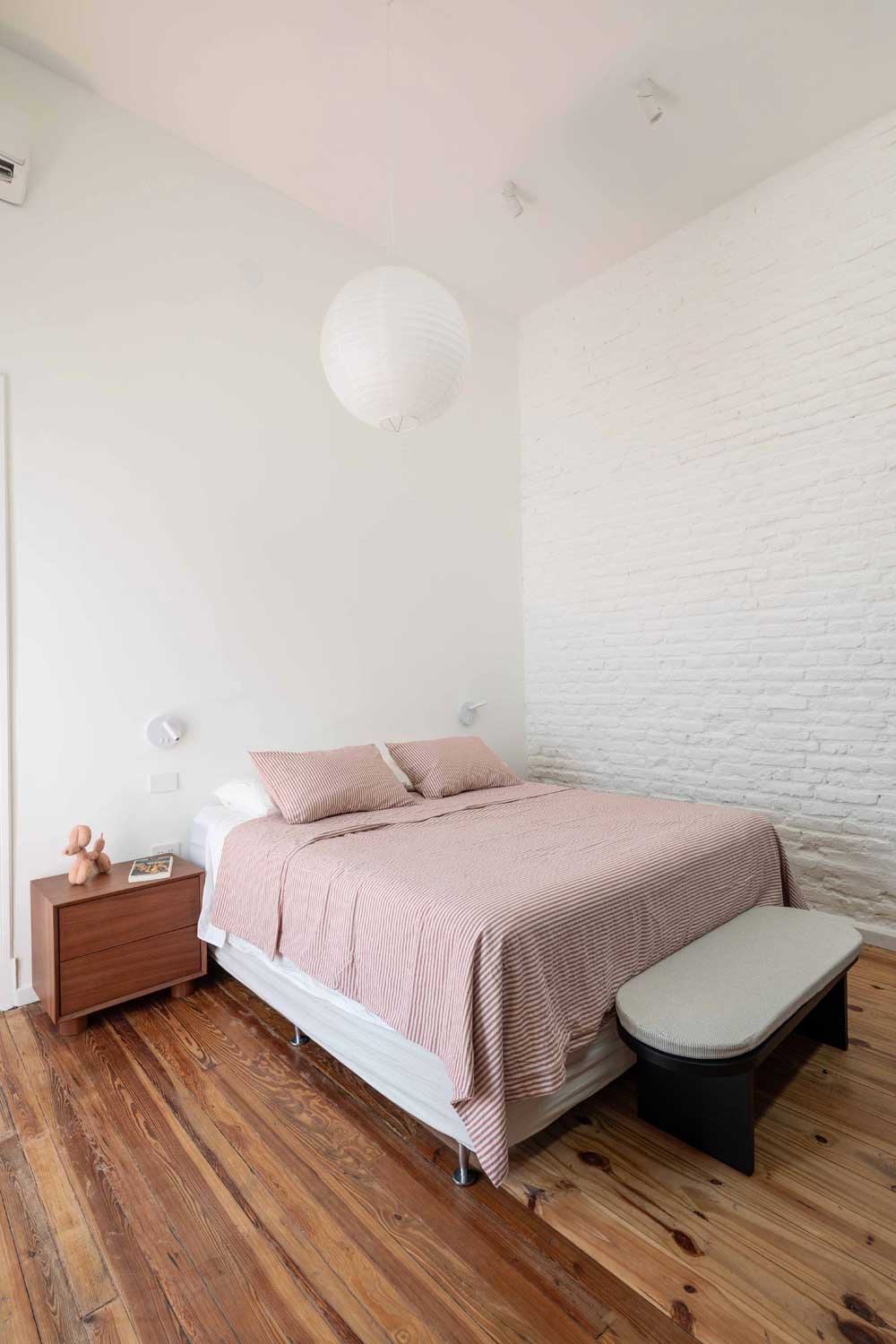
En el interior, la intervención material se apoya en una lógica de depuración y puesta en valor de lo existente. Los muros de mampostería original son descarnados para revelar la textura rugosa del ladrillo antiguo, posteriormente unificados mediante un acabado blanco continuo que amplifica la luz natural y refuerza la lectura abstracta del espacio. Esta materialidad dialoga con la pinotea reutilizada en los pisos, cuya presencia aporta calidez y memoria, estableciendo un contrapunto preciso entre lo áspero y lo táctil, entre lo estructural y lo doméstico.
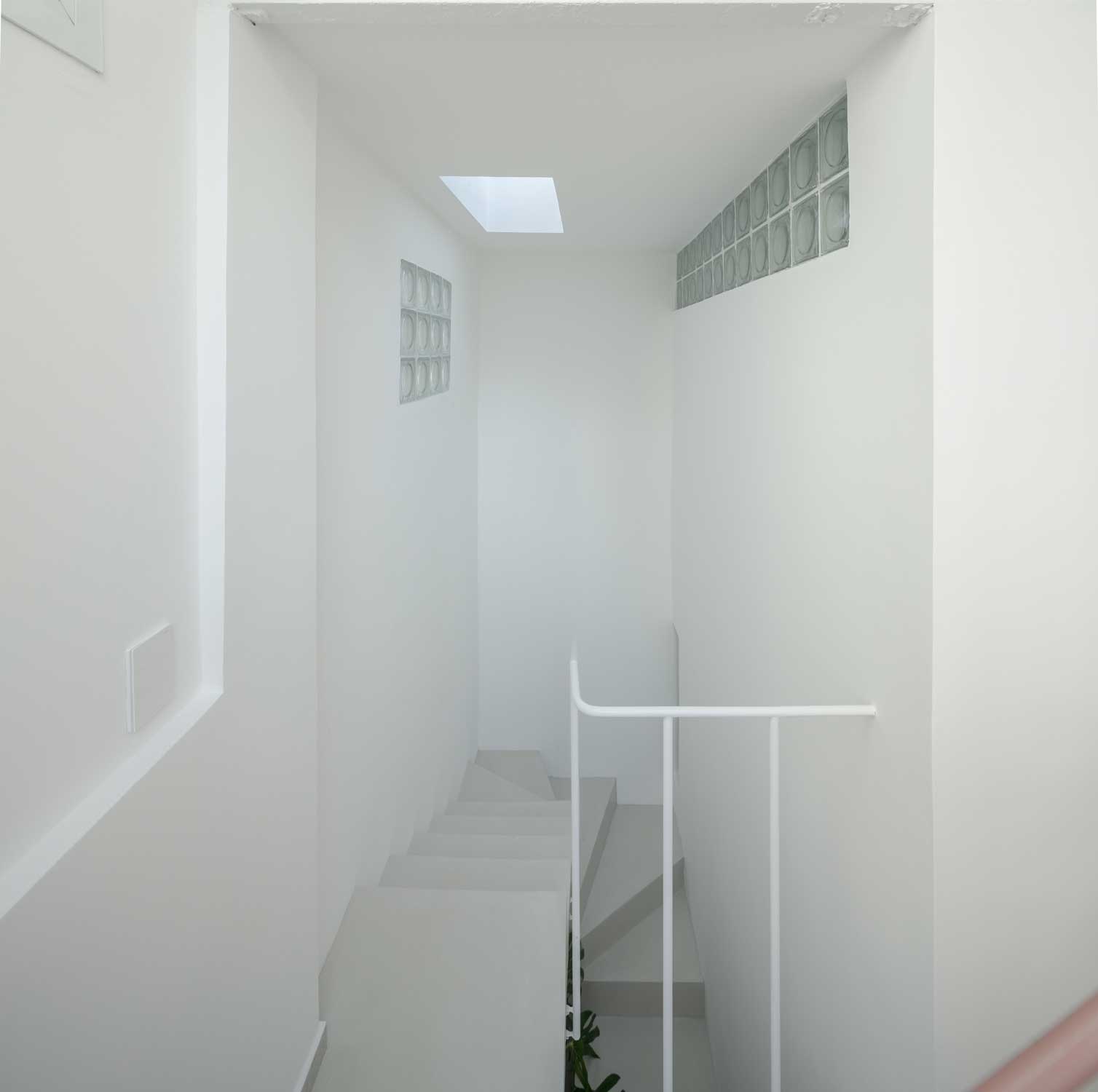
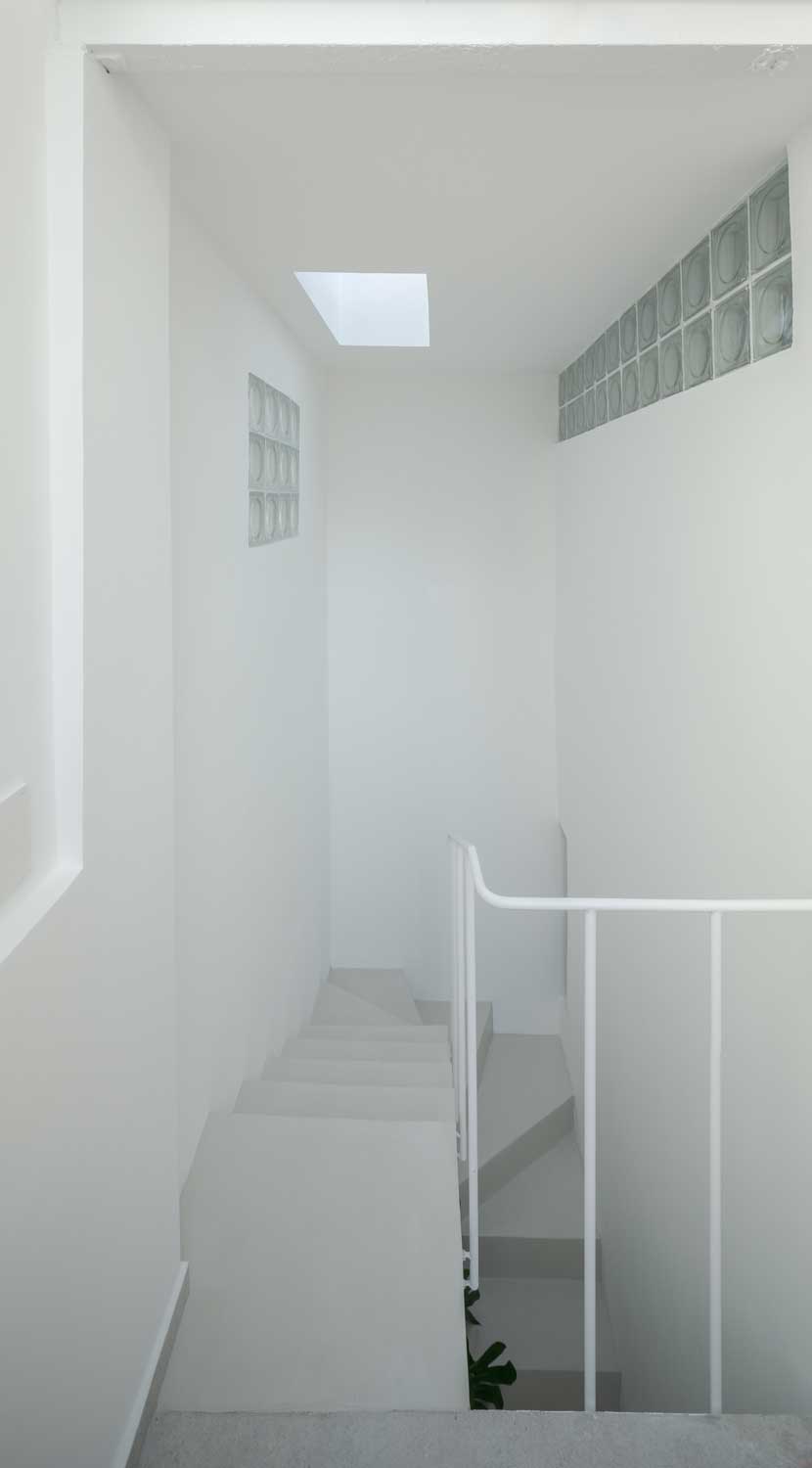
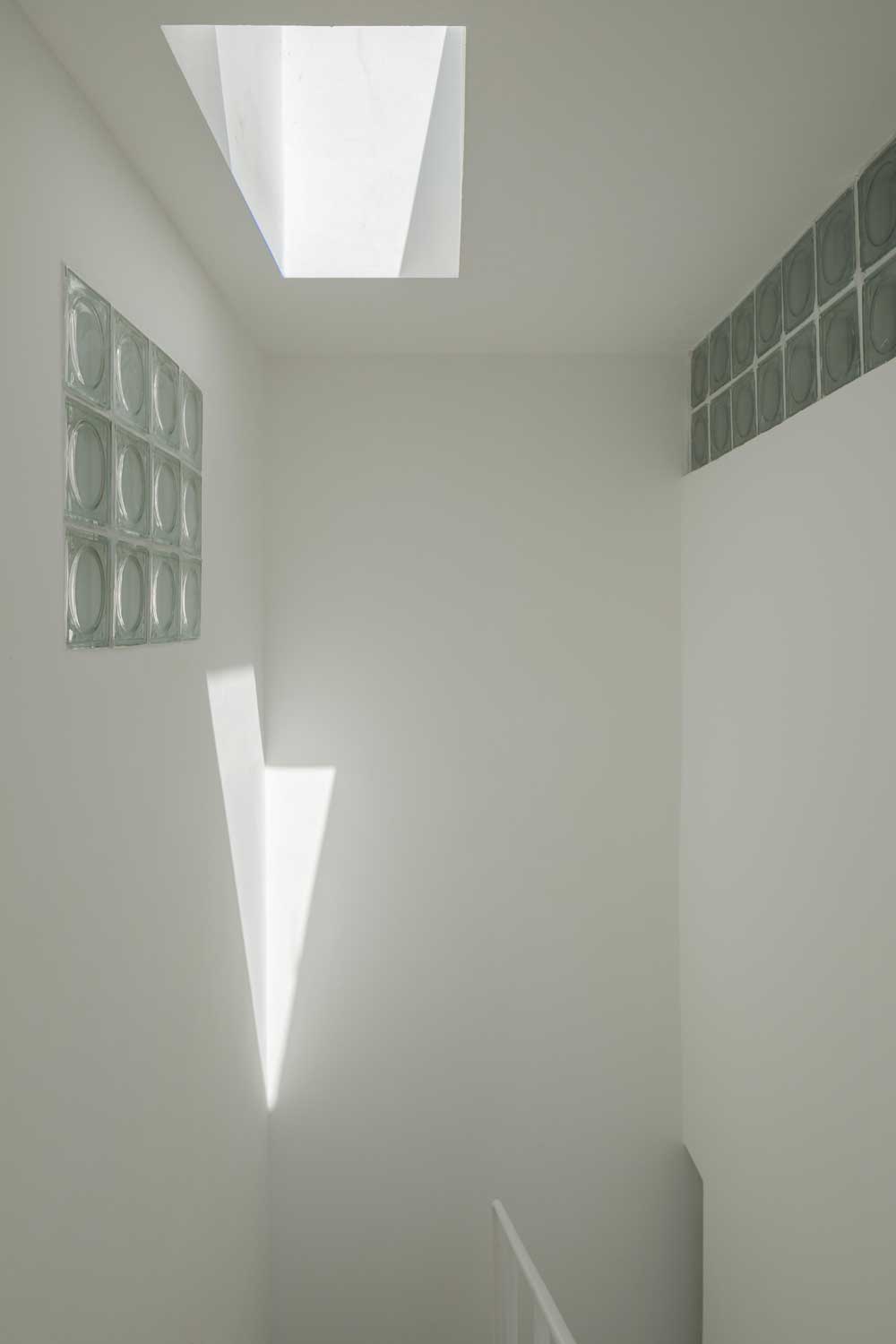
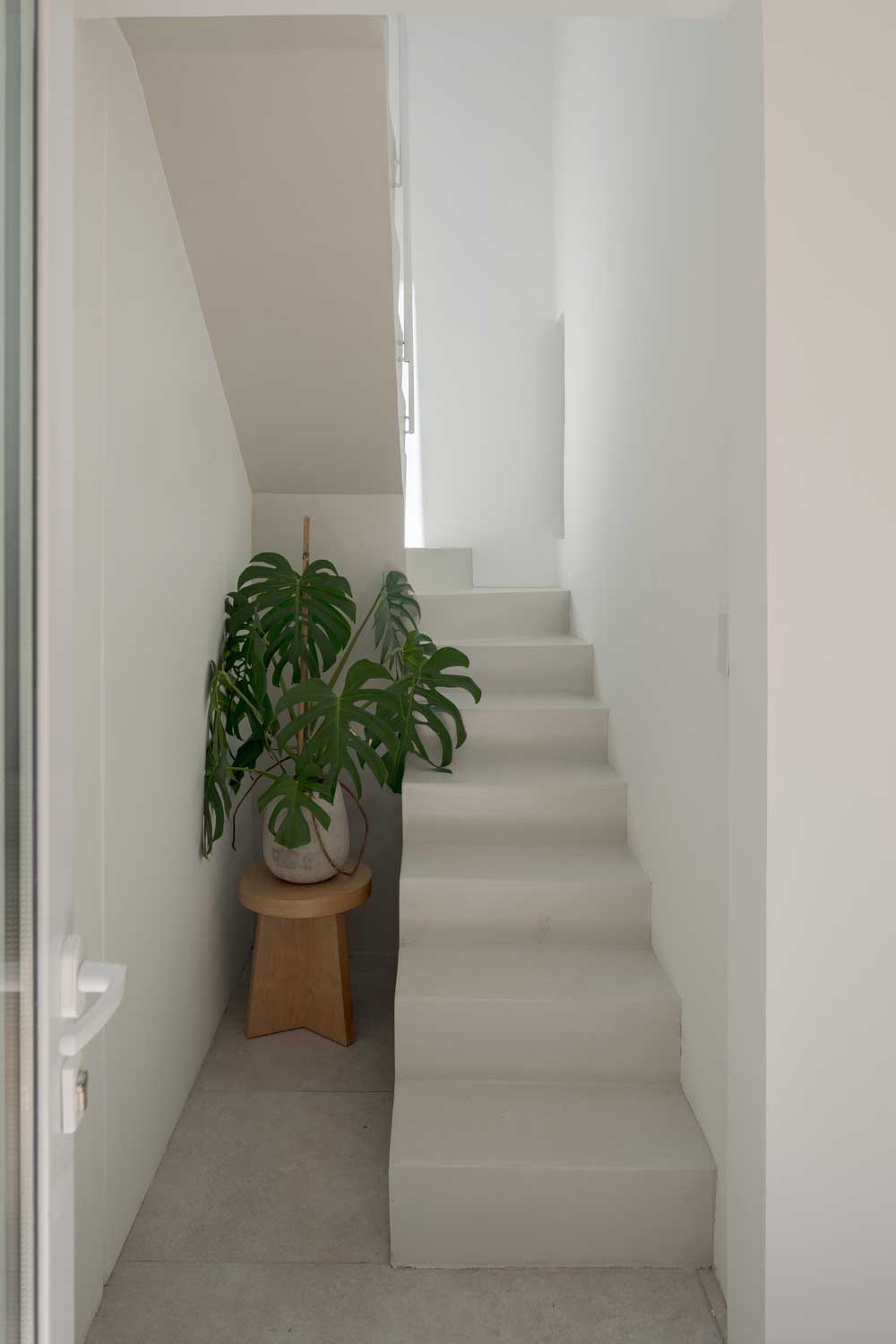
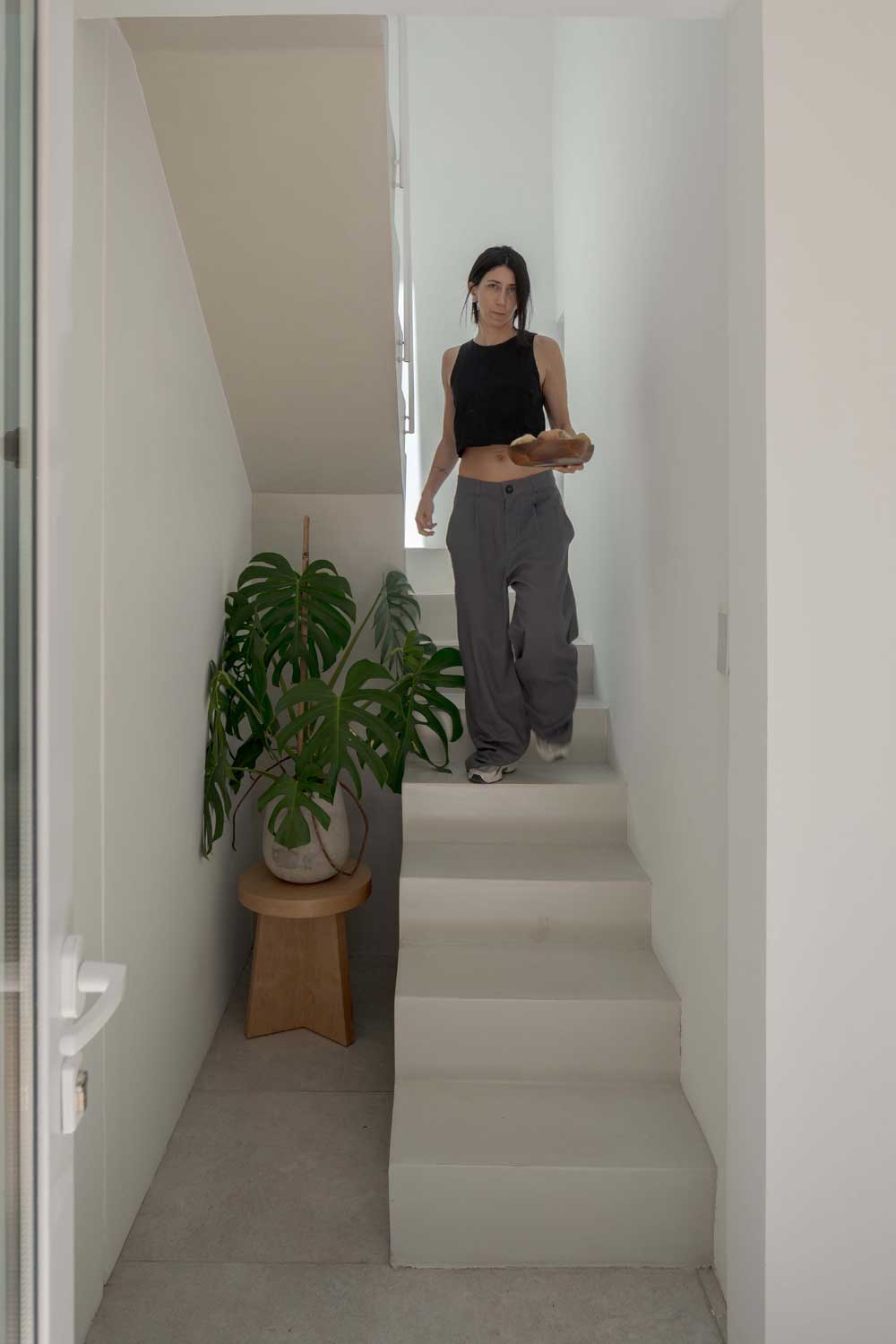
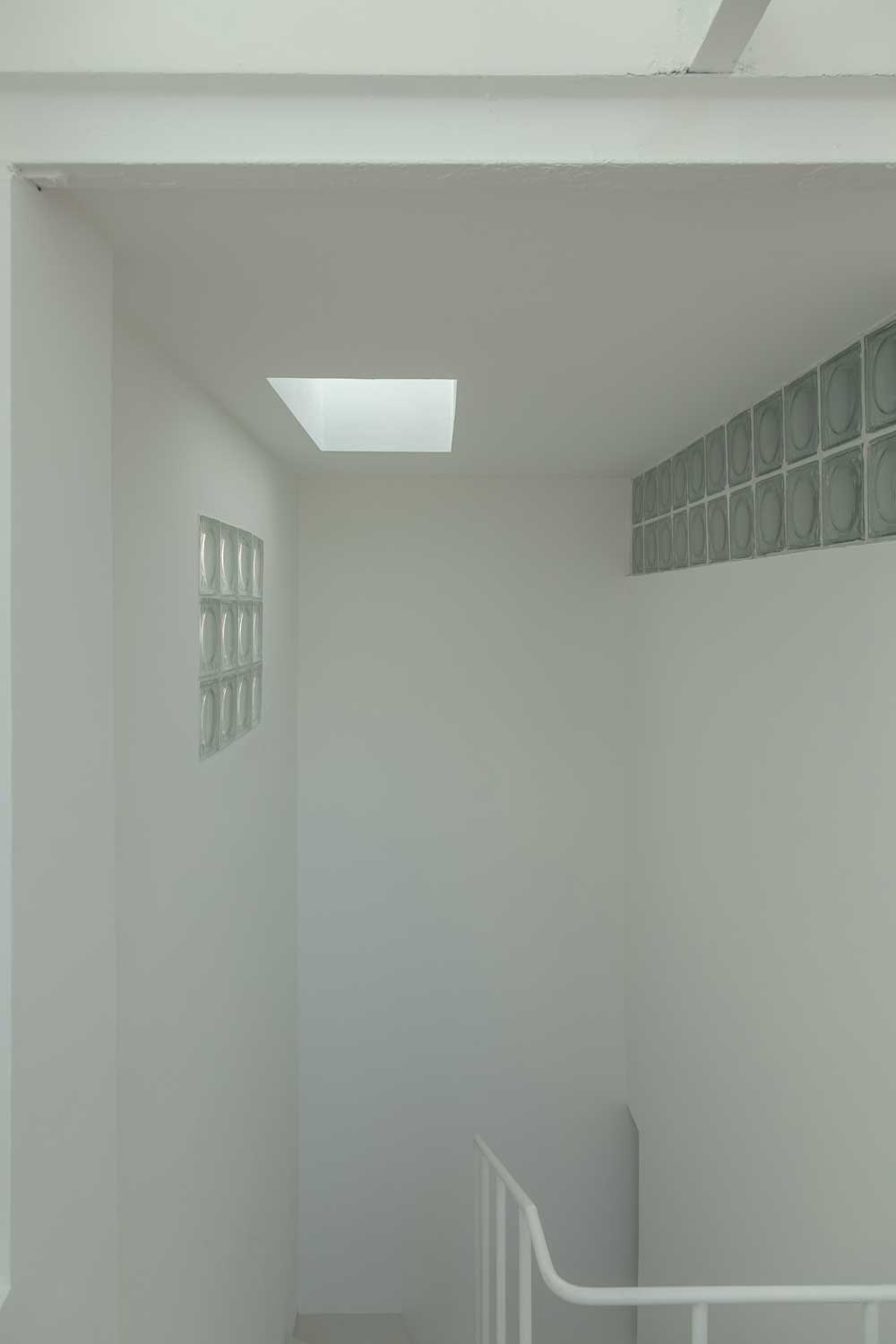
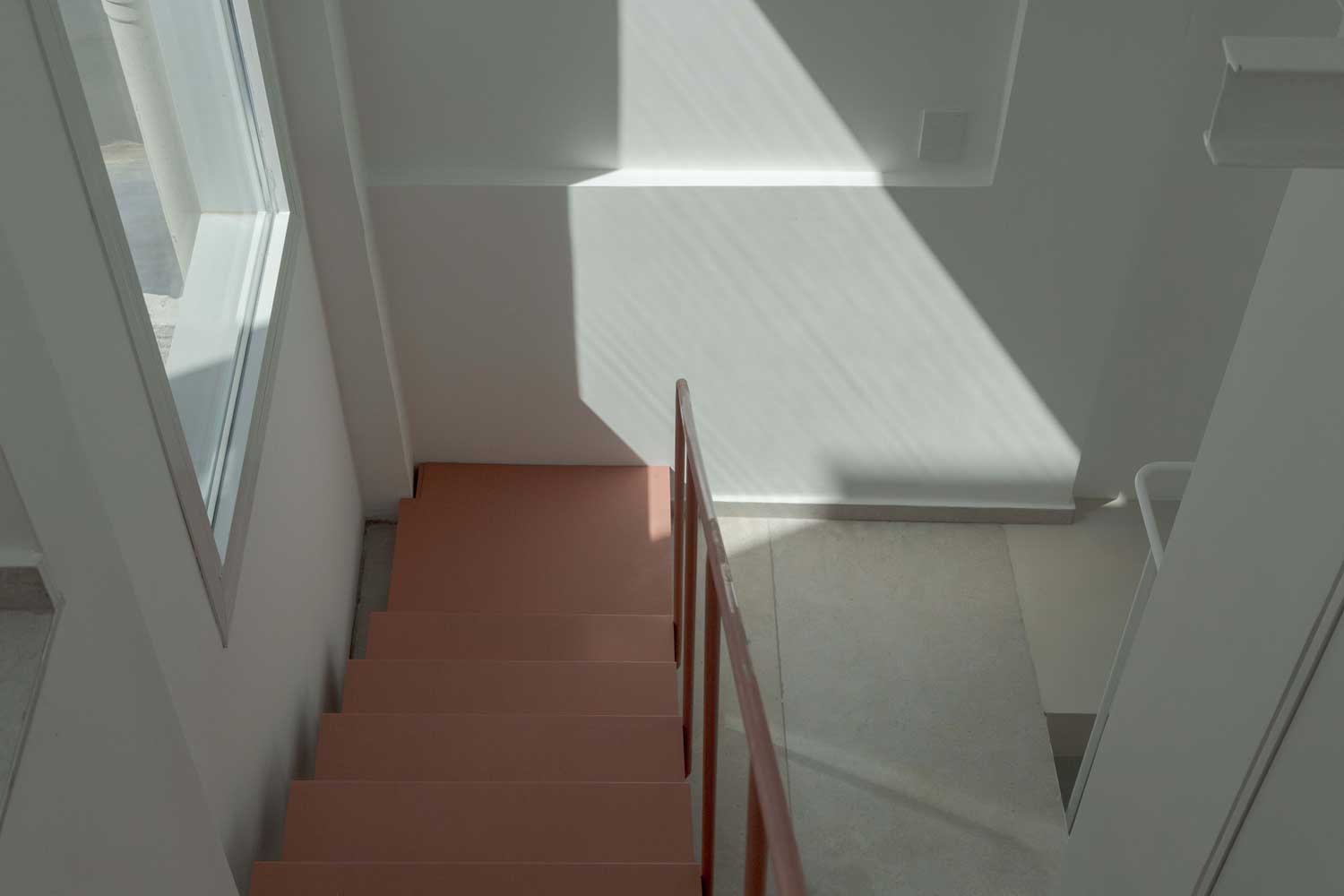
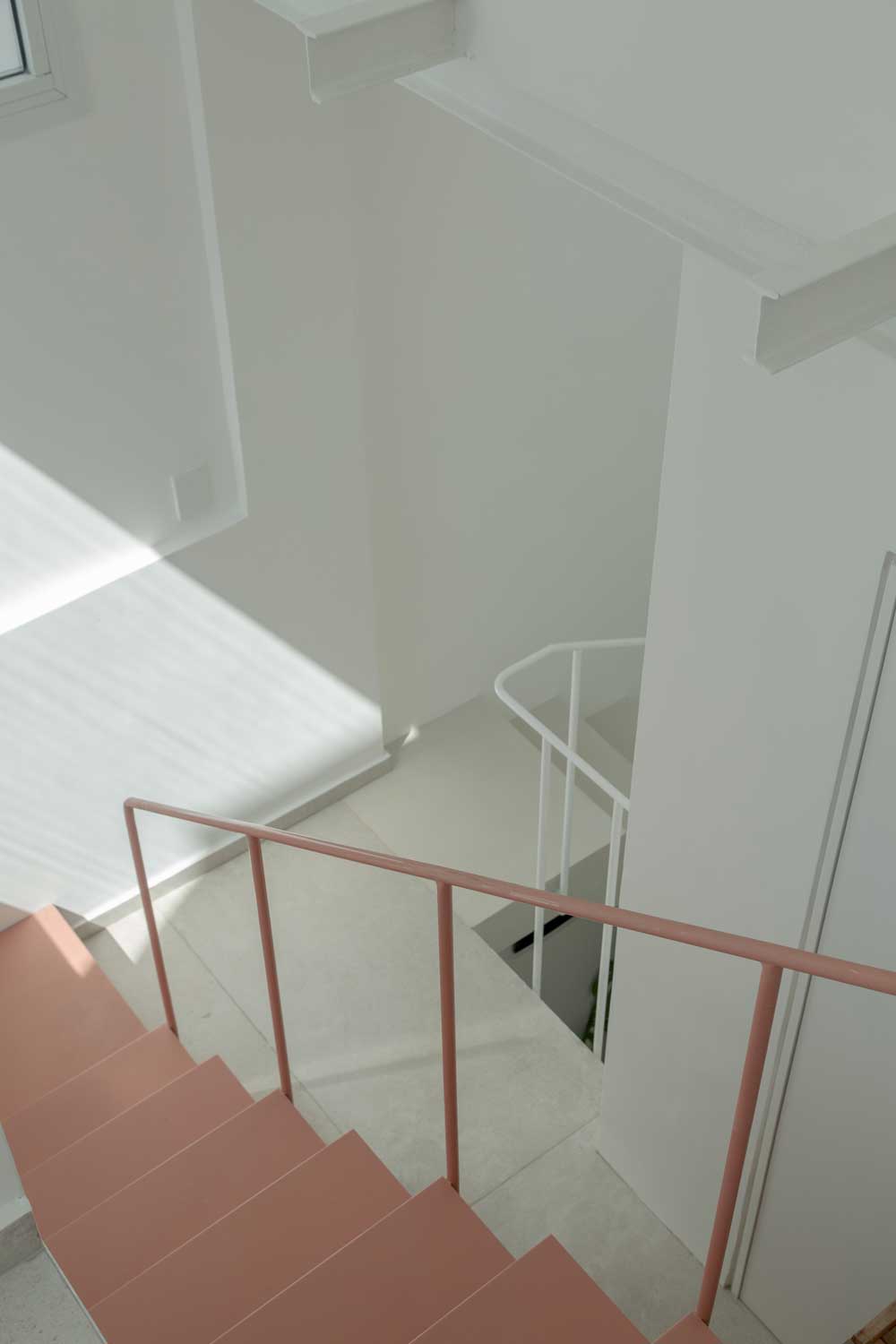
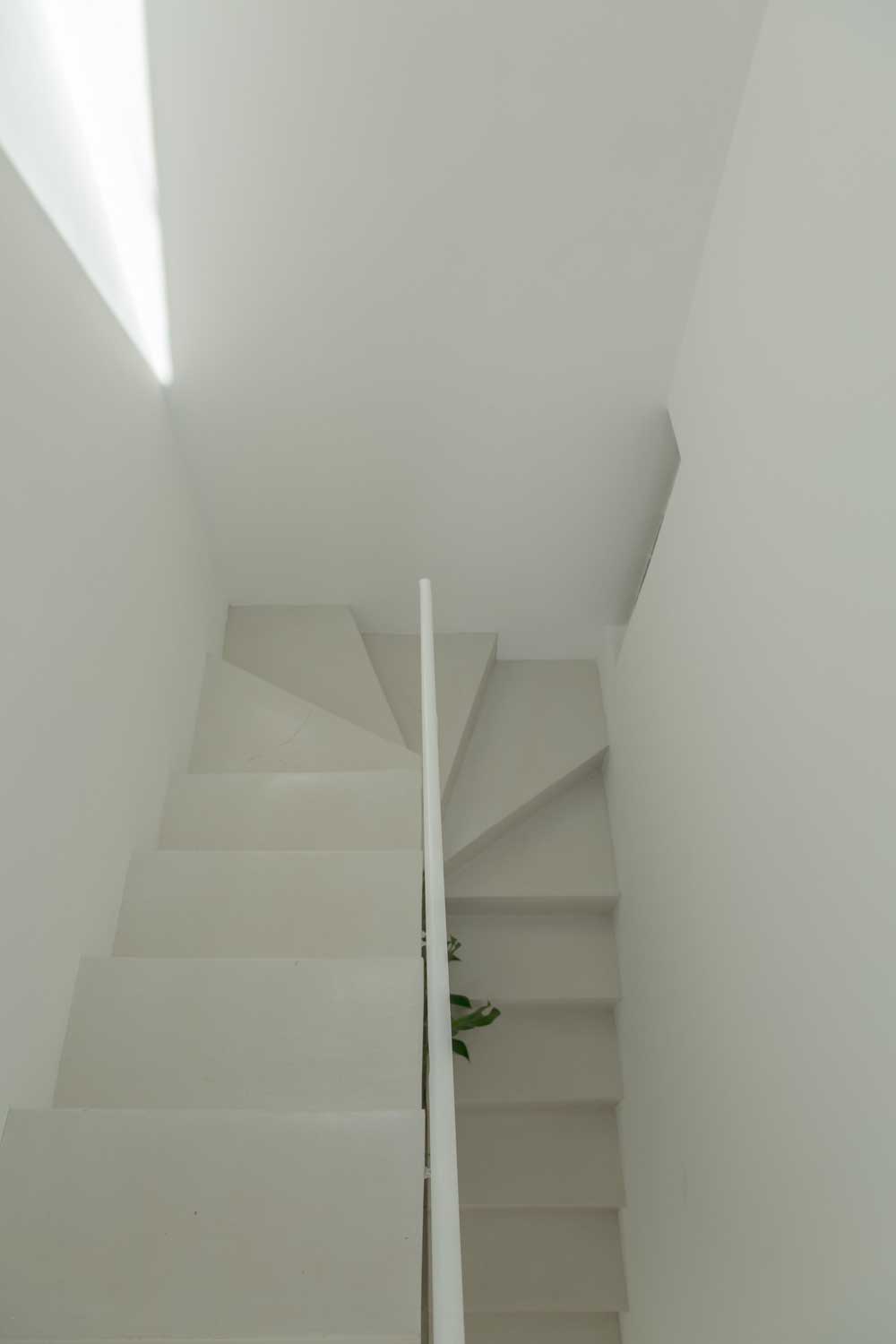
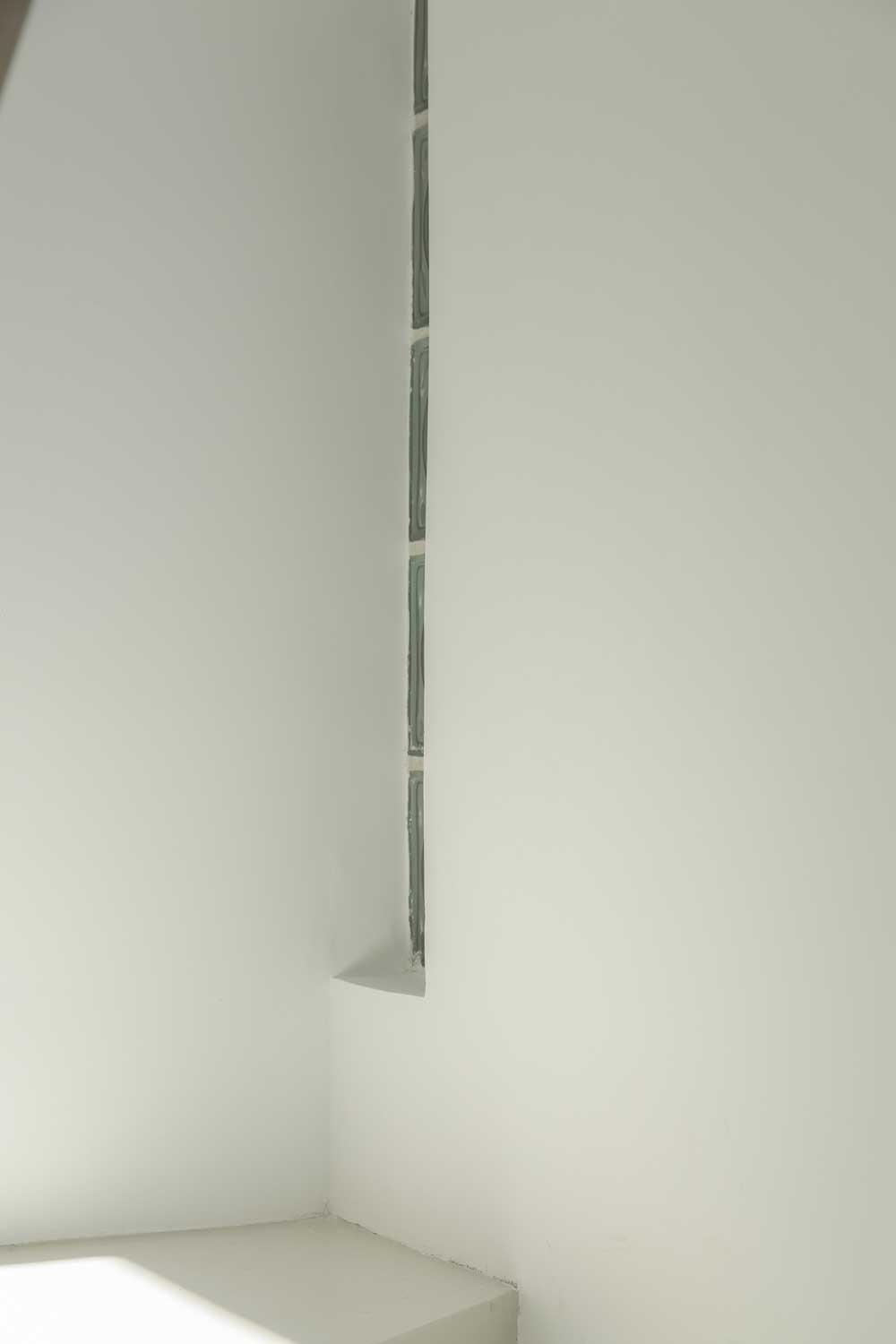
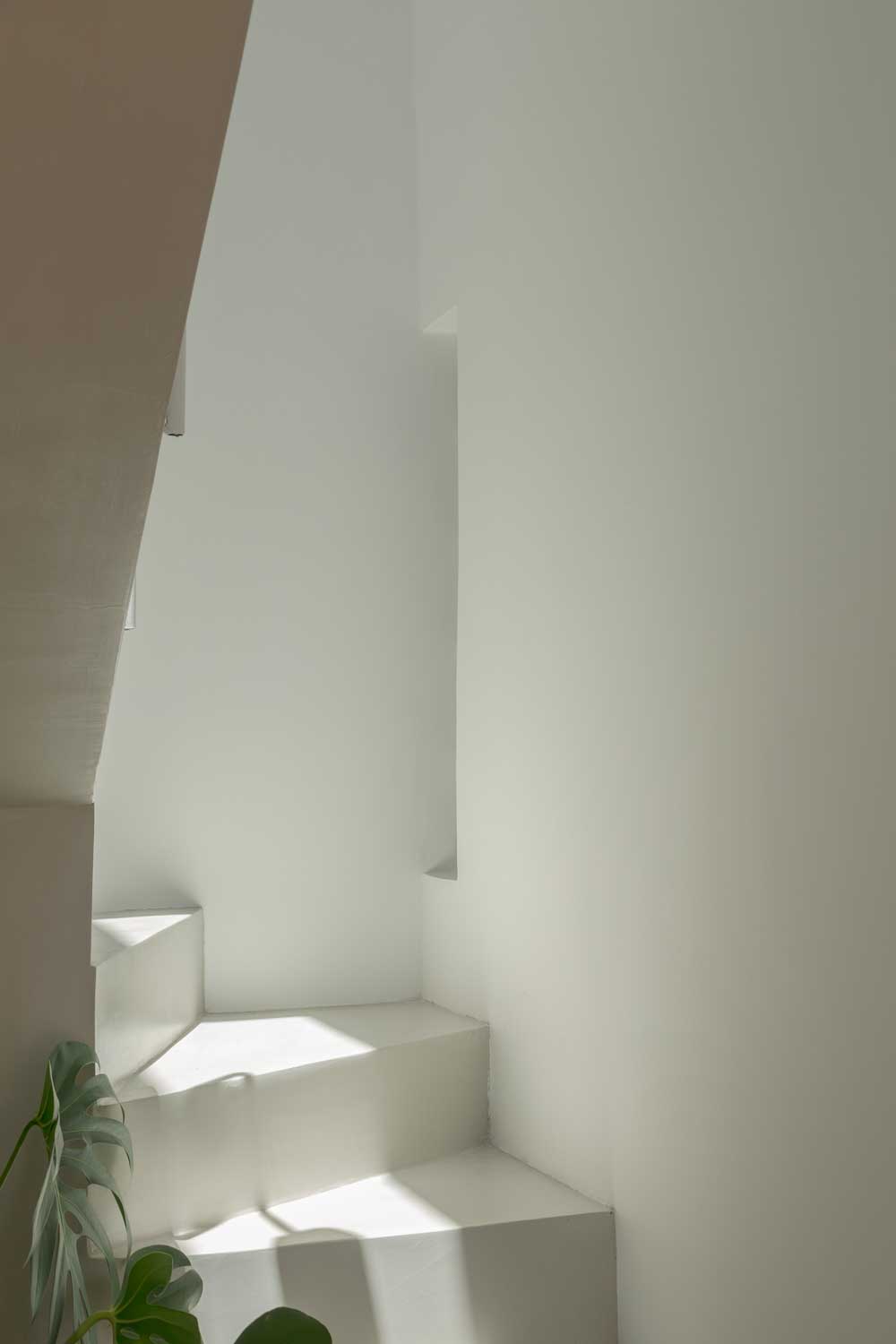
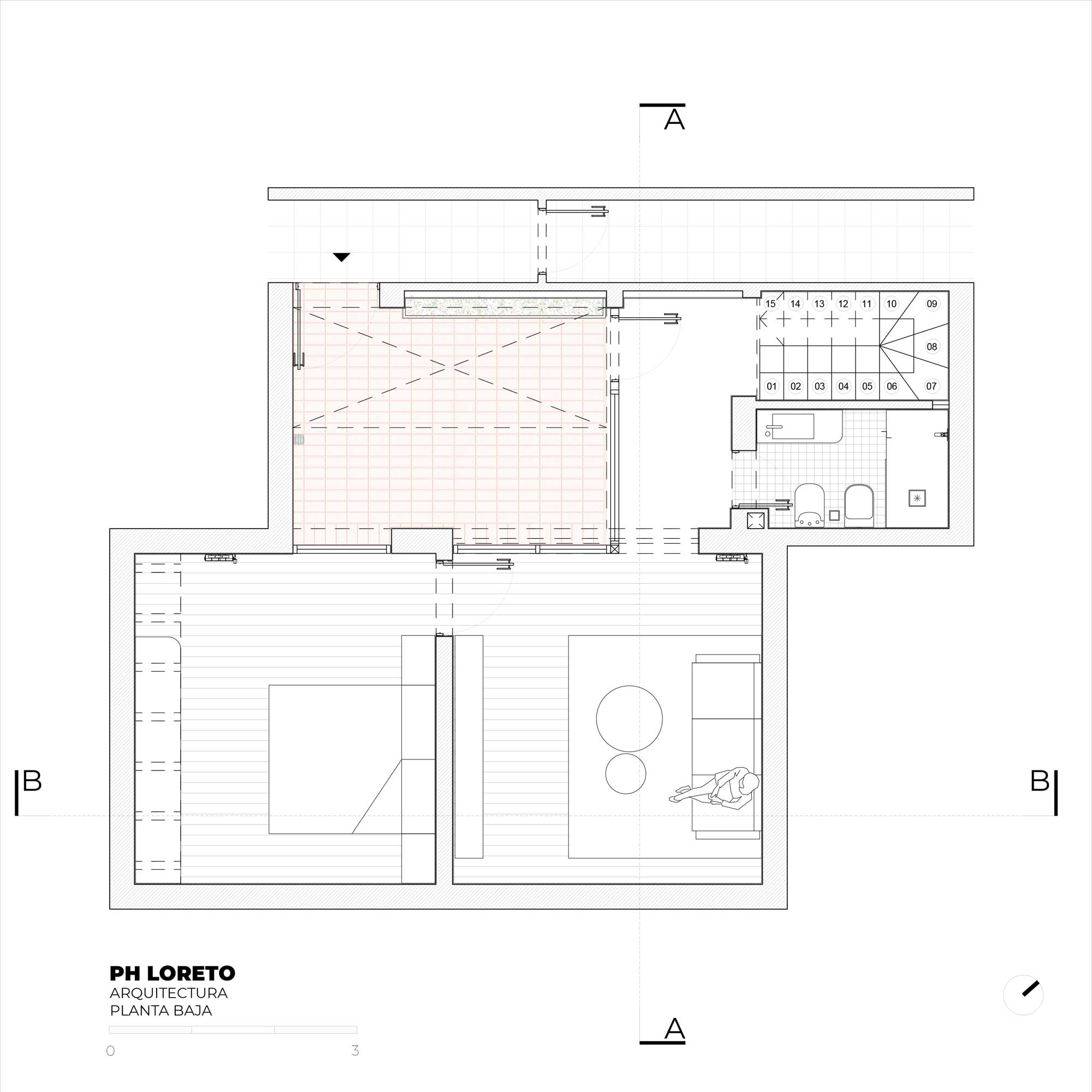
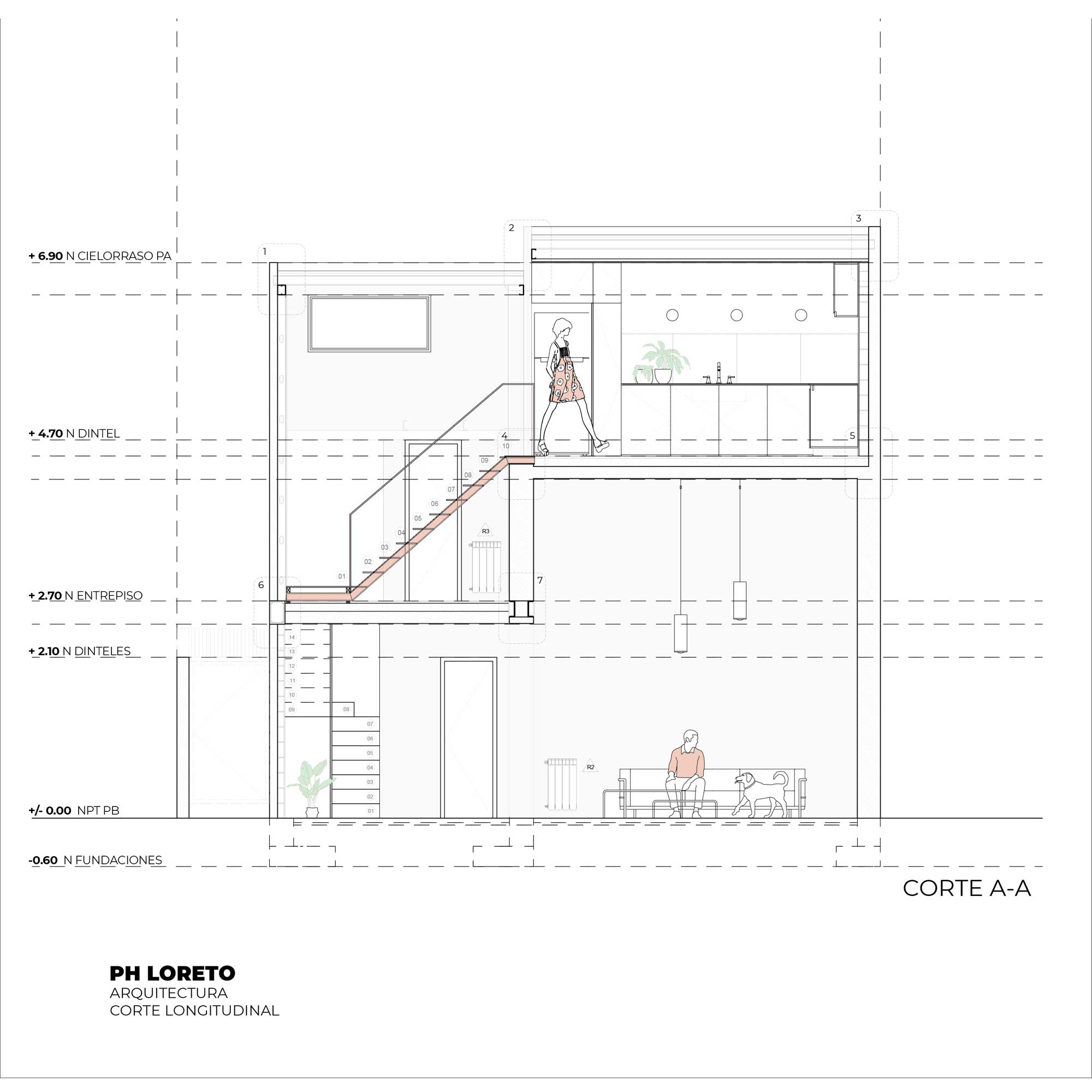
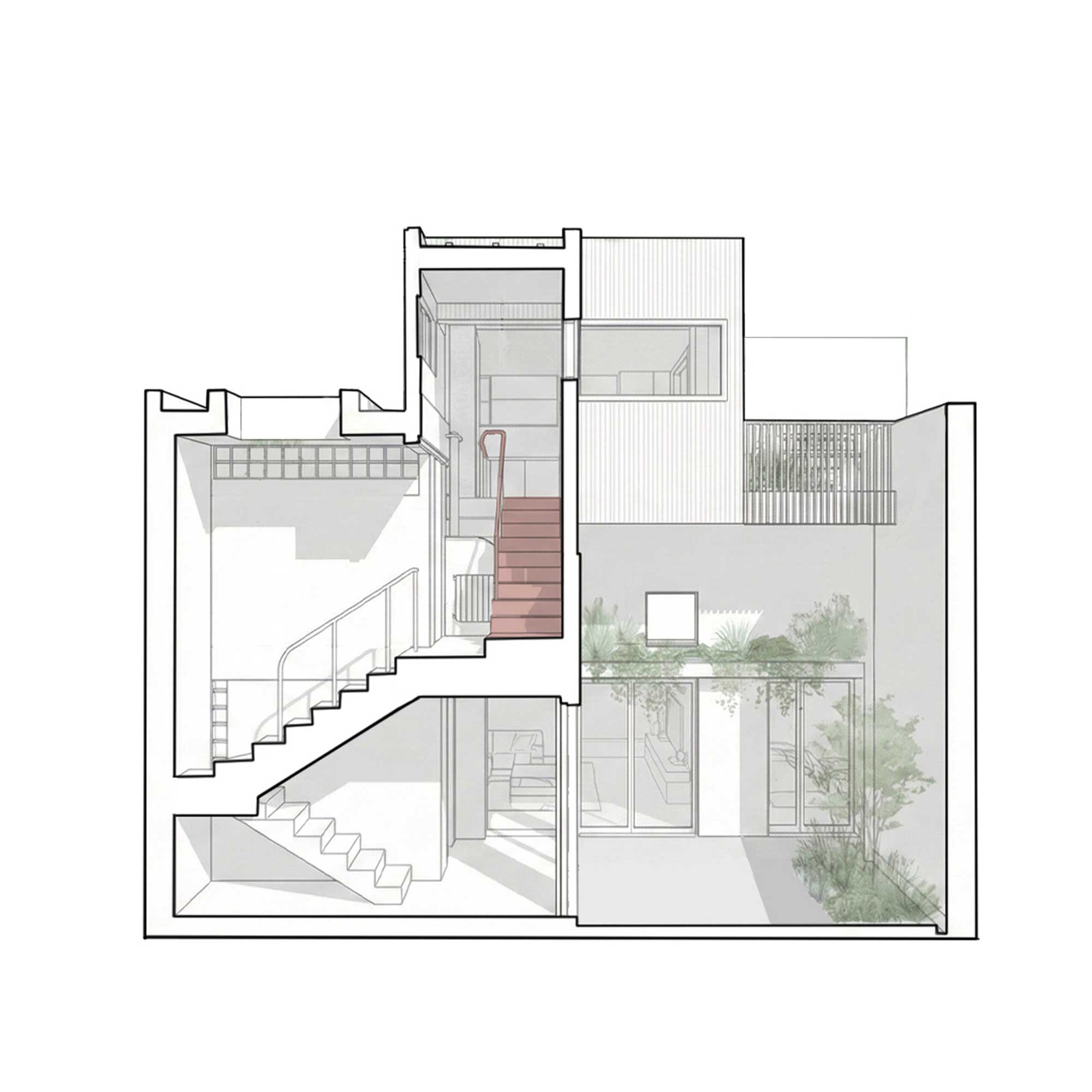
Uno de los gestos fundamentales del proyecto es la relocalización de la escalera. La original fue demolida, pero sus huellas permanecen visibles en los muros, no como gesto nostálgico, sino como reconocimiento del linaje constructivo del lugar. La antigua cocina cede su espacio a una nueva escalera que vincula la planta baja con el entrepiso, concebida como una simple sucesión de escalones, bañados por luz natural. A lo largo de su recorrido, pequeñas oquedades, lucarnas y ventanas estratégicamente dispuestas permiten que la luz penetre en profundidad, alcanzando sanitarios y espacios intermedios y marcando el paso del día mediante la incidencia cambiante del sol.
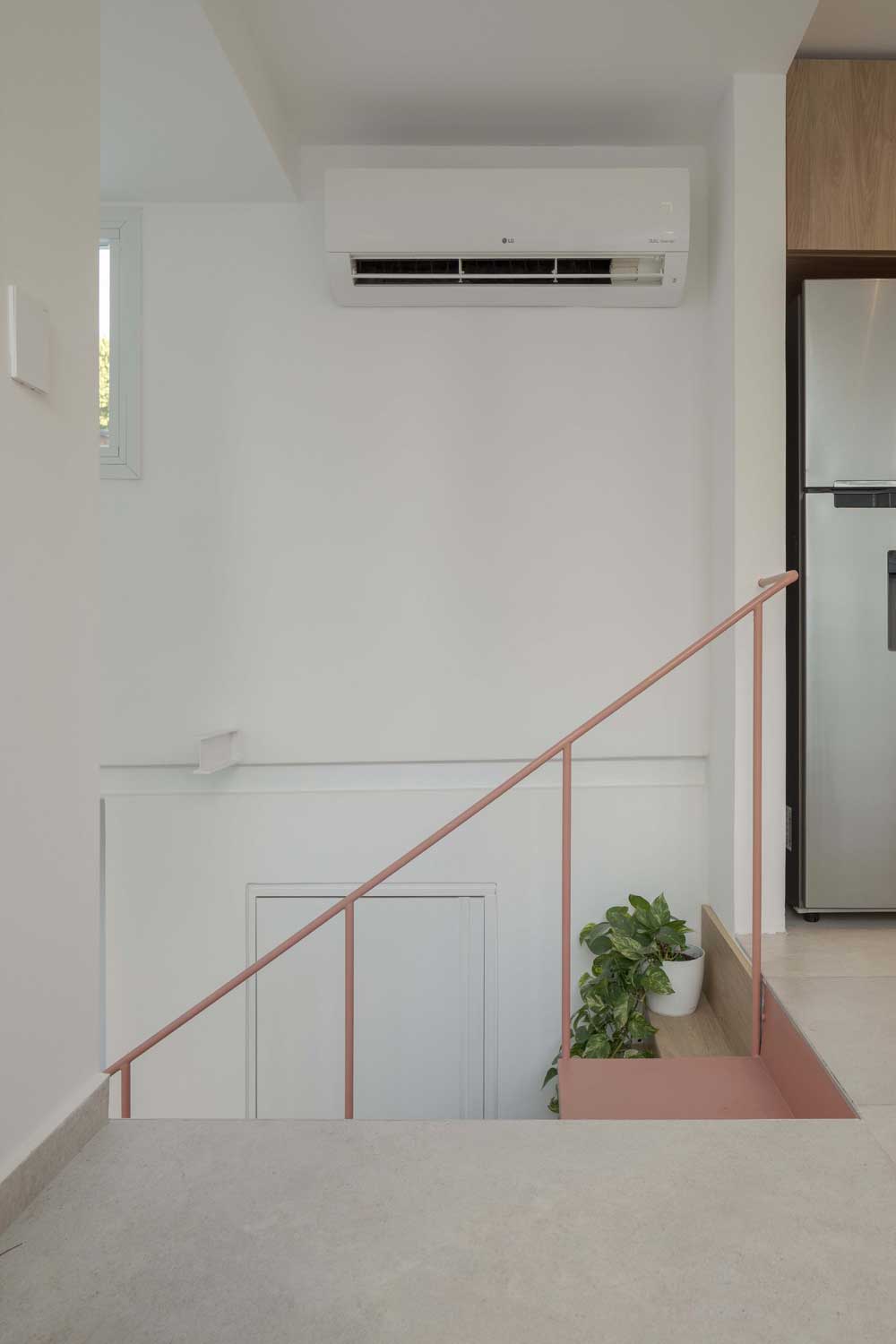
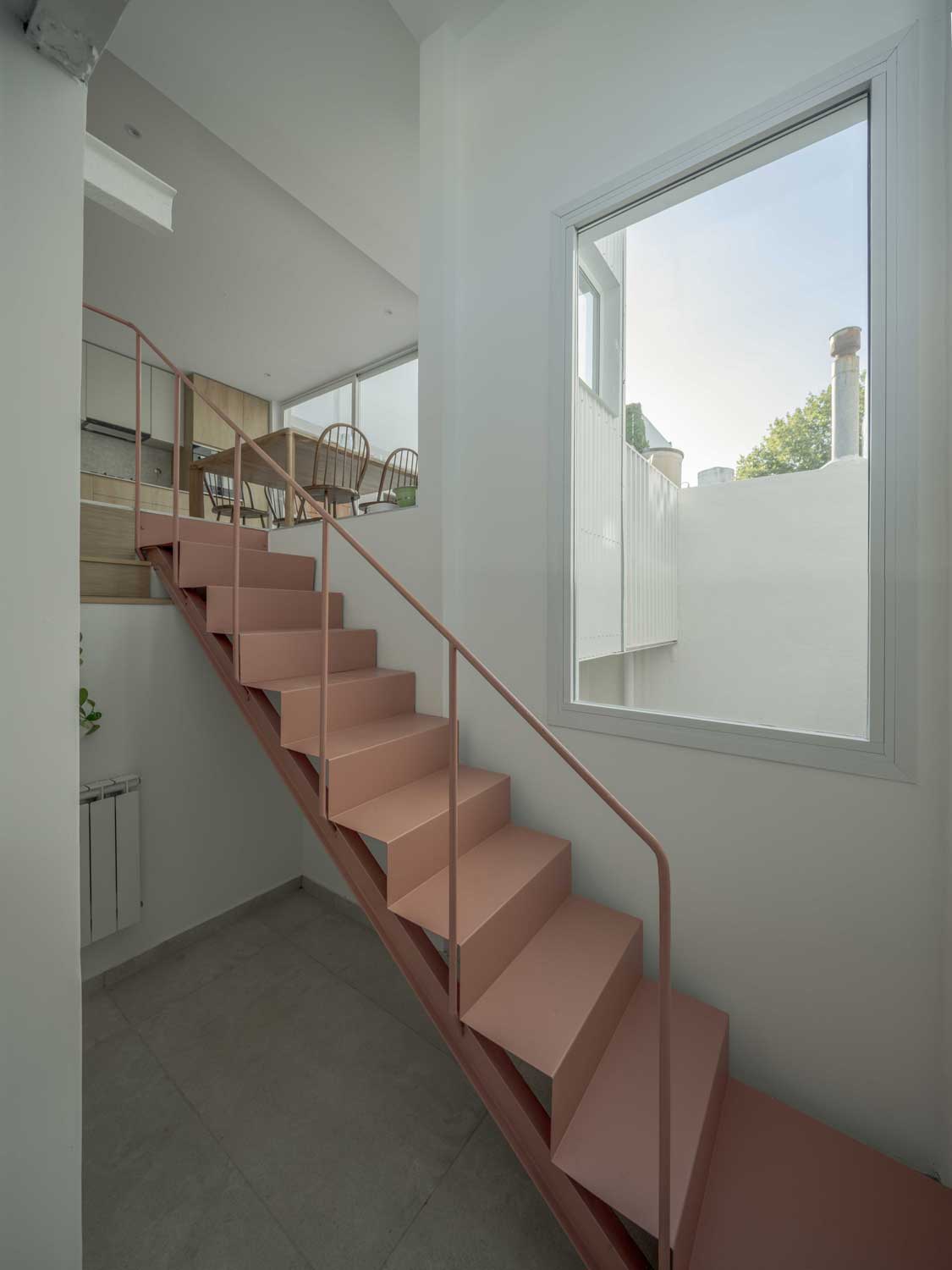
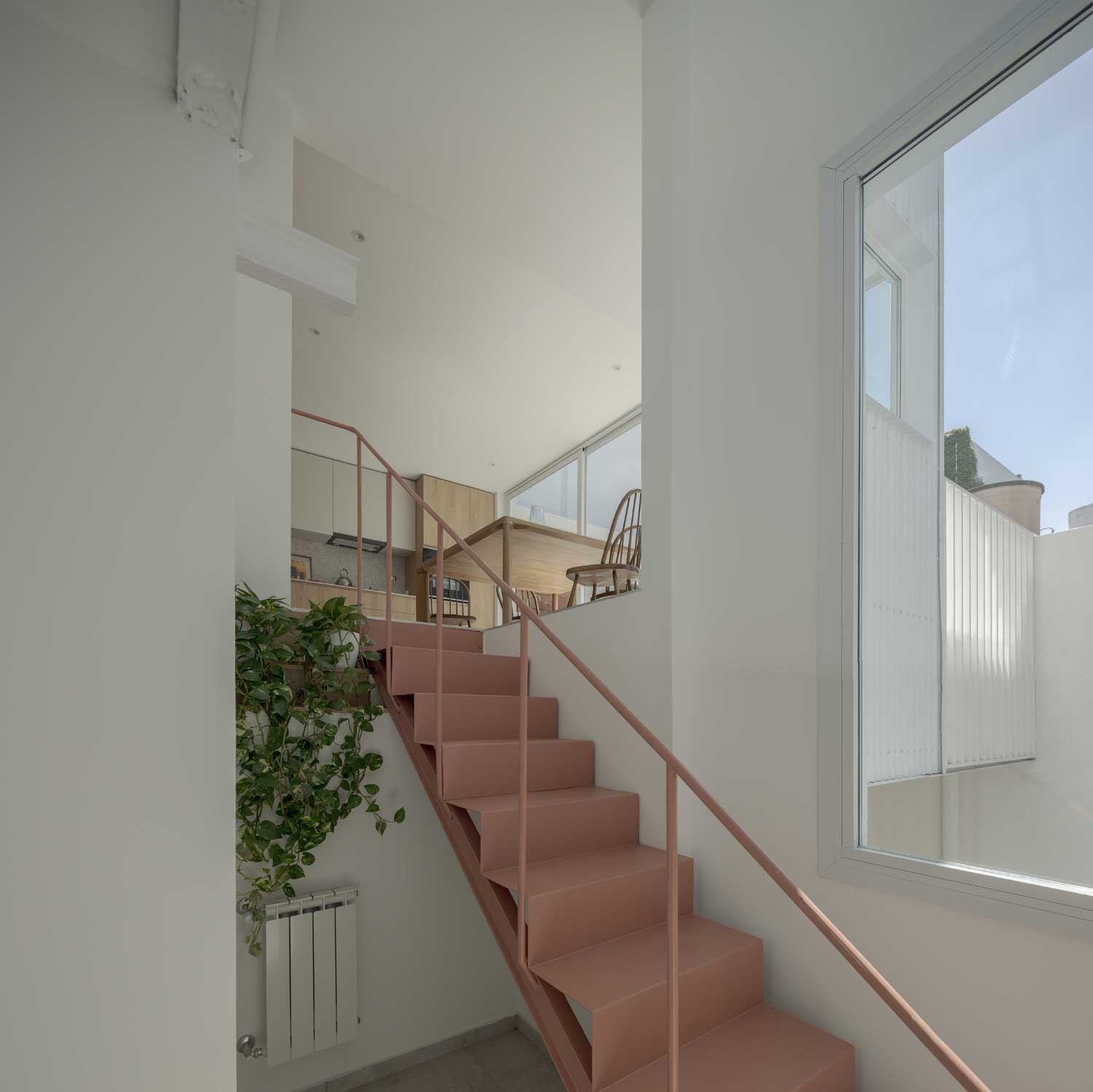
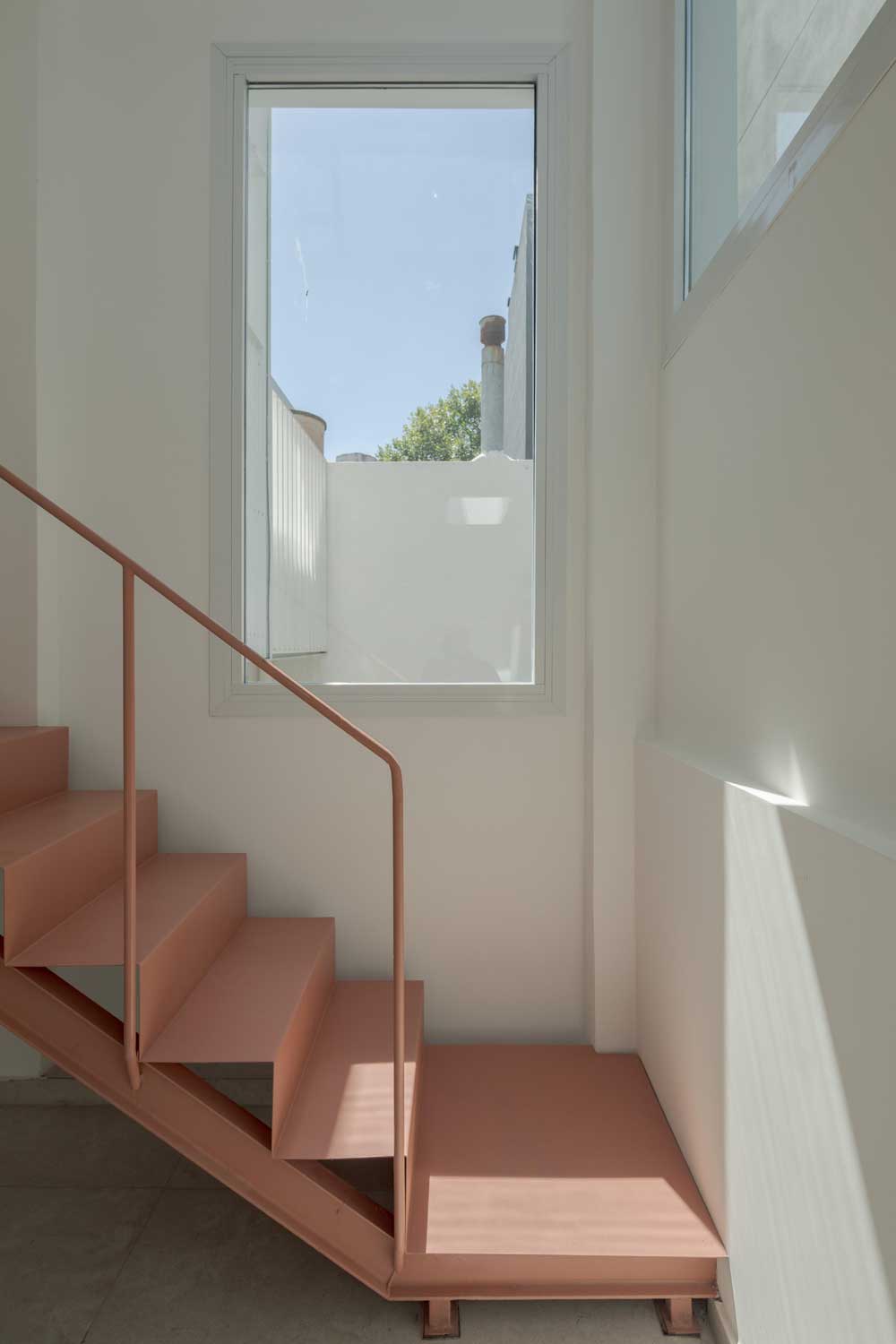
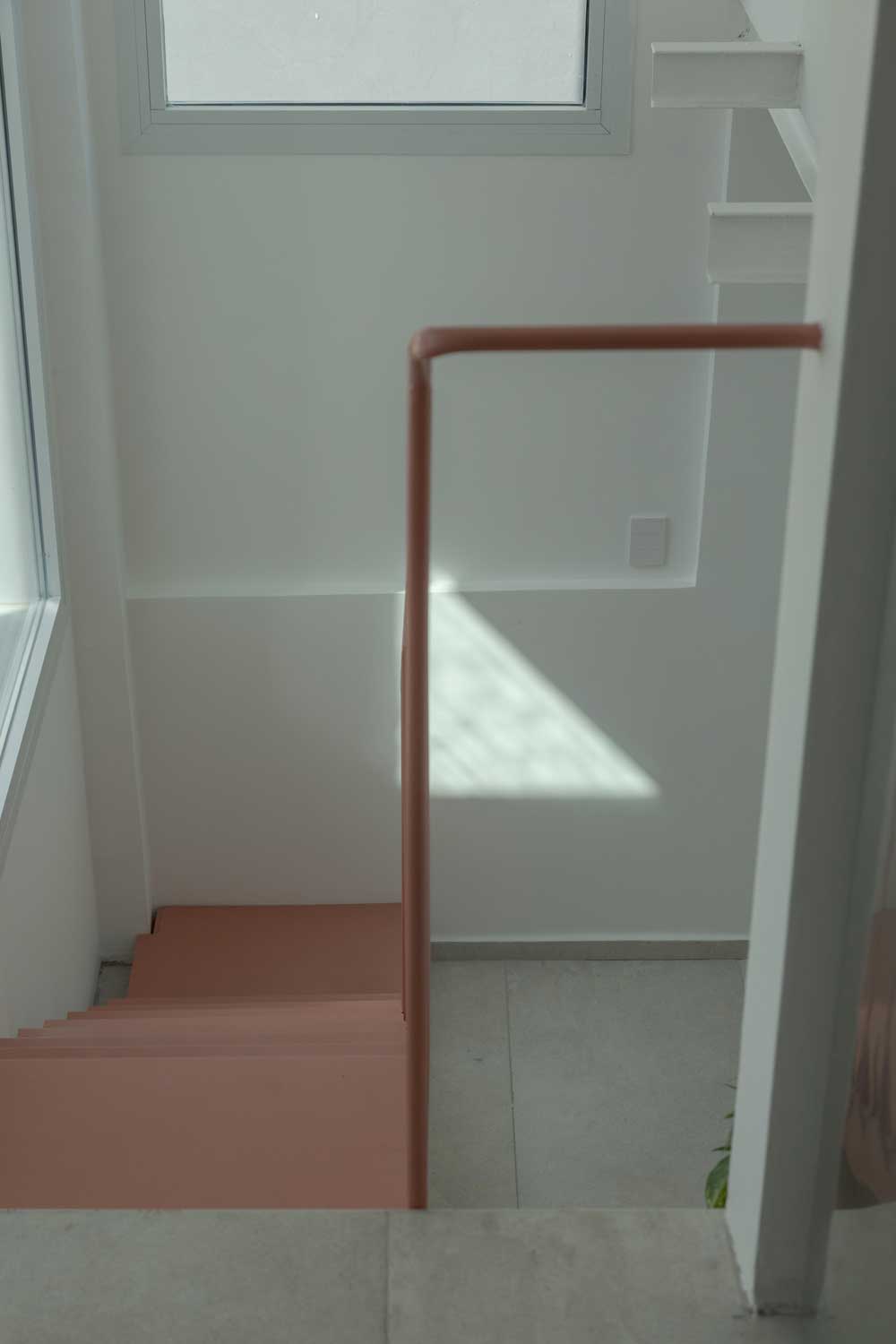
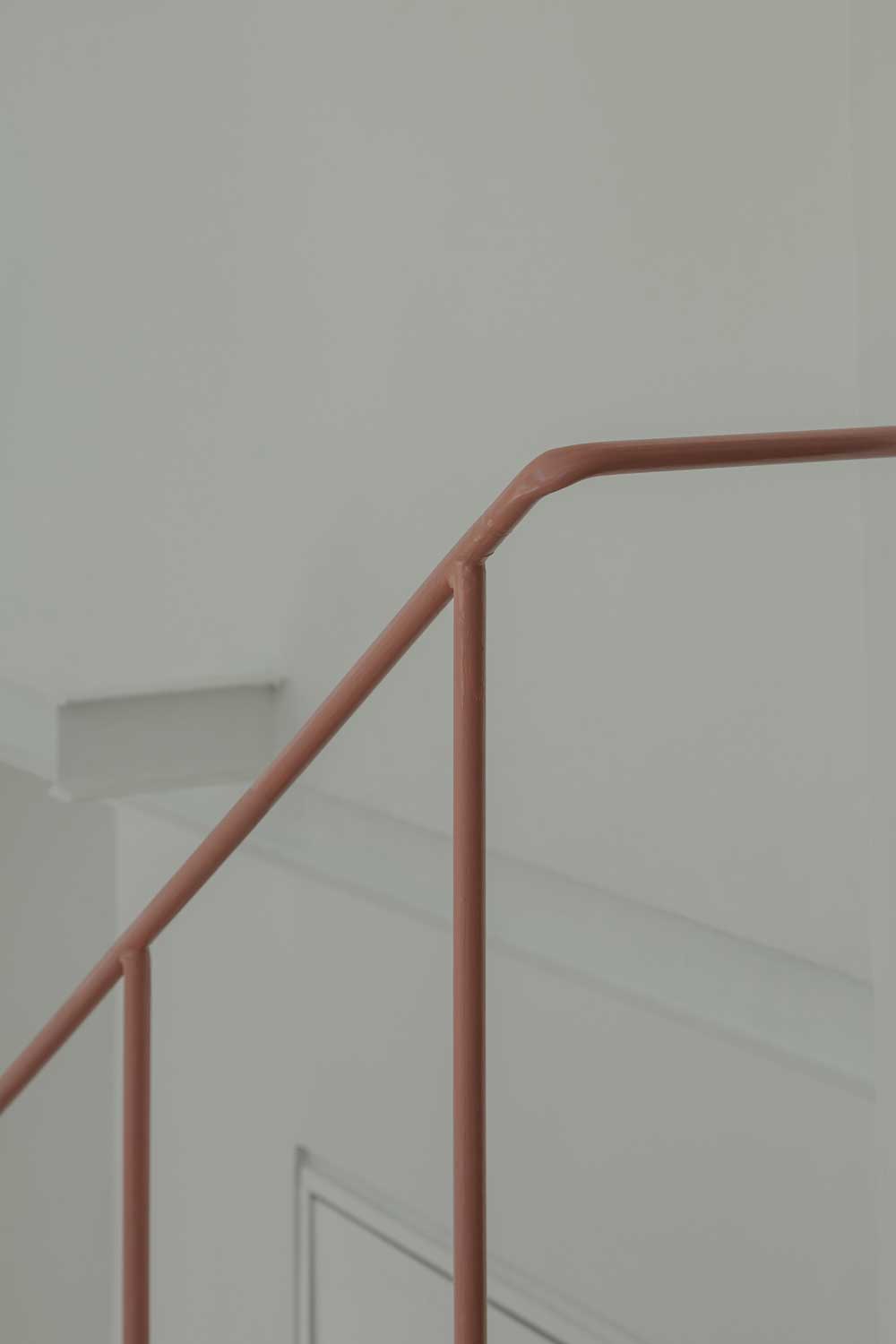
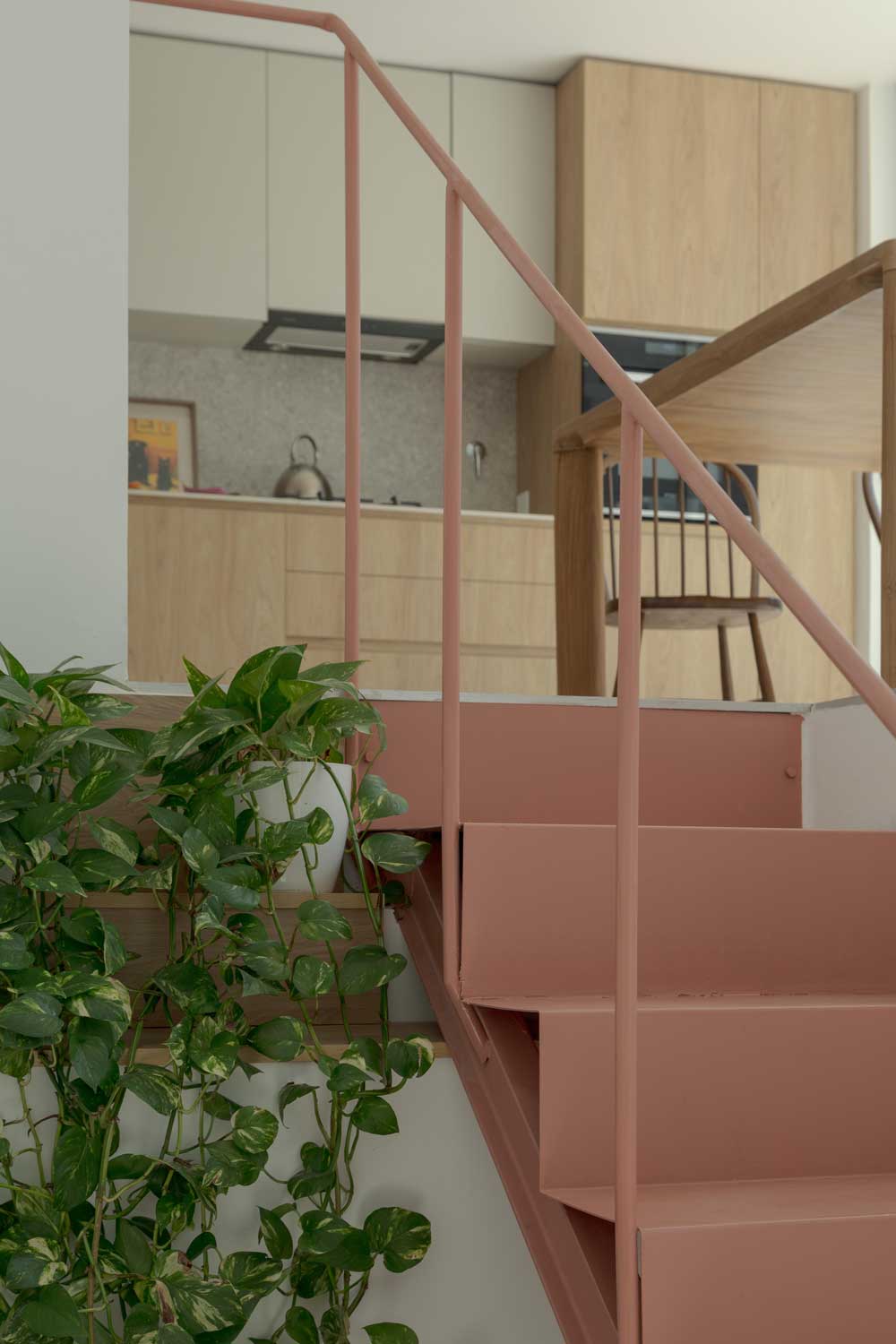
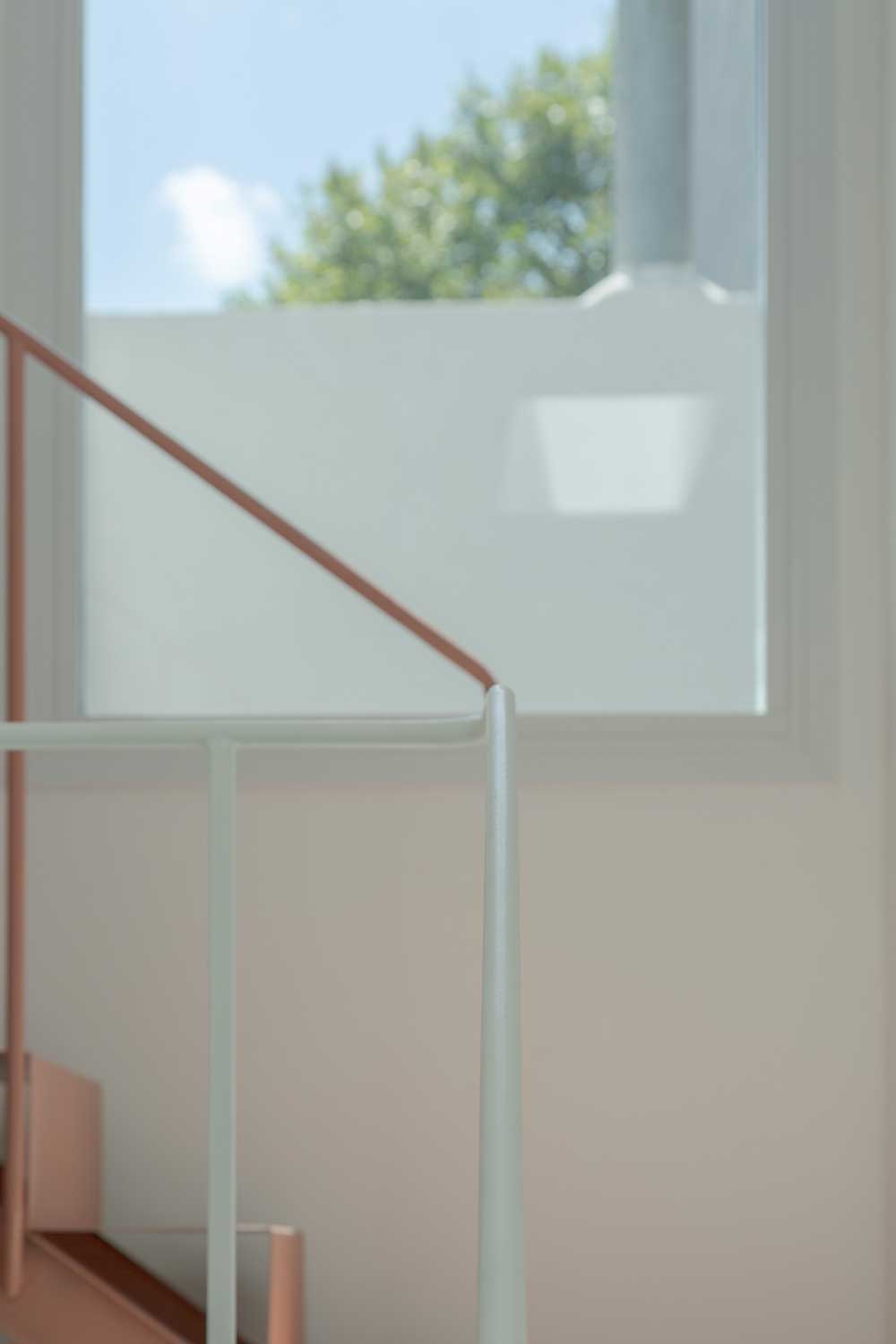
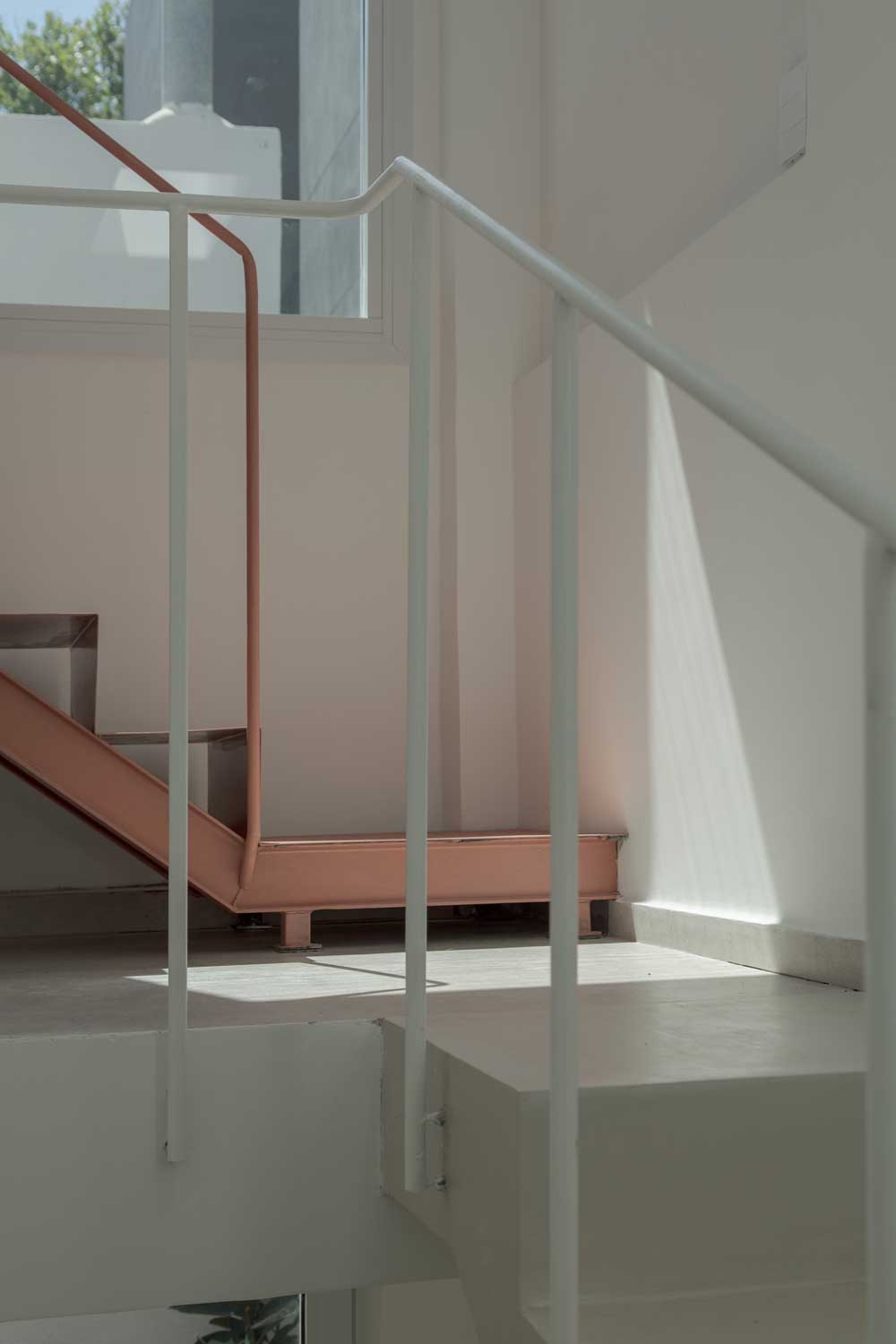
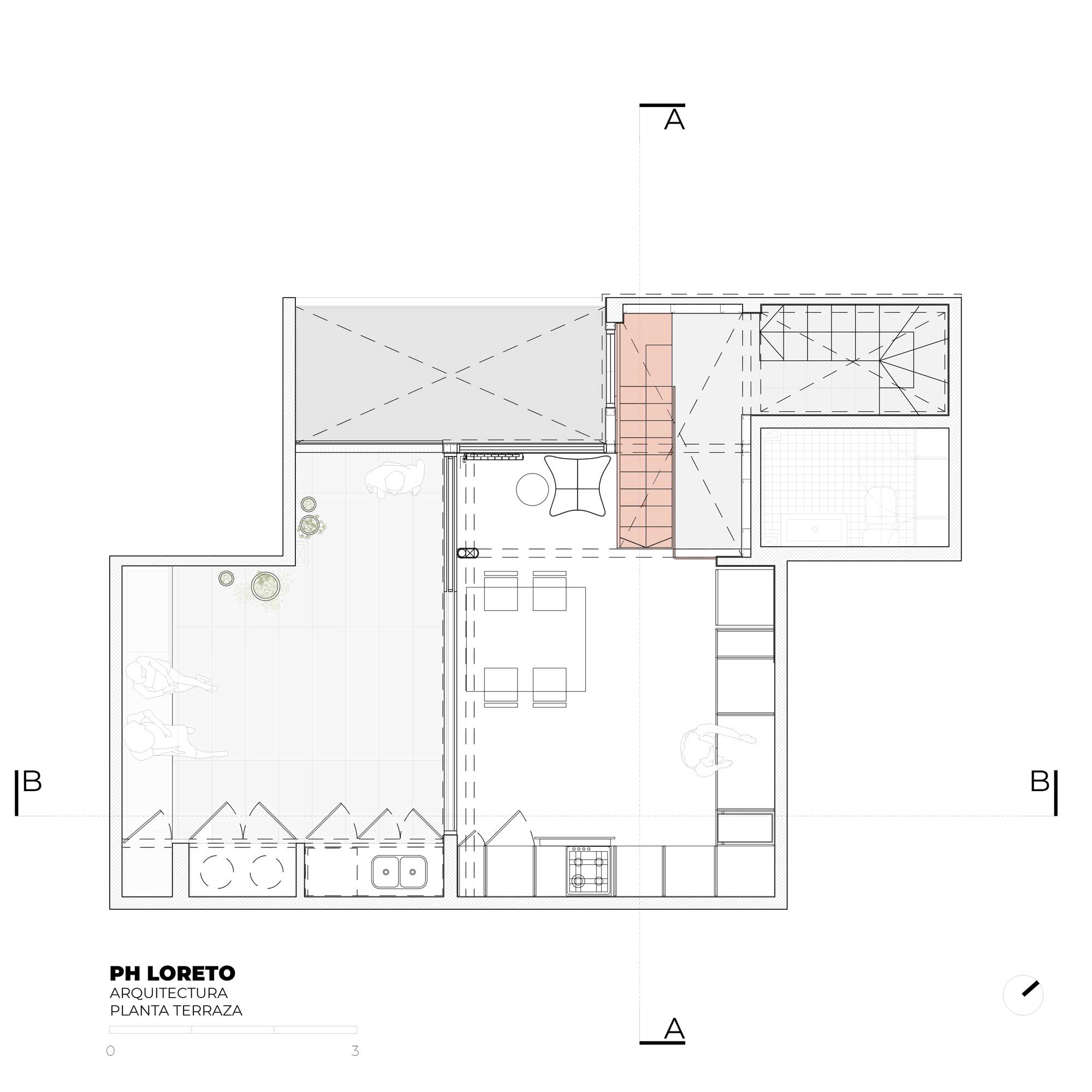
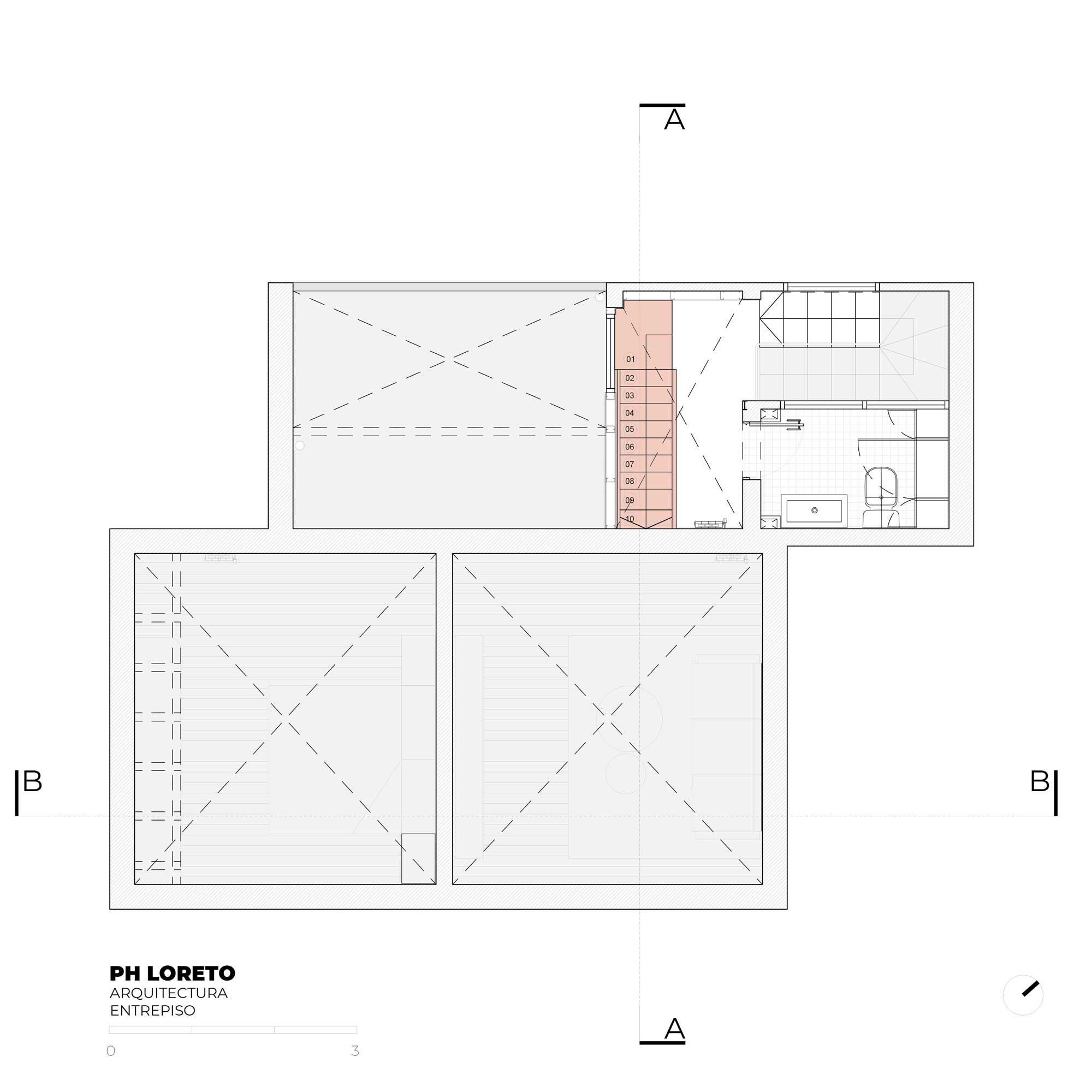
Resuelta en metal y de color rosa viejo, la escalera que vincula el entrepiso y la planta alta se convierte en el elemento por antonomasia que singulariza al PH. Más que un objeto funcional, actúa como una articulación espacial, visual y simbólica: un nodo vital que estructura recorridos, introduce identidad y establece un contrapunto deliberadamente «pop» entre lo nuevo y lo antiguo. Su presencia trasciende lo meramente estético para operar como un elemento relacional, capaz de condensar la energía doméstica del proyecto.
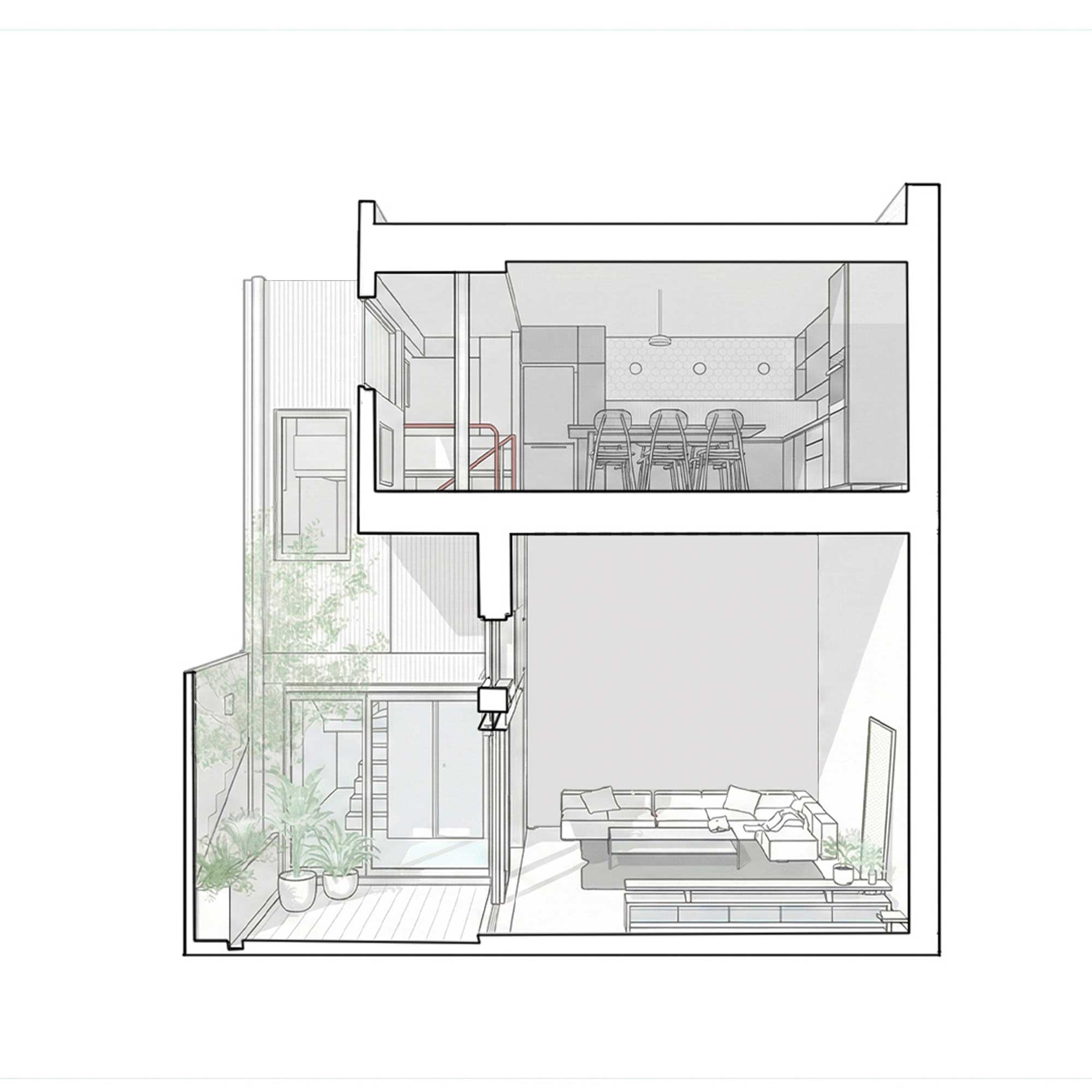
En planta baja se dispone el acceso a la vivienda, el patio y un hall que articula las circulaciones verticales. El entrepiso aloja un toilette de servicio y refuerza la condición de la escalera como objeto central del proyecto: una pieza de geometría clara y color preciso, cuya objetualidad austera condensa el núcleo conceptual de la intervención.
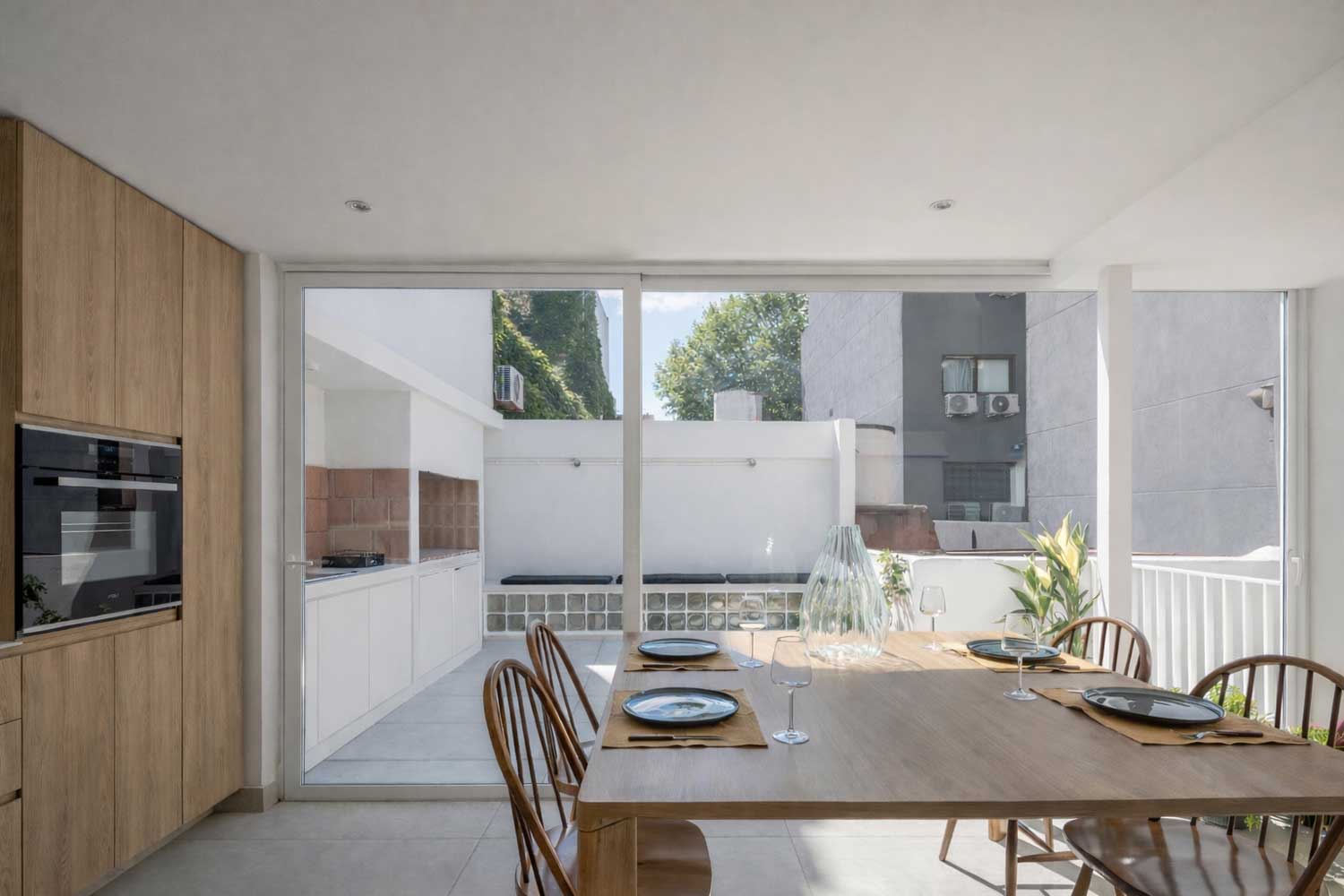
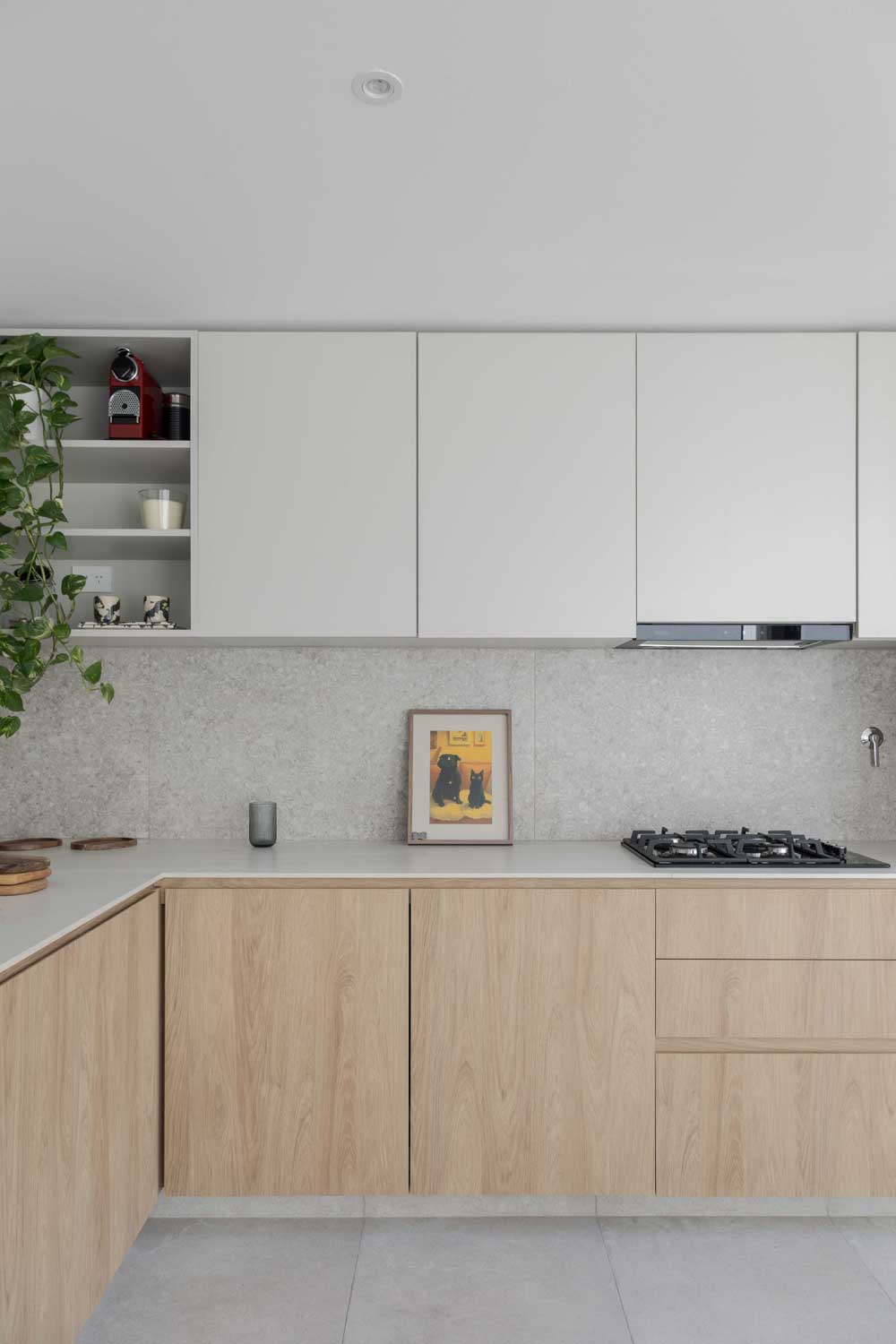
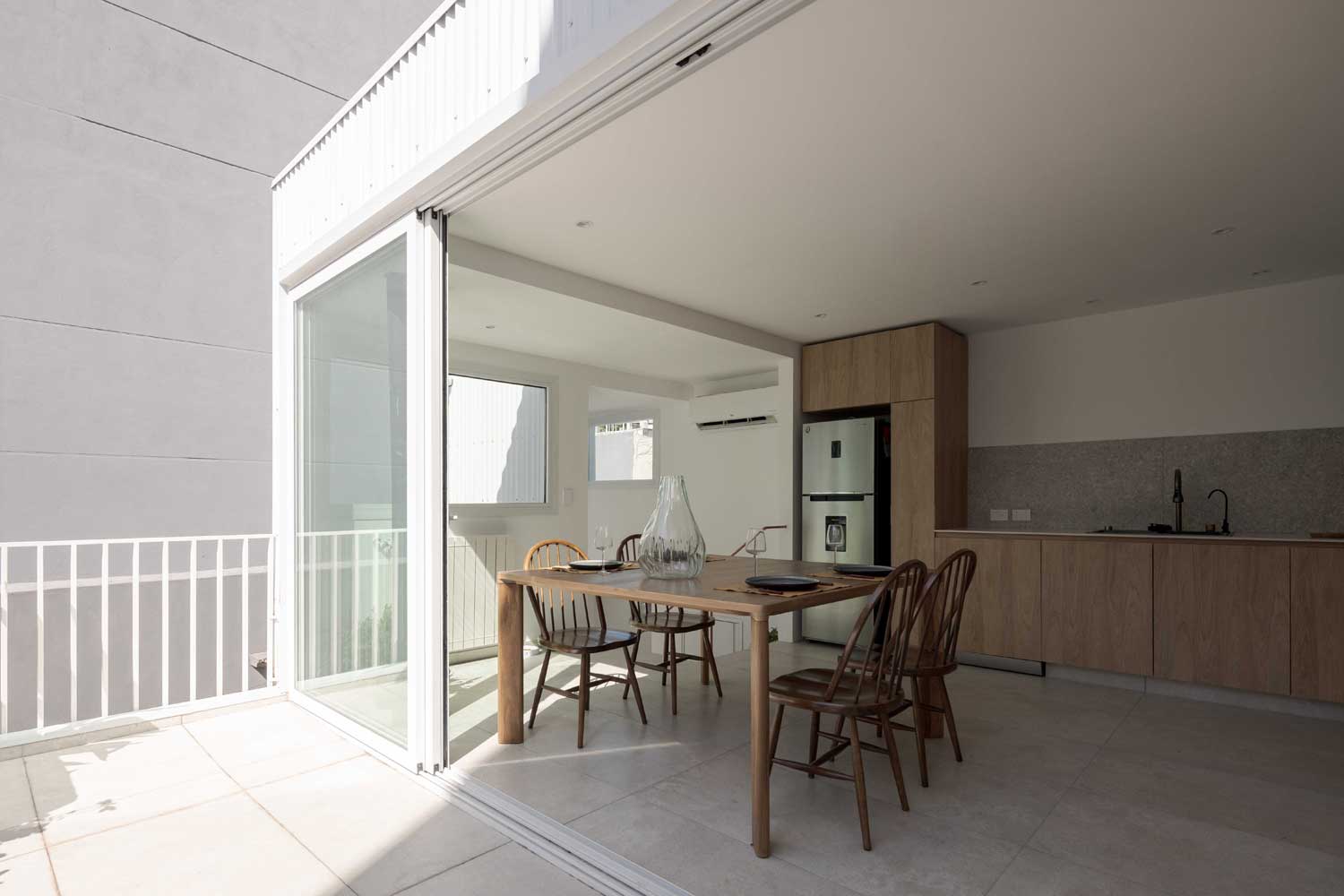
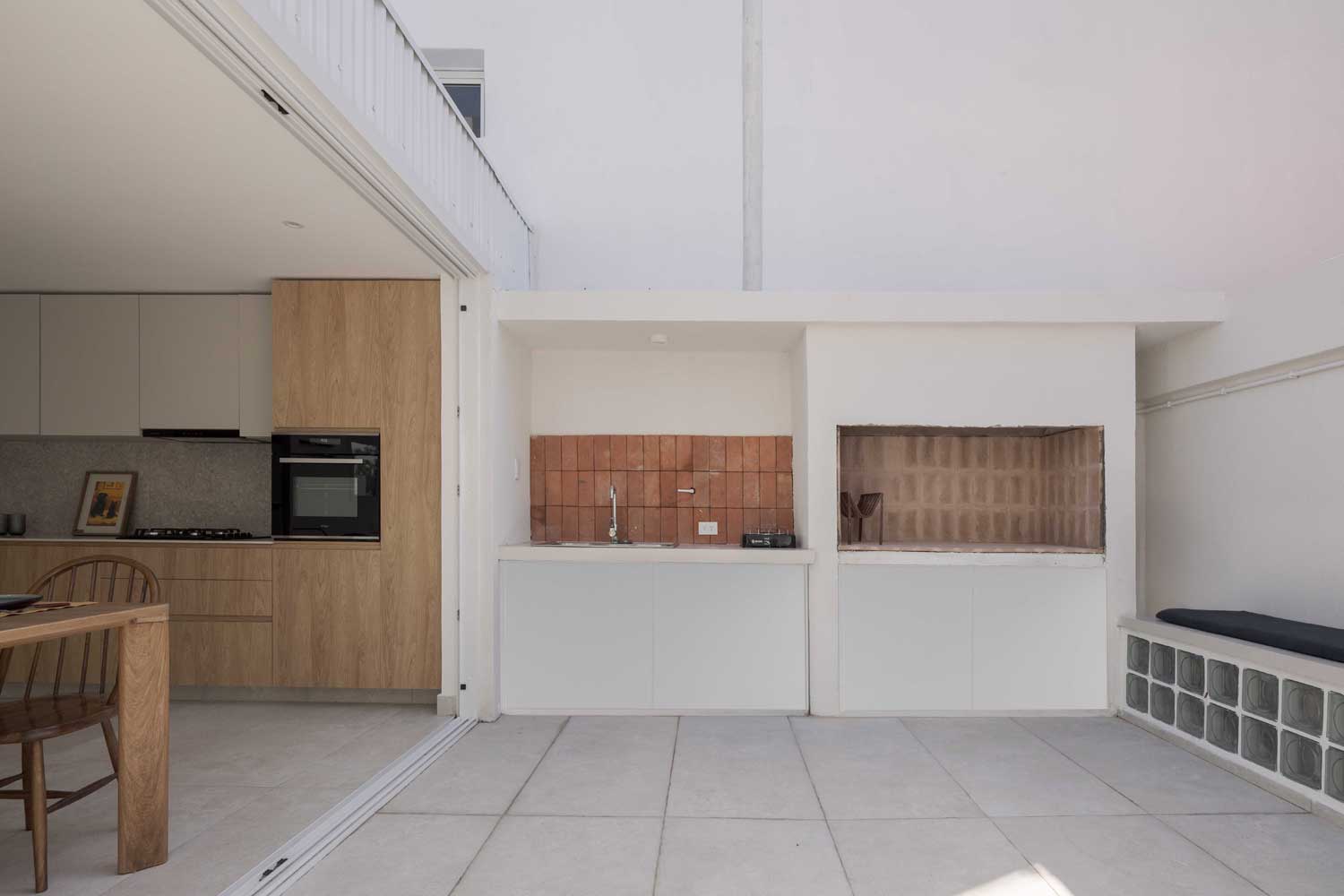
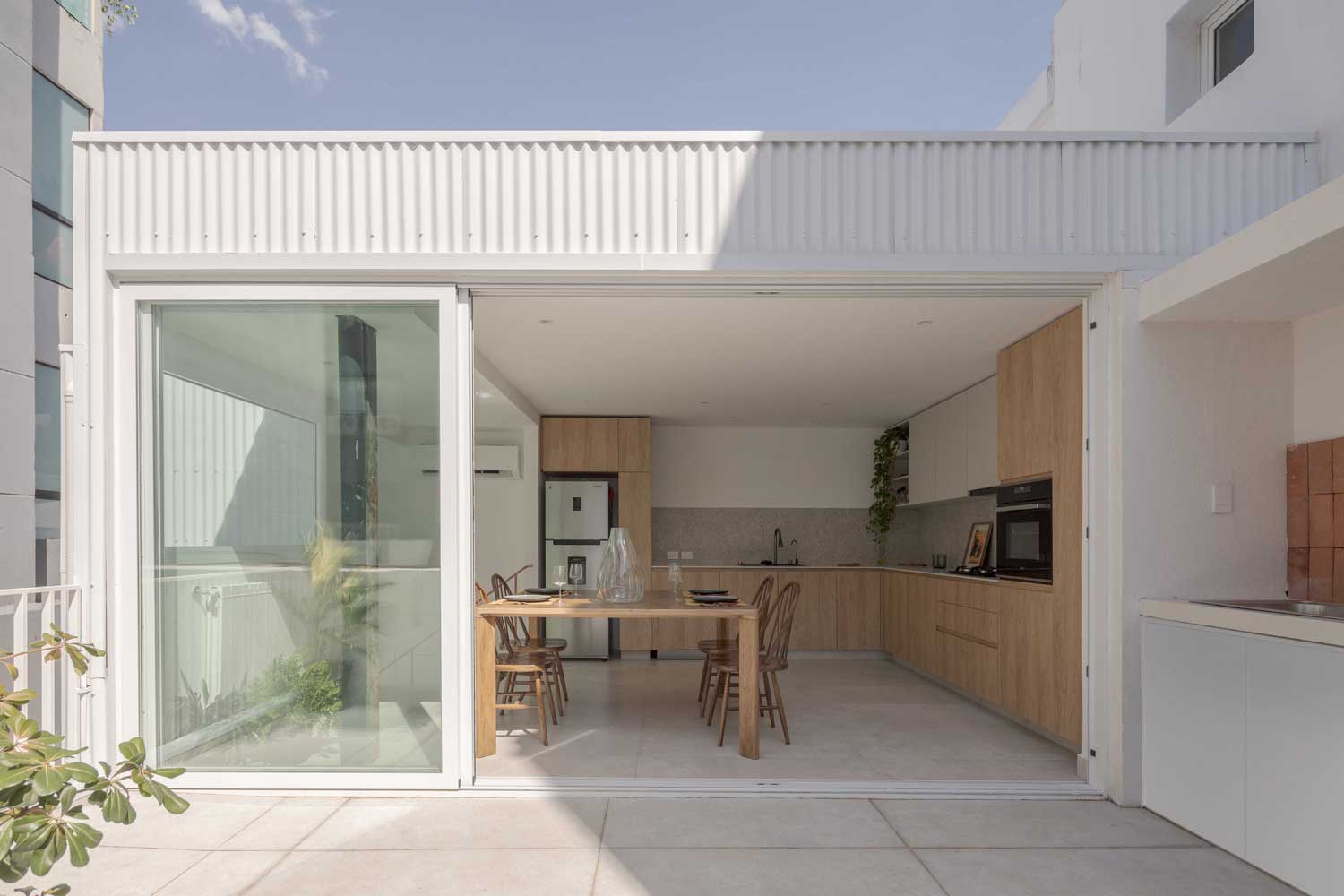
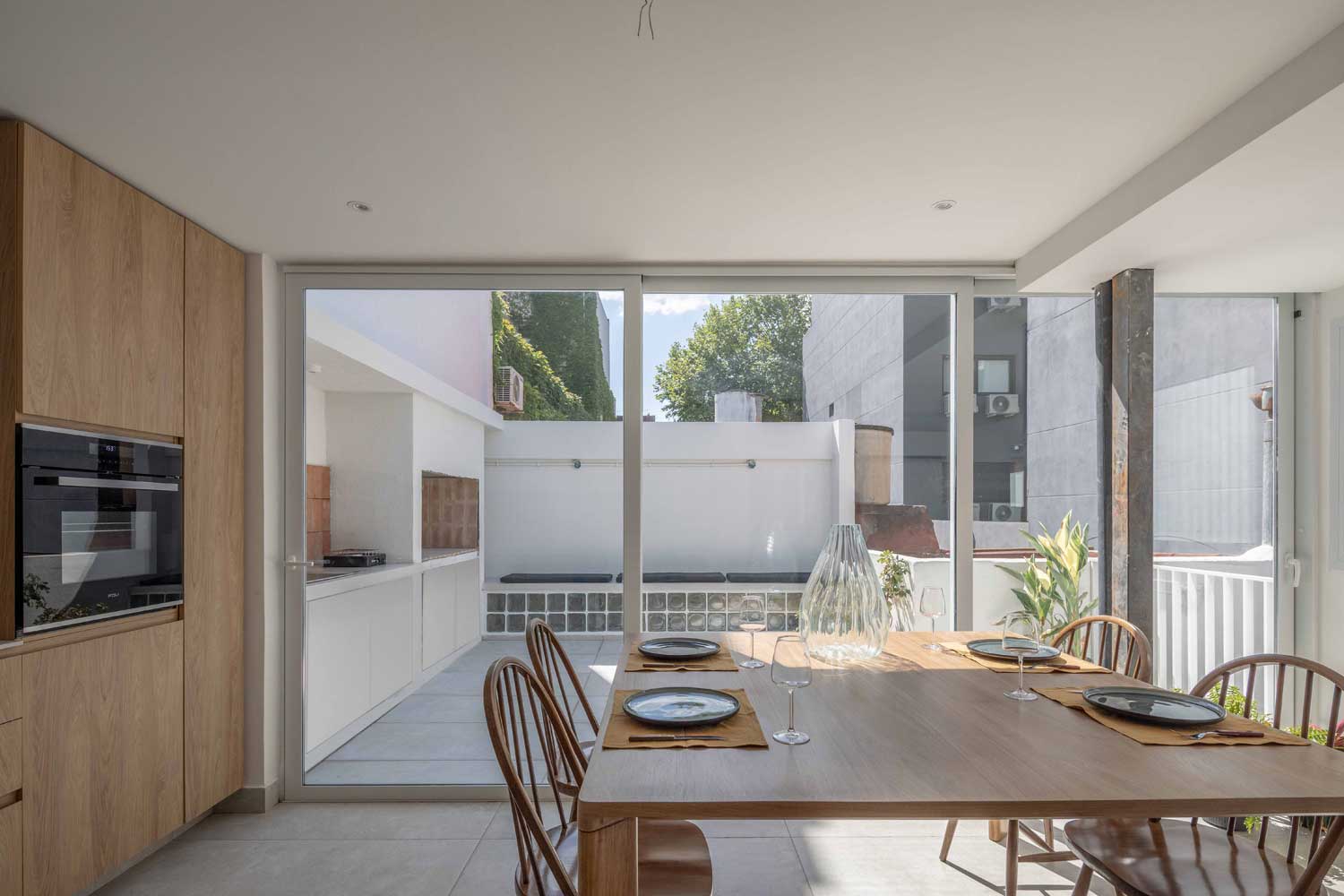
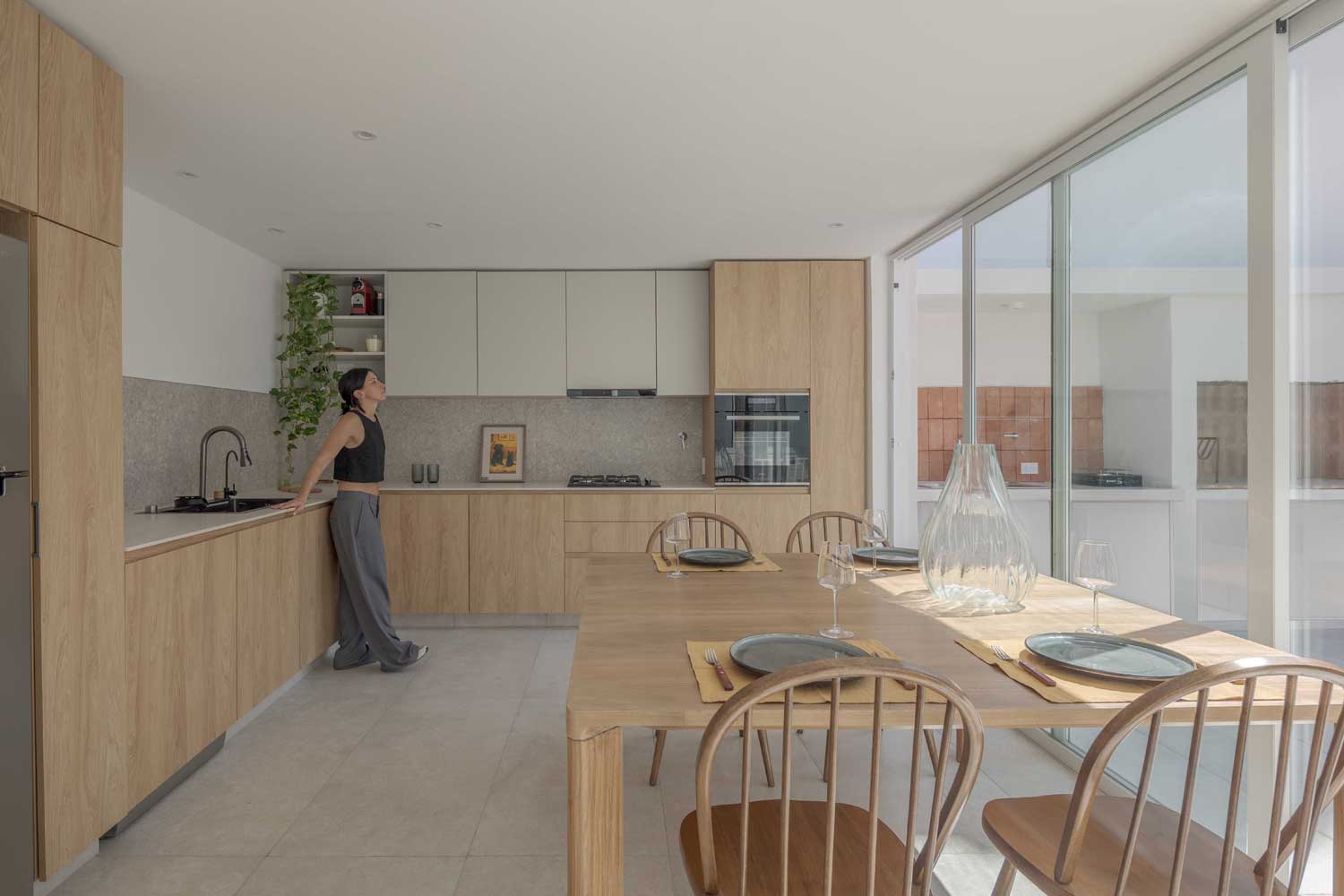
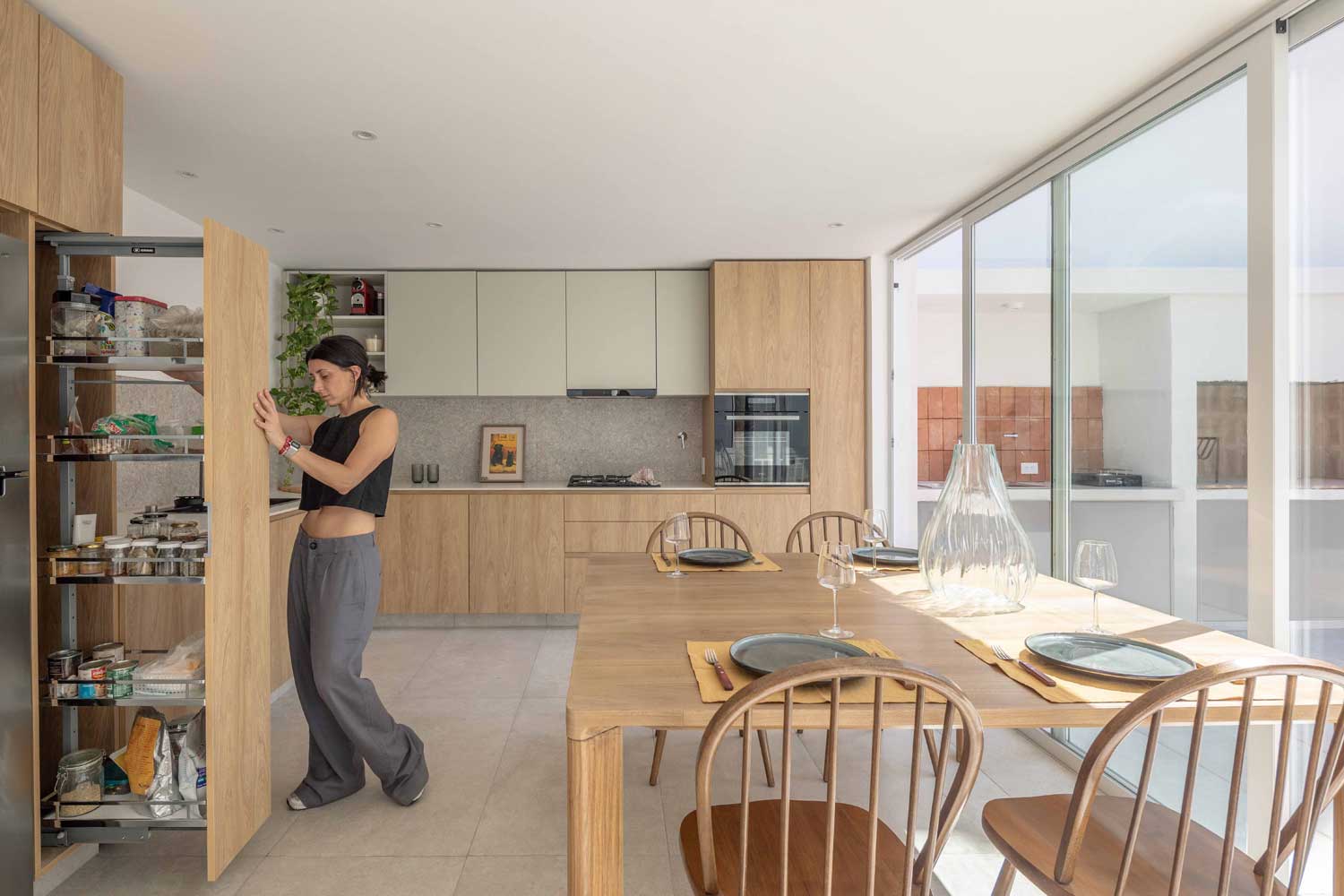
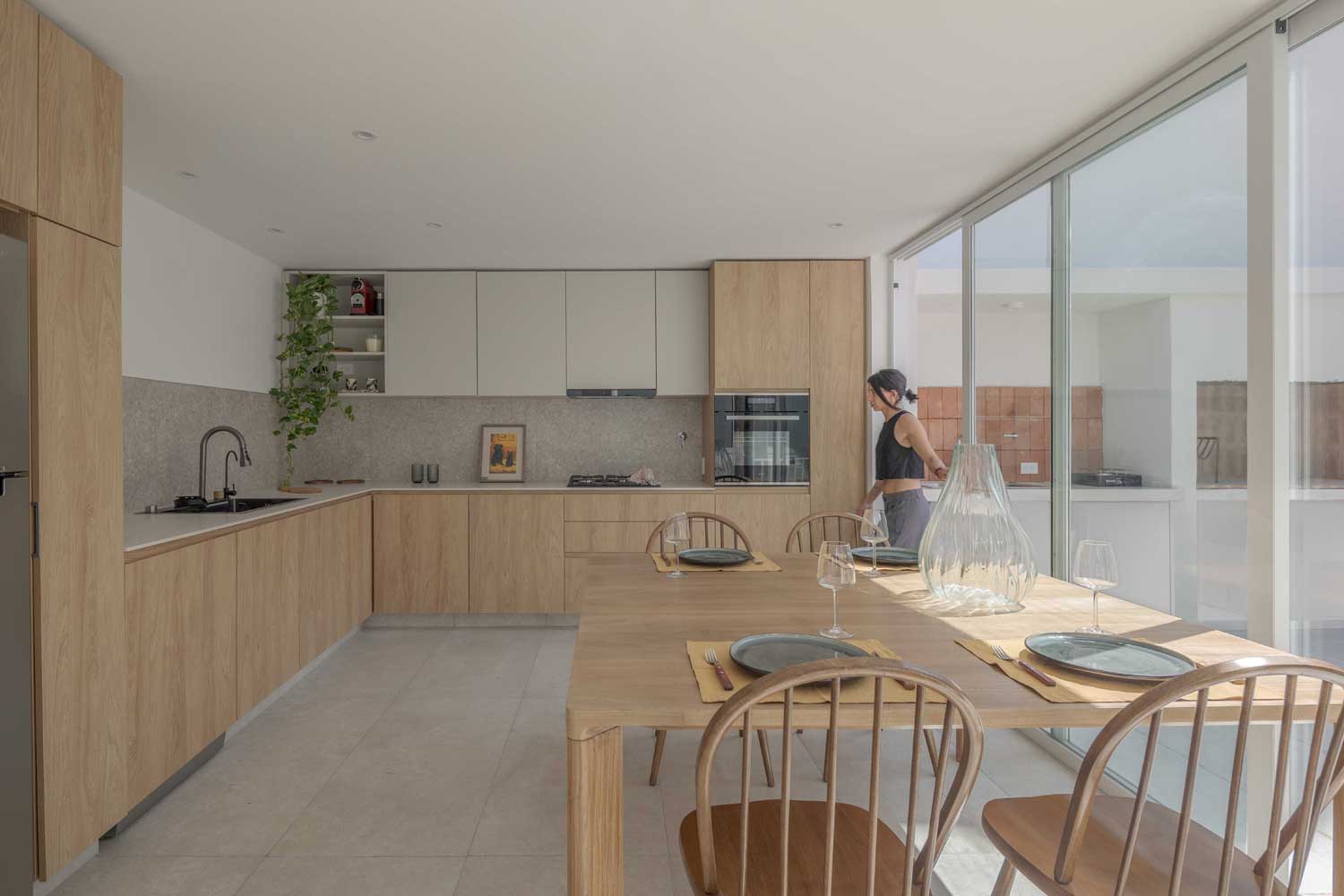
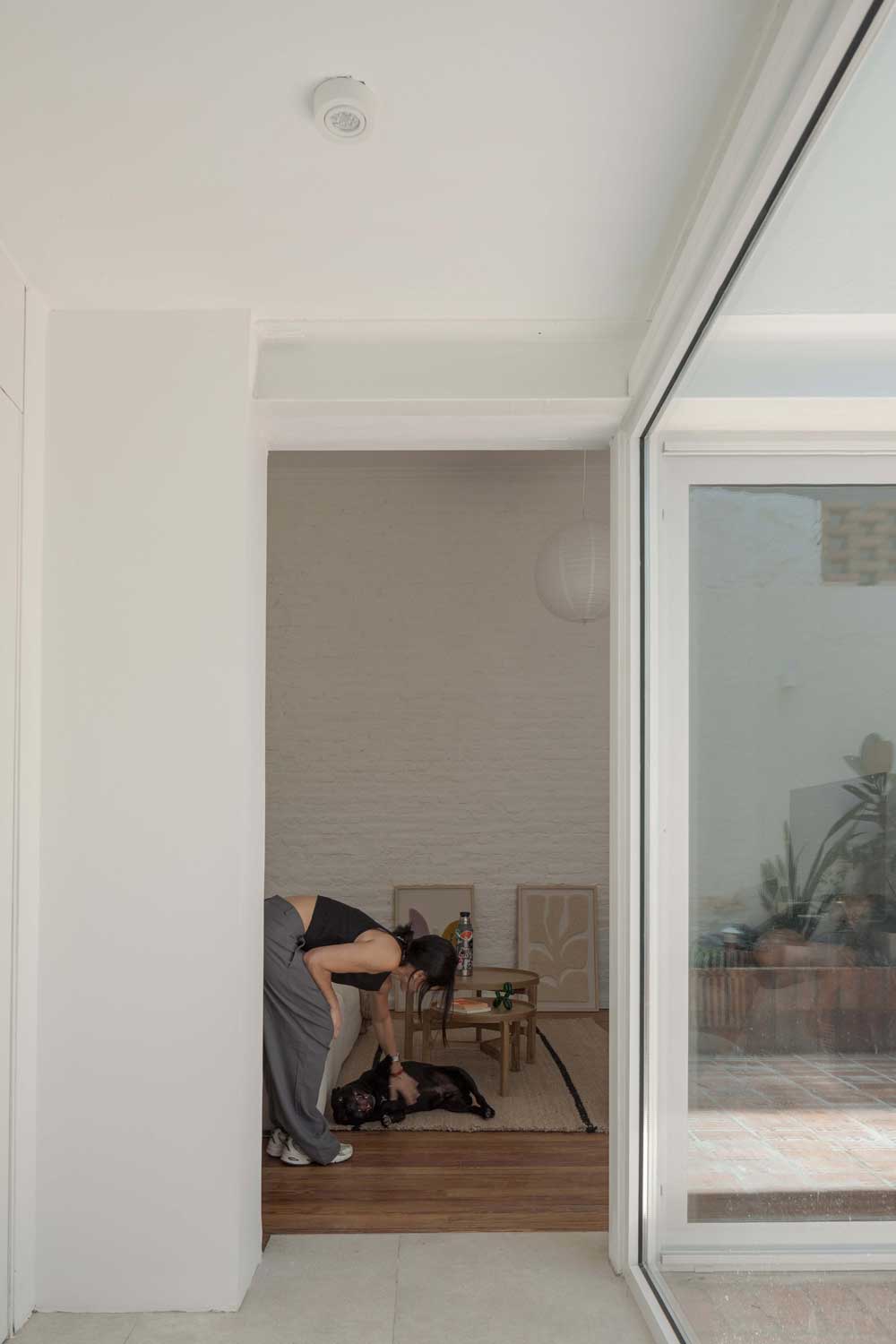
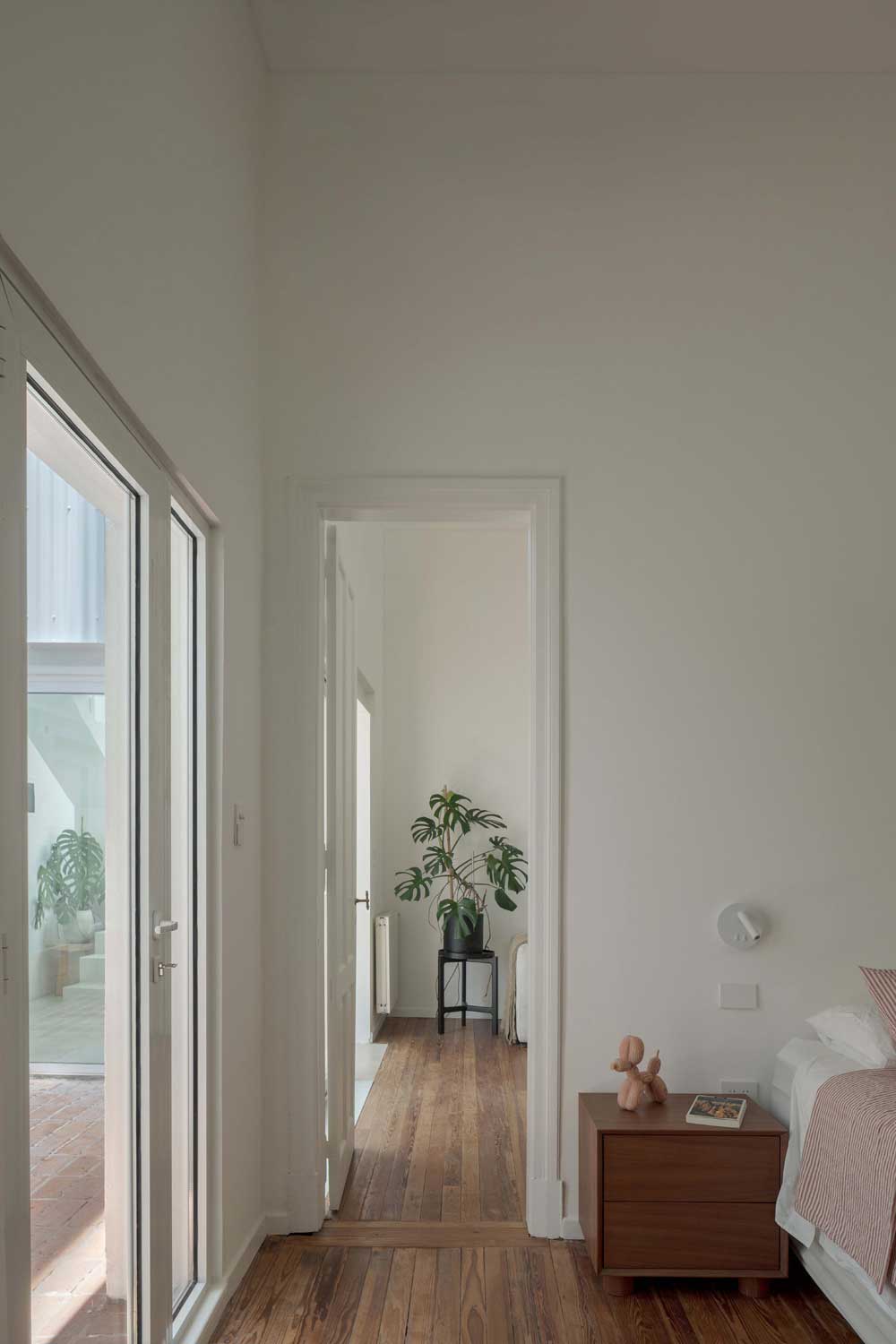
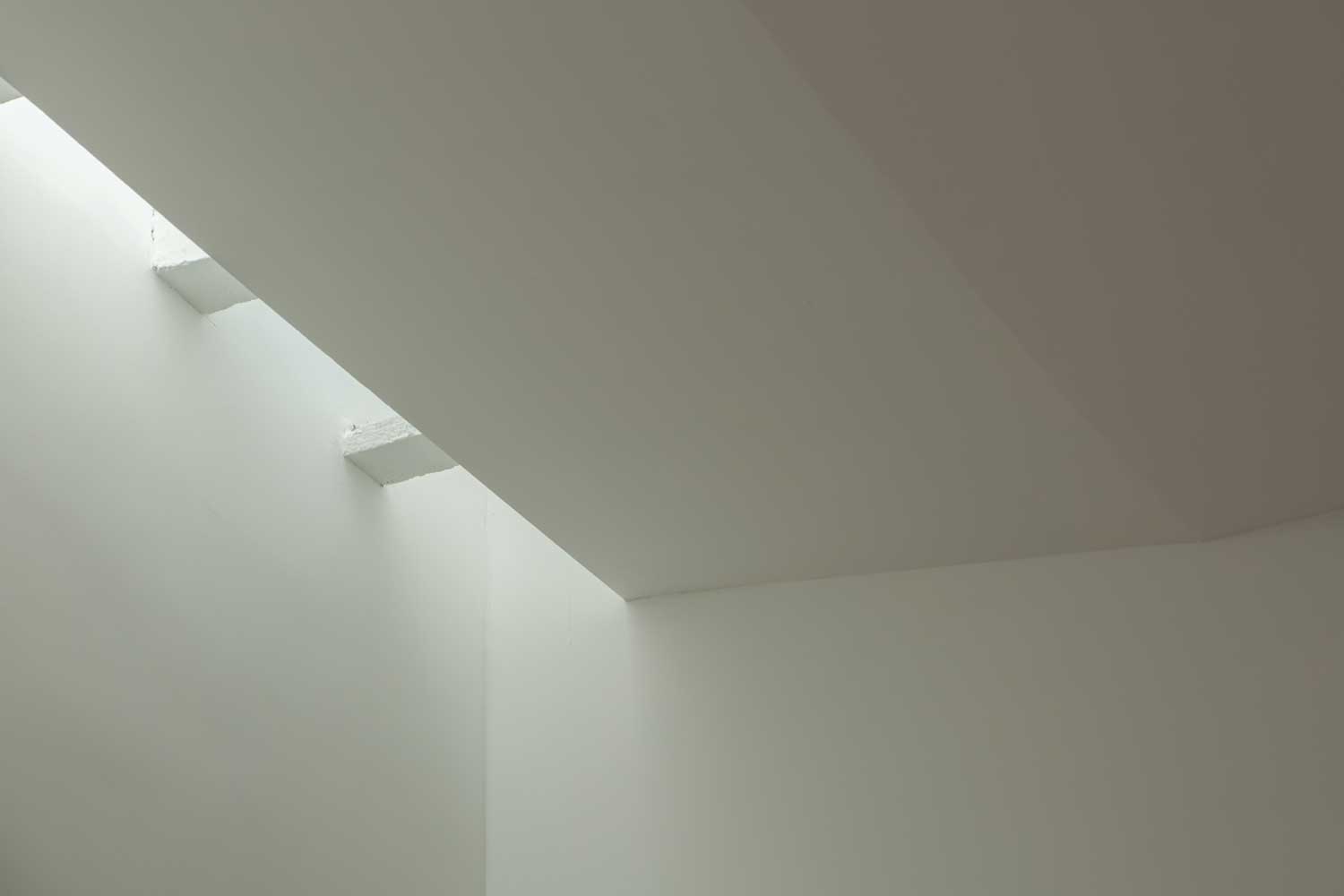
La cocina, el comedor y los principales espacios de estar se trasladan a la planta alta, donde se concentran las mejores condiciones de asoleamiento y ventilación. Generosos ventanales en torno al patio y una larga lucarna que acompaña el dormitorio principal permiten una iluminación homogénea y controlada, construyendo una atmósfera cambiante a lo largo del día. La relación interior-exterior se vuelve fluida, mediada por carpinterías de piso a techo y superficies claras que amplifican la percepción del espacio y refuerzan la continuidad visual hacia la terraza.
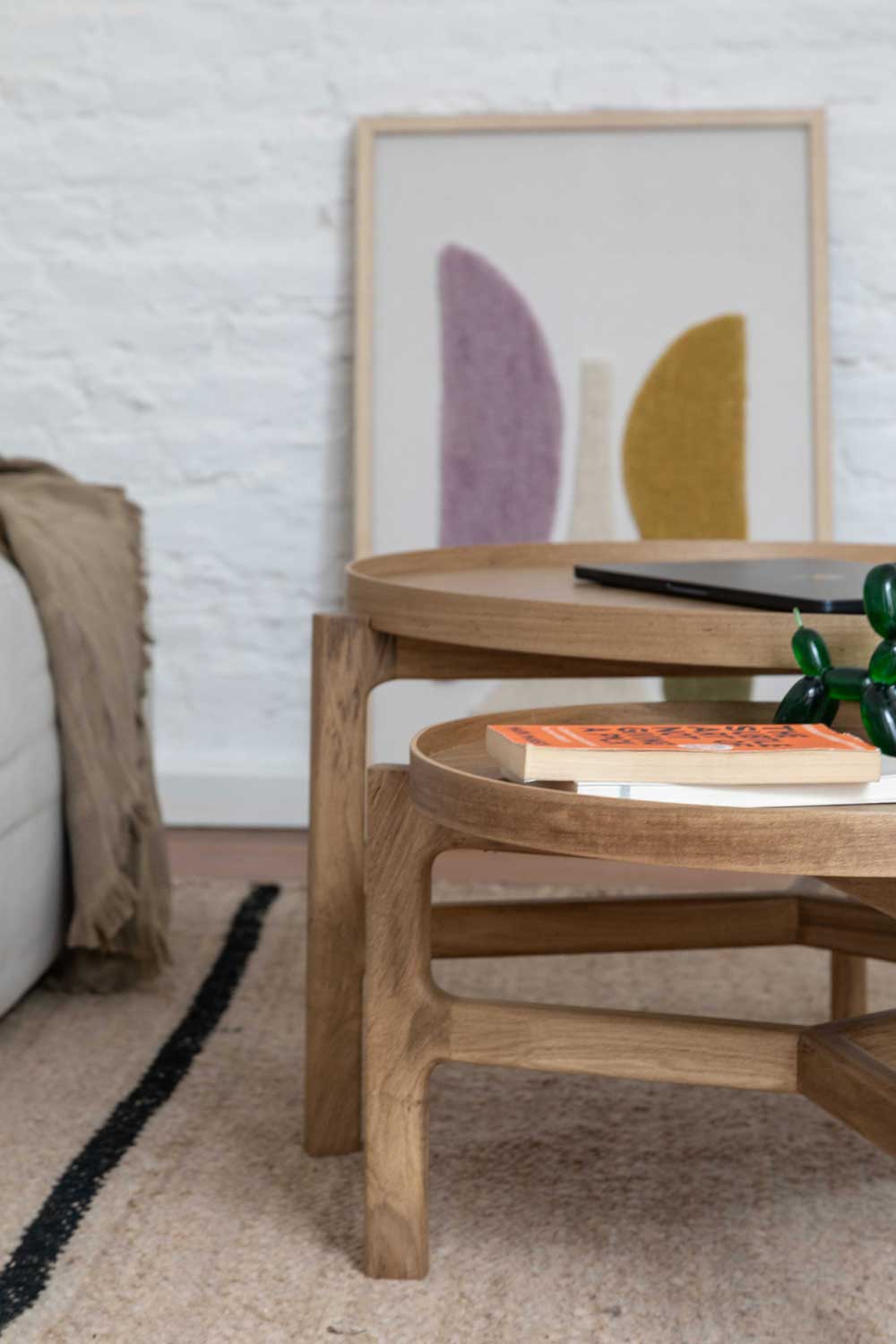
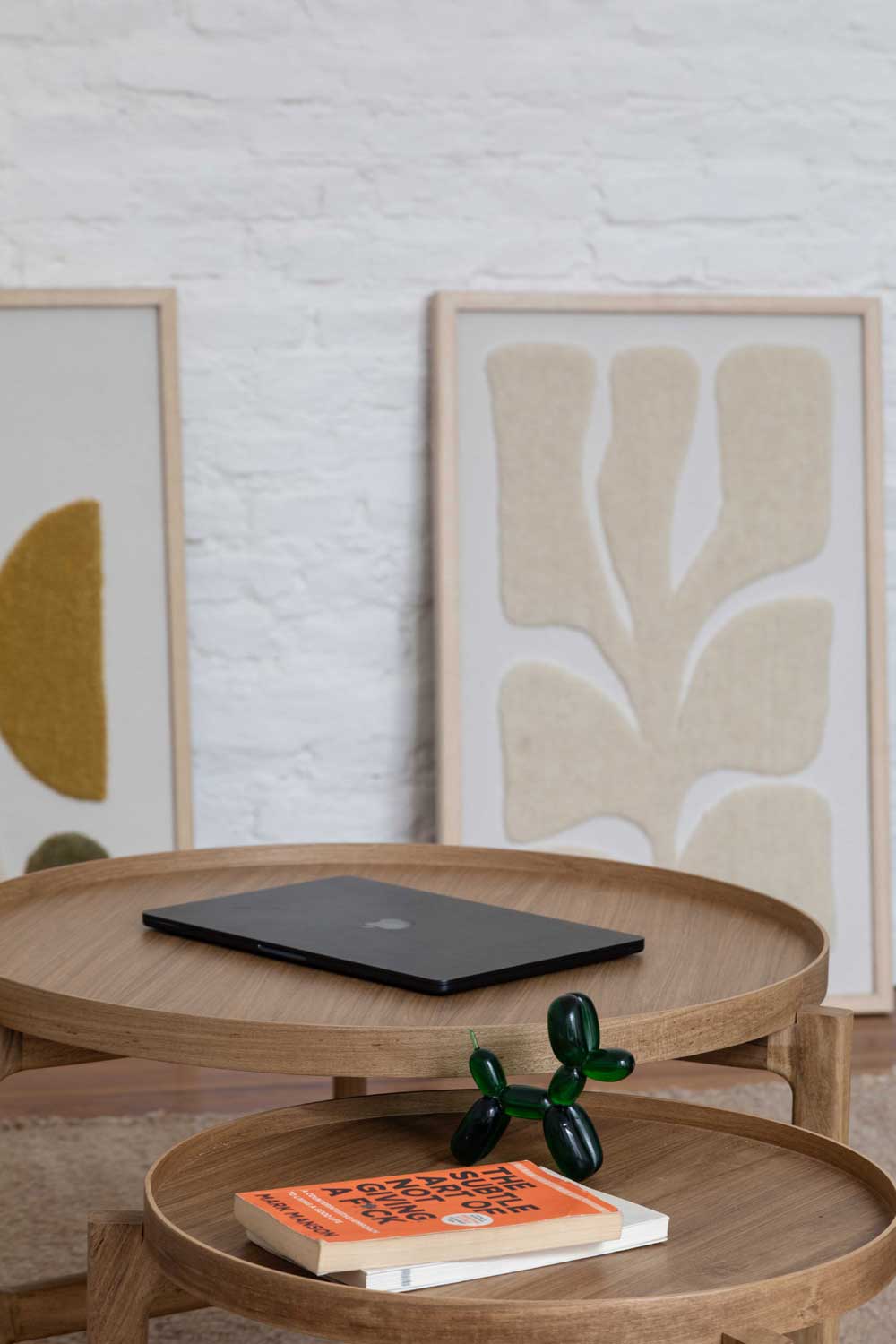
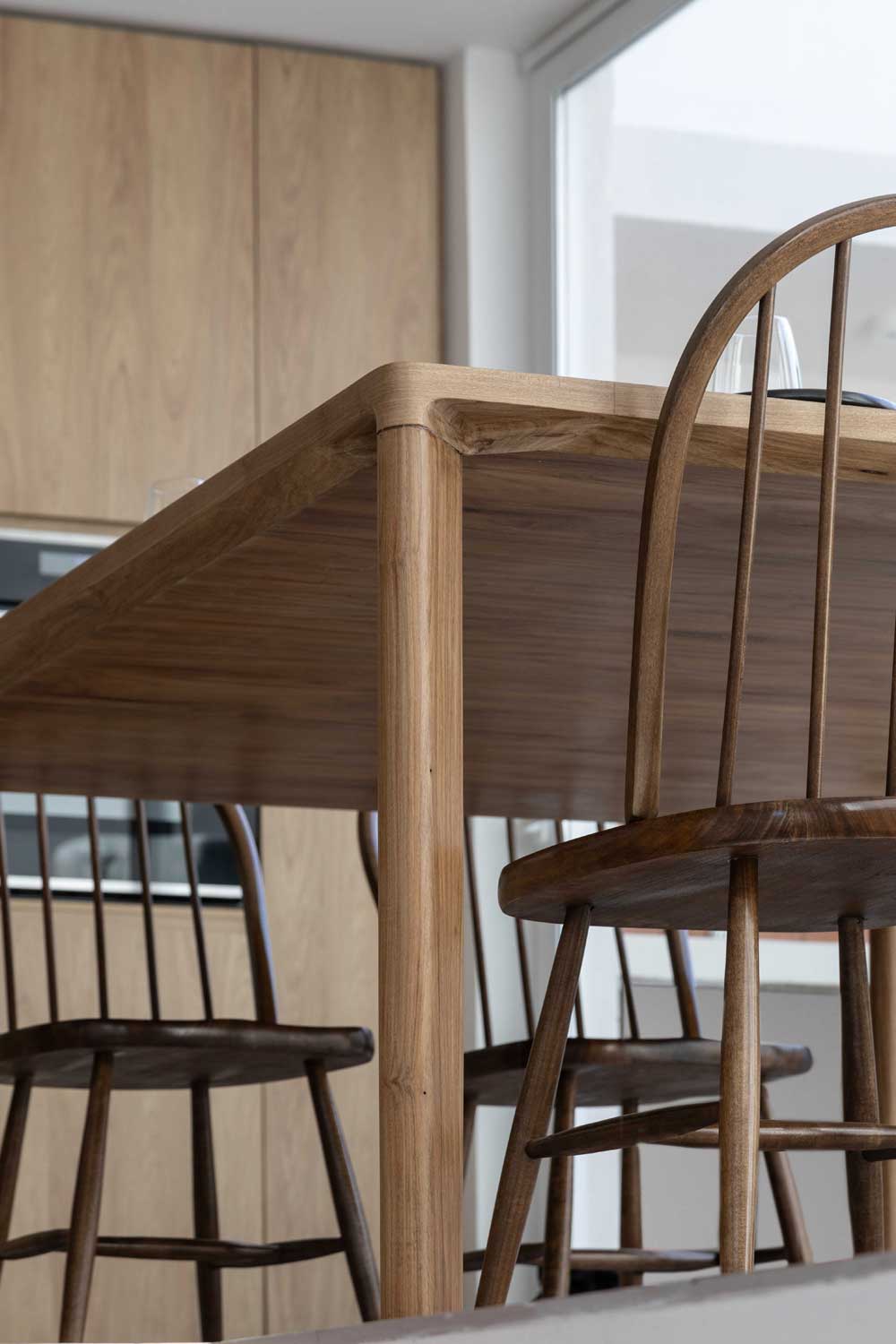
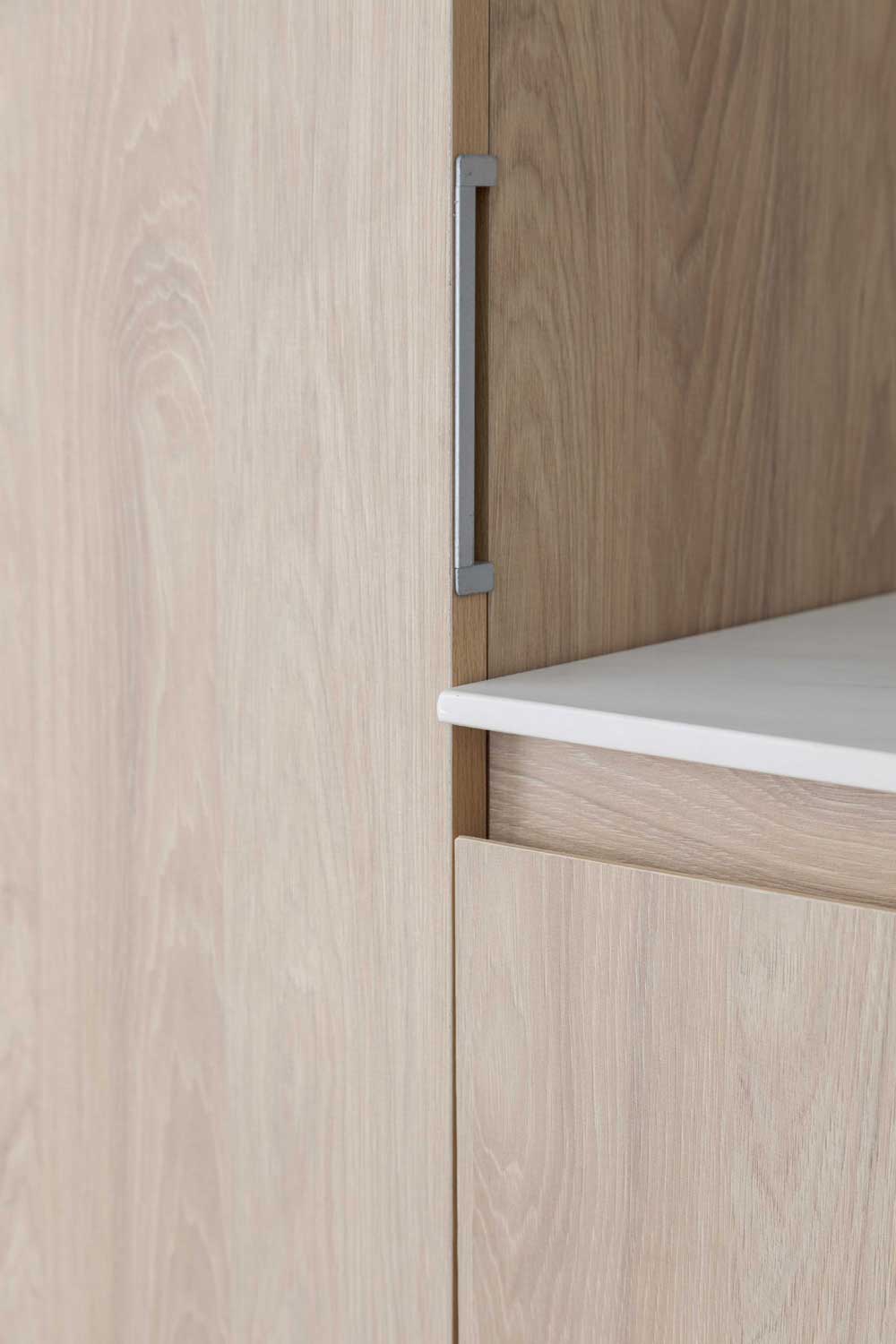
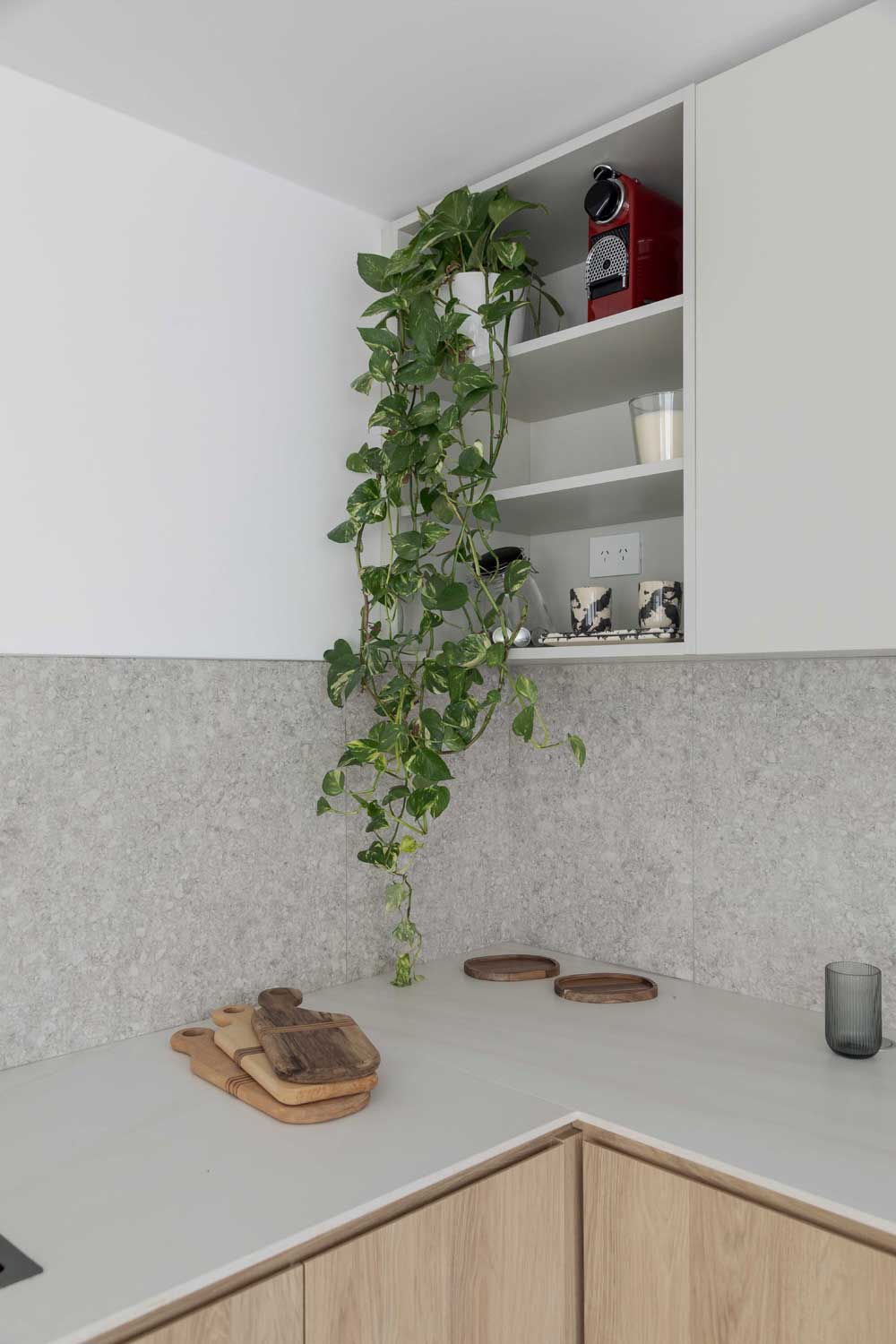
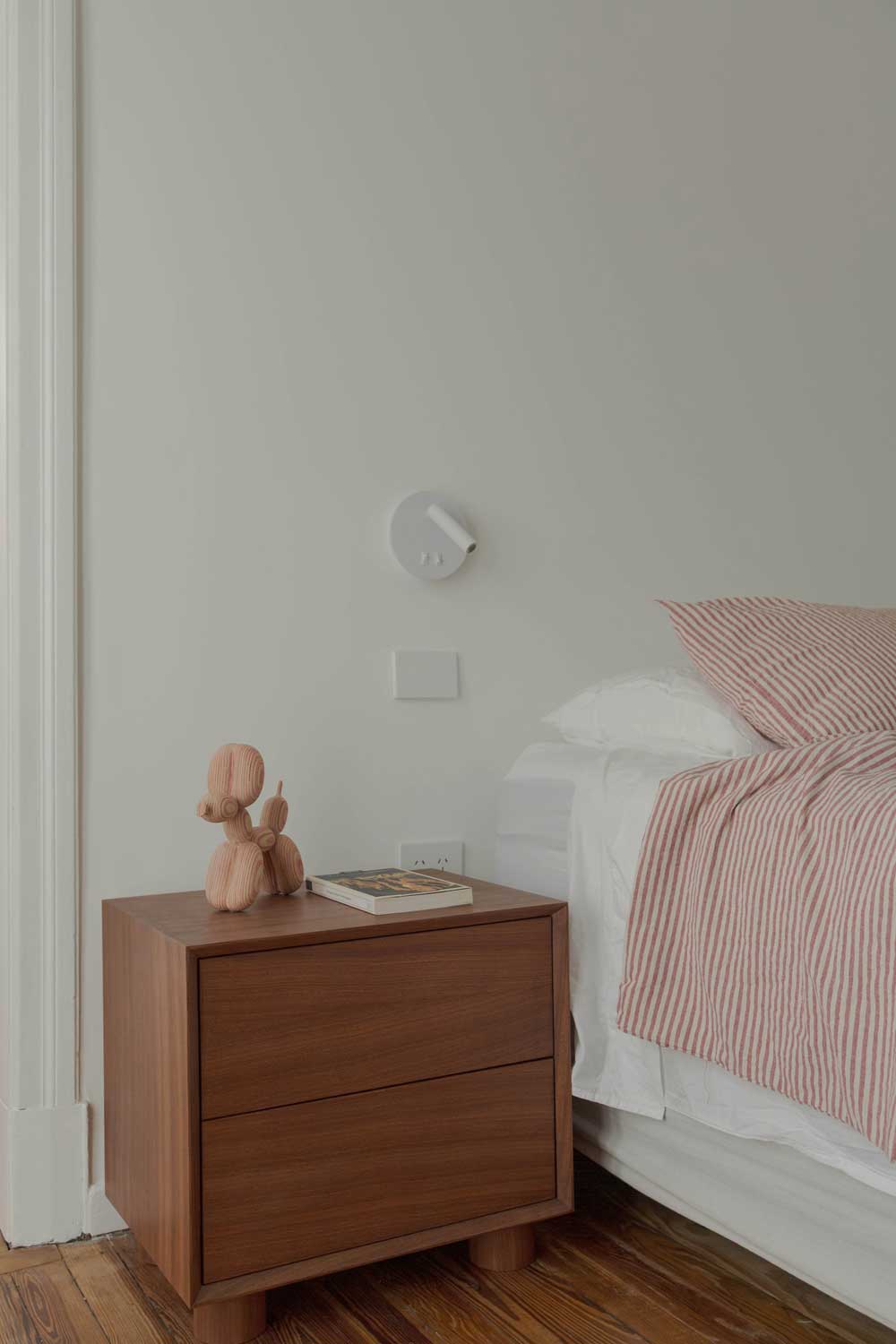
La selección de materiales -madera natural en muebles y equipamientos, superficies neutras, herrerías livianas y cerramientos secos- contribuye a una experiencia fenomenológica serena, donde la arquitectura se retira para dar protagonismo a la luz, al aire y al uso cotidiano. Lejos de una acumulación de gestos, el proyecto construye su identidad desde la coherencia material y la precisión constructiva.
Lejos de idealizar el pasado, el proyecto lo asume como una base sobre la cual mejorar decisiones, potenciar relaciones espaciales y ajustar disposiciones funcionales. En PH Loreto, el vacío no es ausencia, sino oportunidad: un recurso arquitectónico que permite volver a habitar la metrópolis desde la ligereza, la luz y la experiencia cotidiana del espacio.
Ficha técnica
Nombre: PH Loreto
Ubicación: Colegiales, Ciudad de Buenos Aires, Argentina
Proyecto y Dirección: OADD arquitectos
Arquitectos a cargo: Arq. Andrés Barone, Arq. Fabricio Contreras Ansbergs
Colaboradores: Tomás Aguirre, Lucía Giachello
Construcción: JC Construcciones
Estructuras: Ing. Diego Bortz
Interiorismo: OADD + Casa Baldo
Mobiliario: Gastón Bilo Studio
Superficie: 110 m2
Año: 2025
Fotografías: Bruto Studio
English version
The PH Loreto project corresponds to the comprehensive renovation of a single-family residence, the fourth of five functional units that form a typical PH ensemble in the Buenos Aires neighborhood of Colegiales. It is a mid-20th-century construction that, like many others, had undergone successive partial interventions aimed at gaining enclosed floor area, to the detriment of spatial quality, natural daylight, and cross-ventilation.
The intervention stems from a specific request by the owner: to reorganize the residence to respond to contemporary living dynamics, integrating differentiated areas for living and working, and restoring the possibility of enjoying domestic time, light, and air. Within a consolidated and dense urban fabric, the project treats these conditions not as limitations but as a field for precise architectural operations.
From its structural conception, the proposal adopts a clear strategy: to layer the new onto the existing with the greatest economy of means. The addition is resolved through a lightweight volume built in steel frame construction, precisely placed over the original load-bearing masonry structure. This decision responds not only to technical and construction criteria but also establishes a deliberate dialogue between two architectural timeframes. The new rests without imposing, generating a duality in which contemporary lightness enhances the solidity of the preexisting.
The immediate context presents two contrasting situations: on one hand, a large adjoining building that acts as an opaque backdrop over the accesses and circulation of the ensemble; on the other, a vine covering the neighboring party wall, capable of filtering light and introducing an unexpected botanical dimension into the lot. Between these contingencies and opportunities, the design strategy is articulated around a central idea: treating void as architectural matter.
Windows are conceived as elements of visual continuity, the patio as the spatial and climatic articulator of daily activities, and the terrace as a node for expansion and leisure. This sequence of voids not only organizes the program but also establishes a silent resistance against urban hyper-density and the logic of stacking small units around closed circulation cores. The renovation of the PH thus operates as a statement on the quality of metropolitan habitat, a micro-surgery that recovers air, light, and domestic scale where they had been annulled.
Inside, the material intervention follows a logic of refinement and enhancement of the existing. Original masonry walls are stripped to reveal the rough texture of the old brick, later unified with a continuous white finish that amplifies natural light and reinforces the abstract reading of space. This material palette dialogues with the reused pinotea flooring, whose presence brings warmth and memory, establishing a precise counterpoint between the rough and the tactile, between the structural and the domestic.
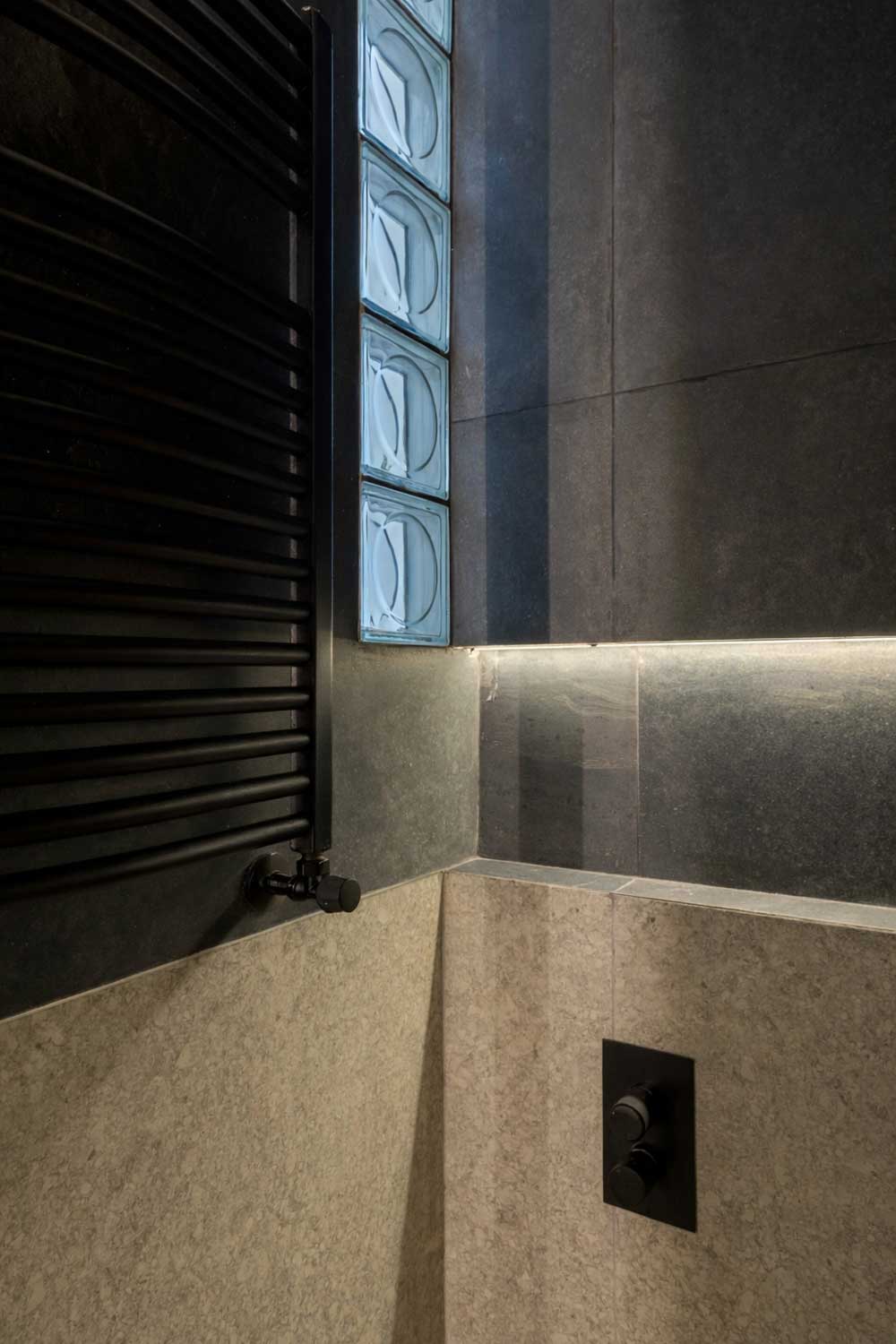
One of the project’s fundamental gestures is the relocation of the staircase. The original stair was demolished, but its traces remain visible on the walls, not as a nostalgic gesture, but as an acknowledgment of the constructive lineage of the place. The former kitchen gives way to a new stair linking the ground floor with the mezzanine, conceived as a simple succession of steps bathed in natural light. Along its path, small voids, skylights, and strategically placed windows allow light to penetrate deeply, reaching bathrooms and intermediate spaces, and marking the passage of the day through the shifting incidence of the sun.
Built in metal and finished in dusty pink, the staircase connecting the mezzanine and the upper floor becomes the defining element of the PH. More than a functional object, it acts as a spatial, visual, and symbolic hinge: a vital node that structures circulation, introduces identity, and establishes a deliberately pop counterpoint between old and new. Its presence transcends the aesthetic to operate as a relational device capable of condensing the domestic energy of the project.
On the ground floor are located the entrance to the residence, the patio, and a hall that articulates vertical circulation. The mezzanine houses a service restroom and reinforces the role of the staircase as the project’s central object: a piece of clear geometry and precise color whose austere objecthood concentrates the conceptual core of the intervention.
The kitchen, dining room, and main living spaces are relocated to the upper floor, where the best conditions of sunlight and ventilation are concentrated. Generous windows opening onto the patio and a long skylight running alongside the primary bedroom provide uniform and controlled lighting, building a shifting atmosphere throughout the day. The interior-exterior relationship becomes fluid, mediated by floor-to-ceiling glazing and light surfaces that amplify spatial perception and reinforce visual continuity toward the terrace.
The selection of materials -natural wood in furnishings and millwork, neutral surfaces, lightweight metalwork, and dry enclosures- contributes to a serene phenomenological experience in which the architecture withdraws to foreground light, air, and everyday use. Far from an accumulation of gestures, the project builds its identity through material coherence and constructive precision.
Rather than idealizing the past, the project treats it as a foundation upon which to improve decisions, enhance spatial relationships, and adjust functional layouts. At PH Loreto, void is not absence but opportunity: an architectural resource that enables reinhabiting the metropolis through lightness, daylight, and the everyday experience of space.