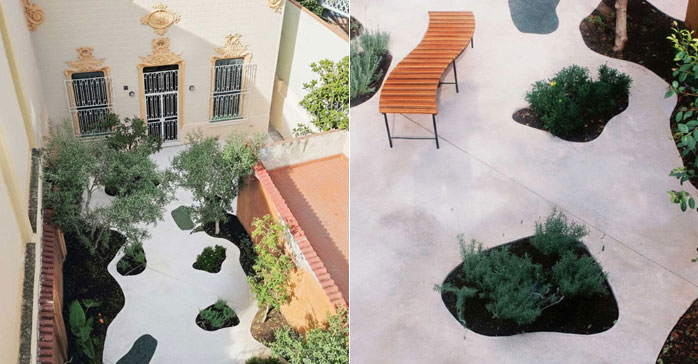
Jardín en las Nubes (Gràcia, Barcelona, España) por h3o Architects. Proyecto de paisajismo que, a partir del nacimiento de la hija de los propietarios, transforma un jardín delantero pavimentado e impermeable en un territorio vivo y permeable de fantasía cotidiana inspirado en el universo simbólico del cuento «Jack y la judía mágica».
-Papá, ¿me vuelves a leer Jack y la judía mágica?- Y así, casi cada noche.
Es el cuento favorito de Claudia. Jack, una familia pobre, una habichuela plantada en la tierra, un tallo que crece hasta las nubes, gigantes que lo persiguen, la carrera final, el corte justo a tiempo… y, al final, todo acaba bien.
-¿Me lo vuelves a leer, por favor?
La reforma del pequeño jardín delantero de esta casa de Gràcia, Barcelona, coincide con el nacimiento de Claudia. El jardín deja de ser solo un espacio exterior para convertirse también en un lugar para jugar y crecer: un escenario para sus primeras aventuras. Jack y la judía mágica, su cuento preferido, se convierte así en el punto de partida del proyecto. No como una narración literal, sino como un universo simbólico capaz de transformar el jardín en un territorio de fantasía cotidiana.
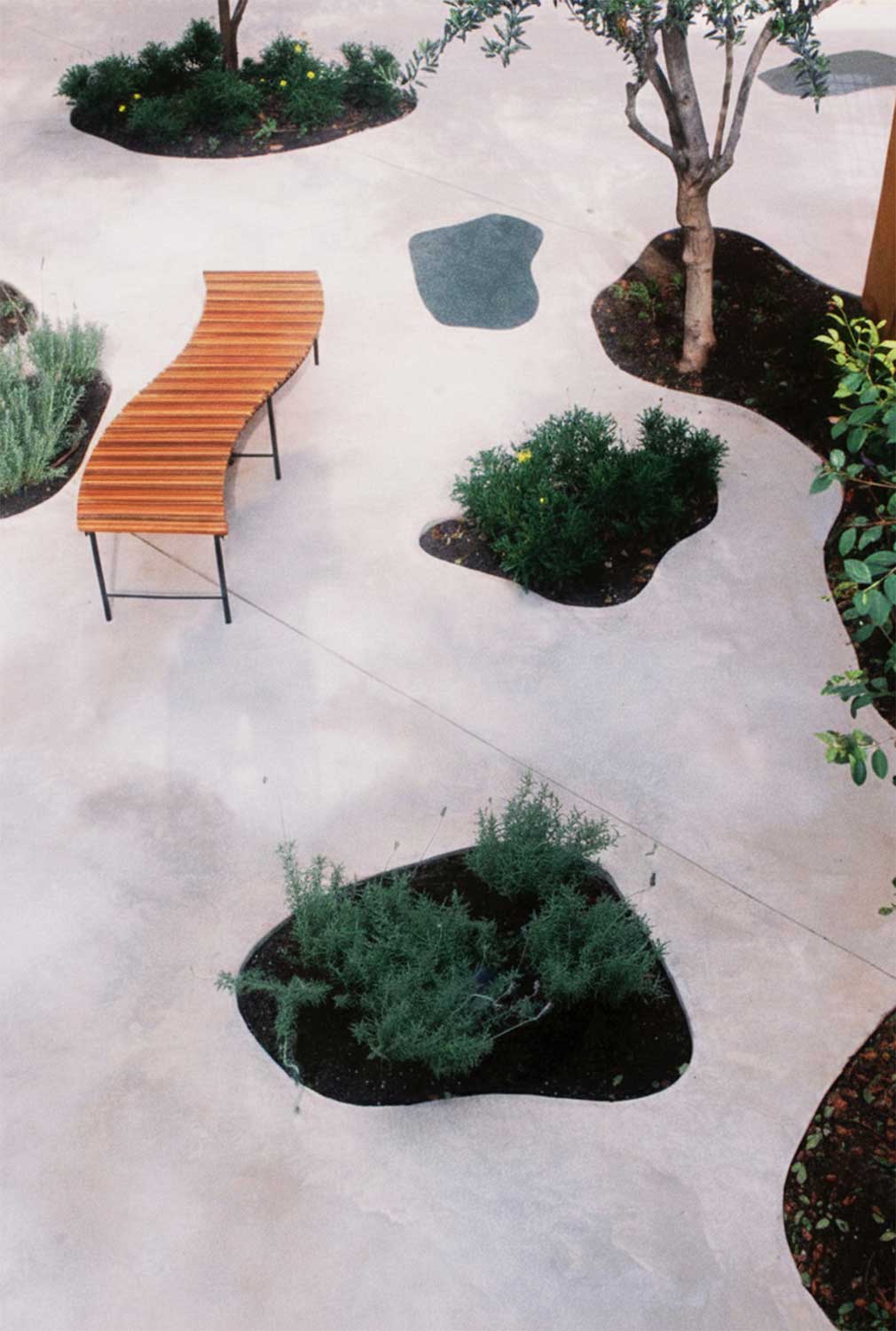
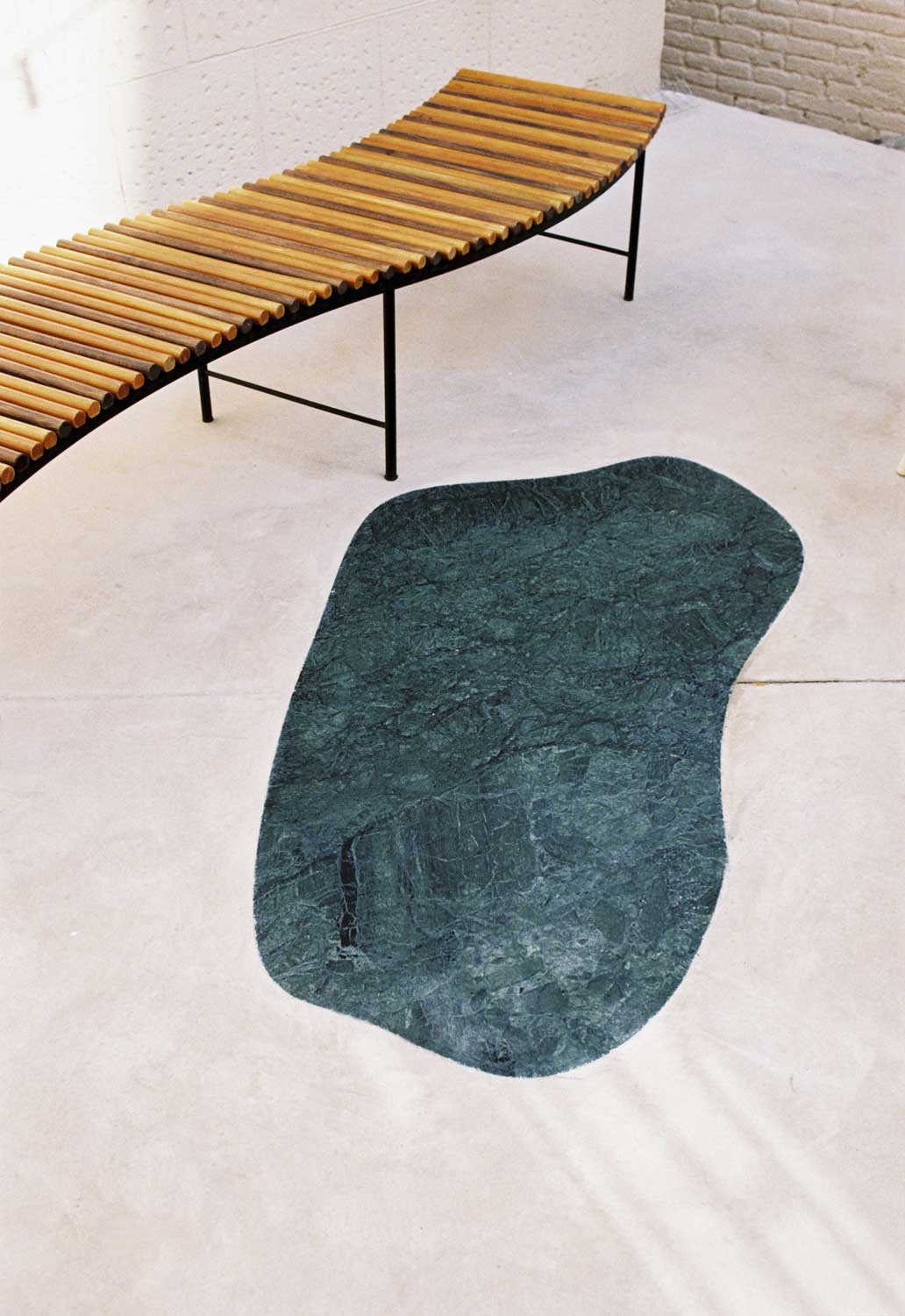
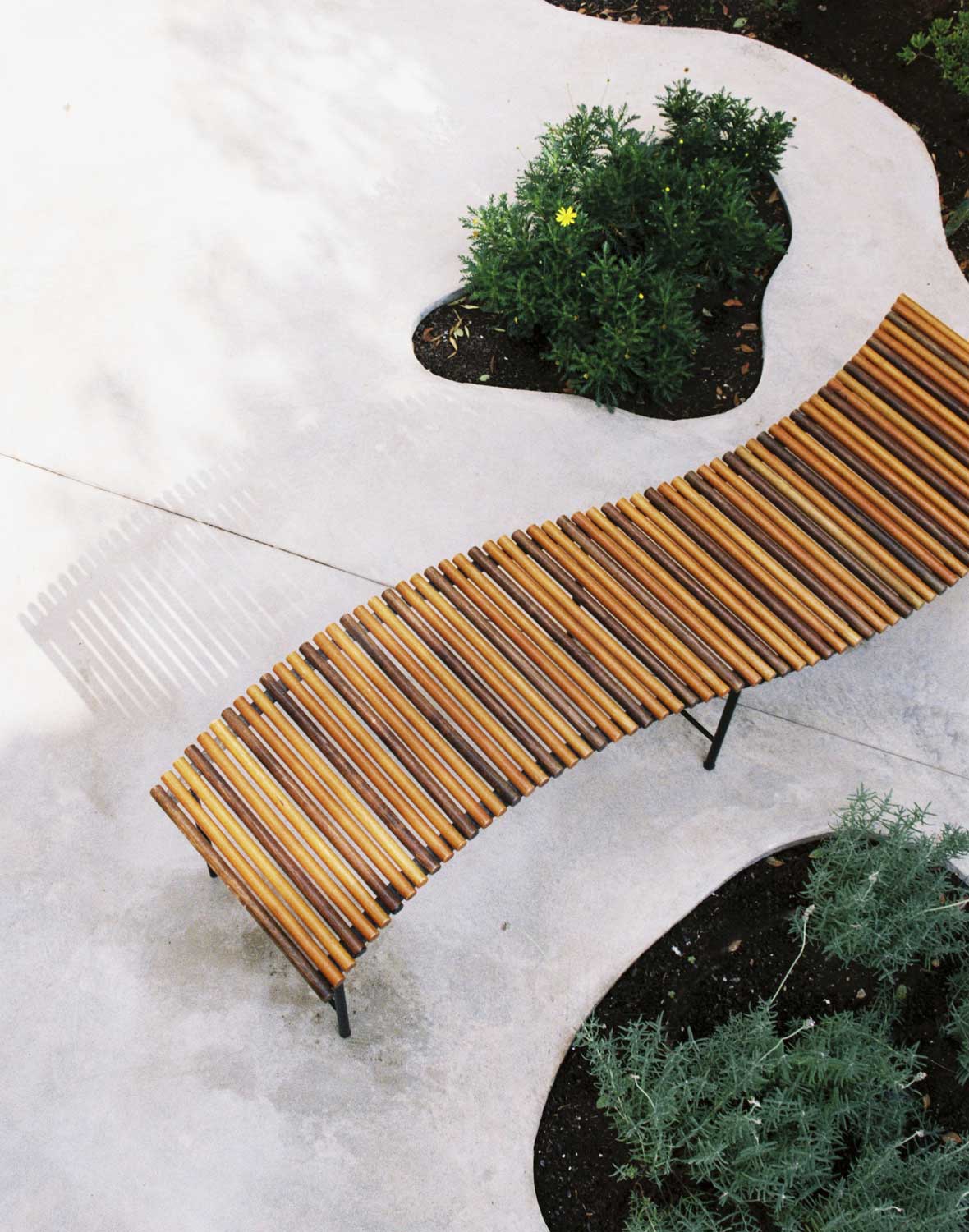
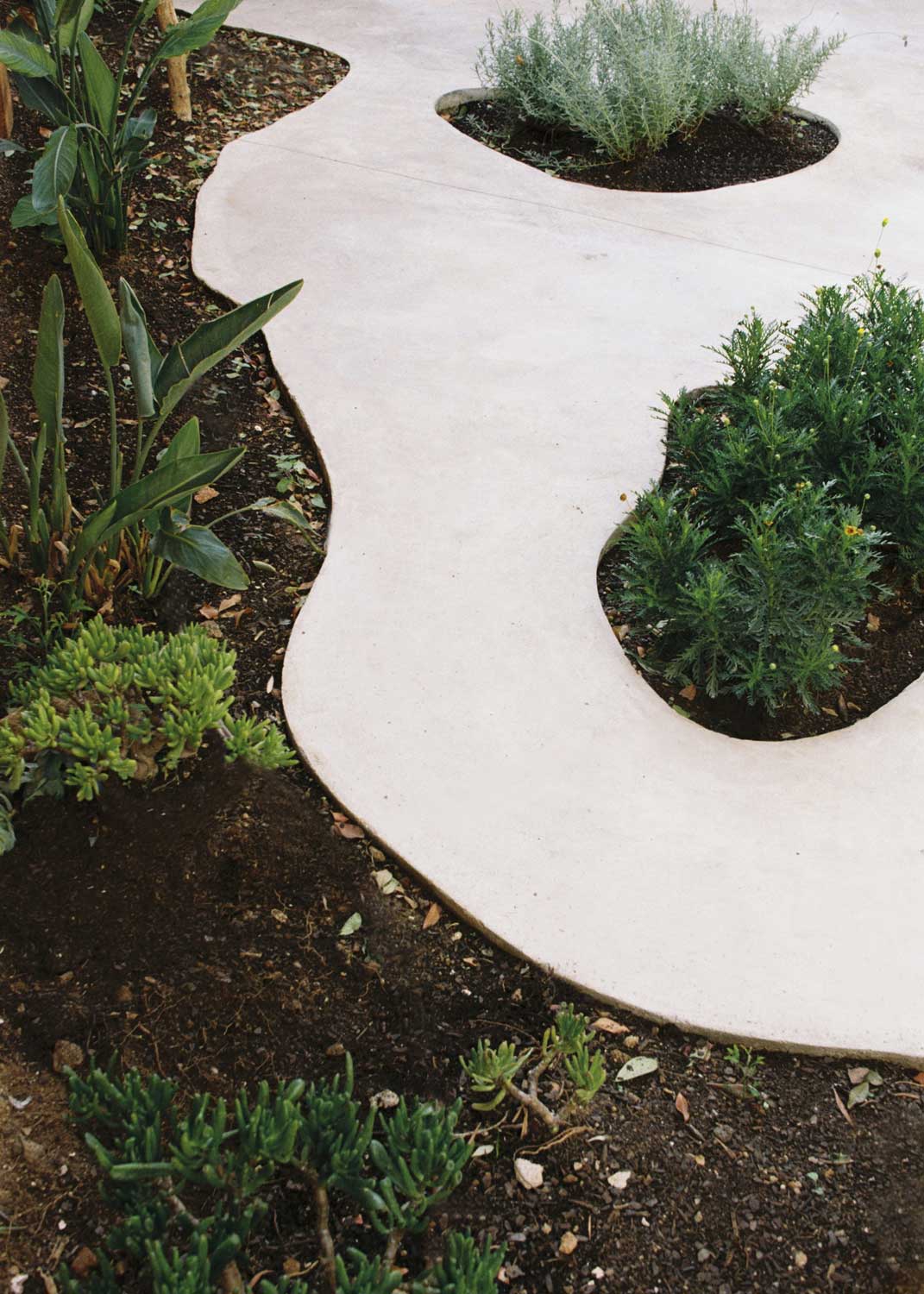
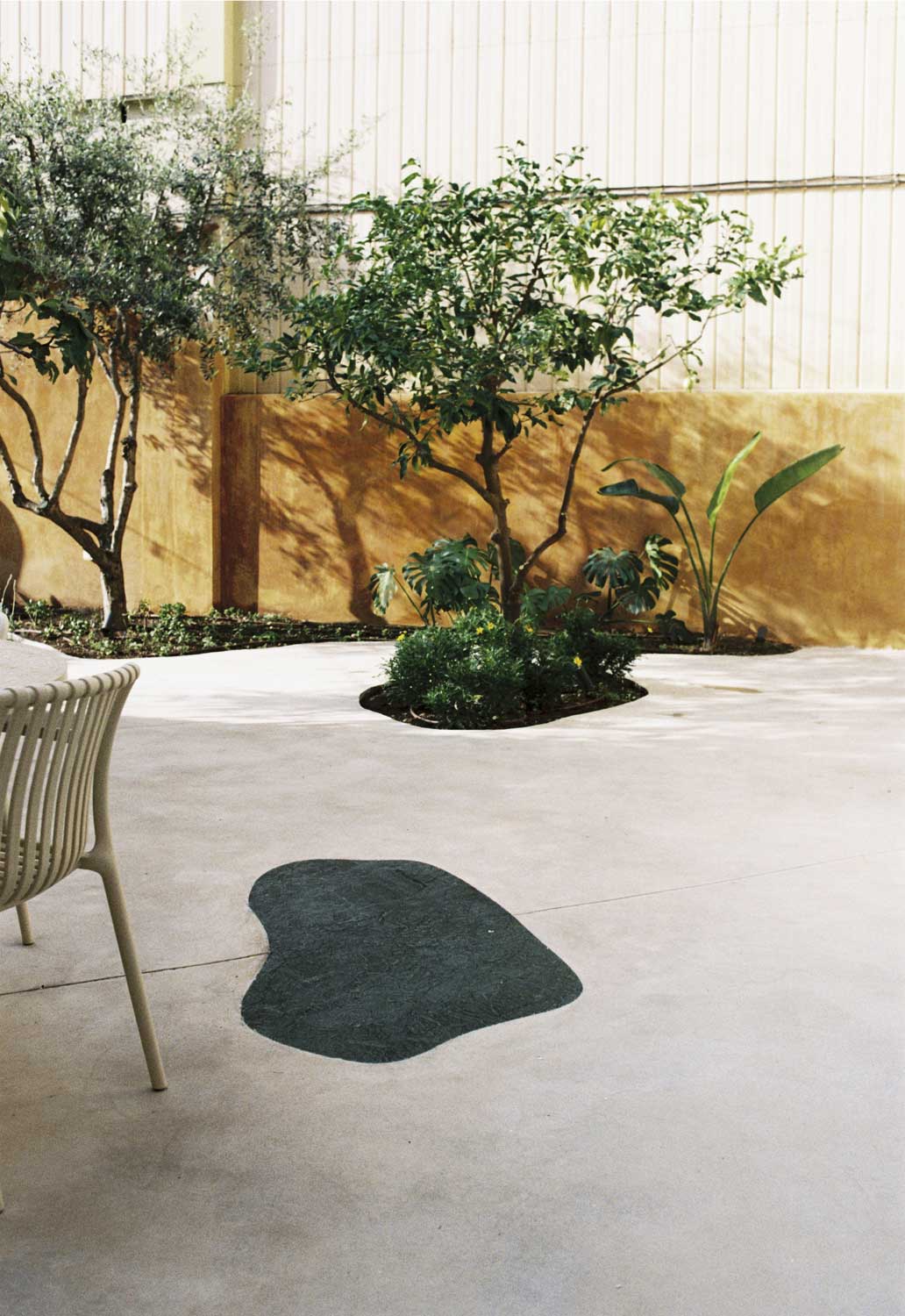
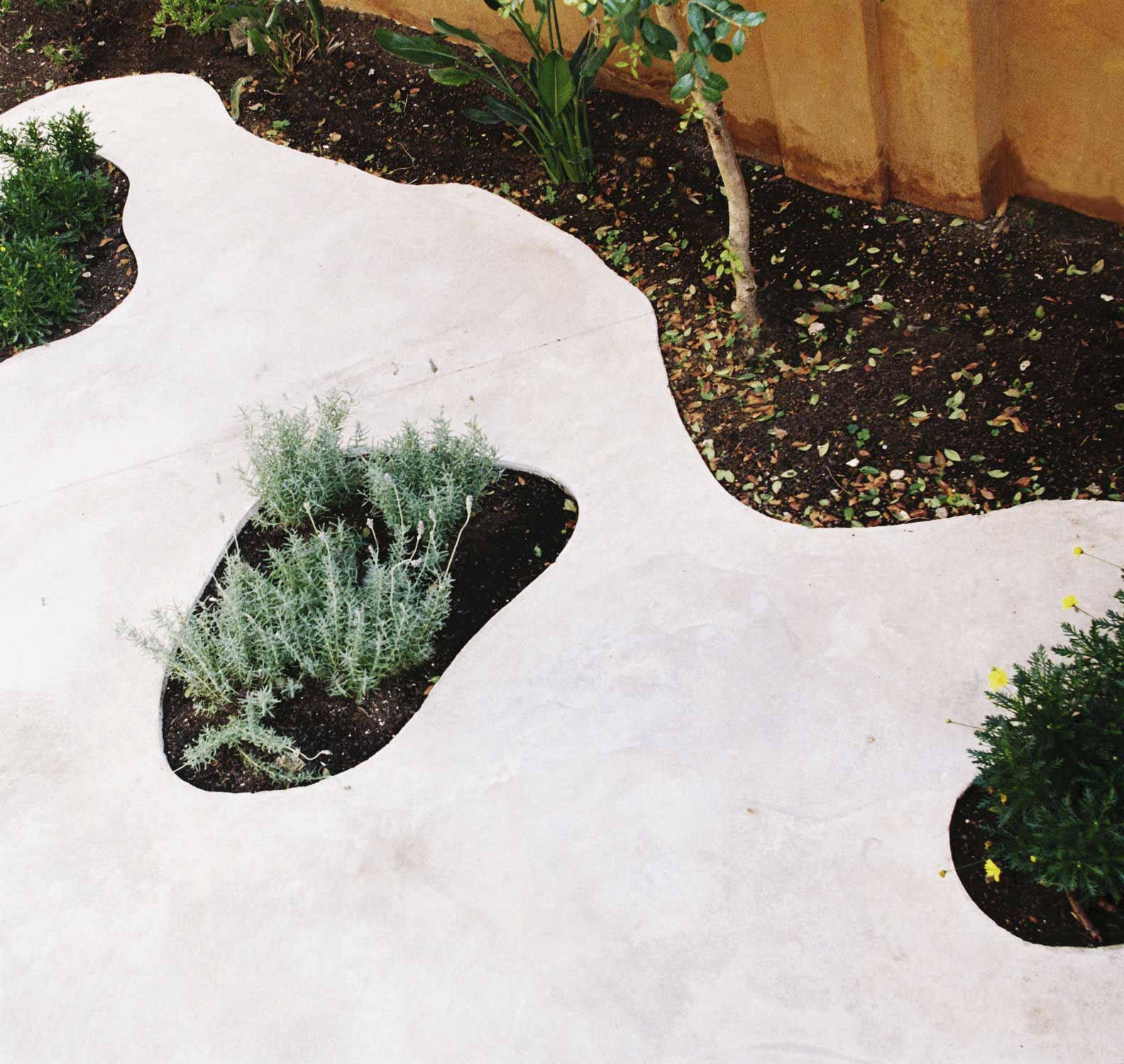
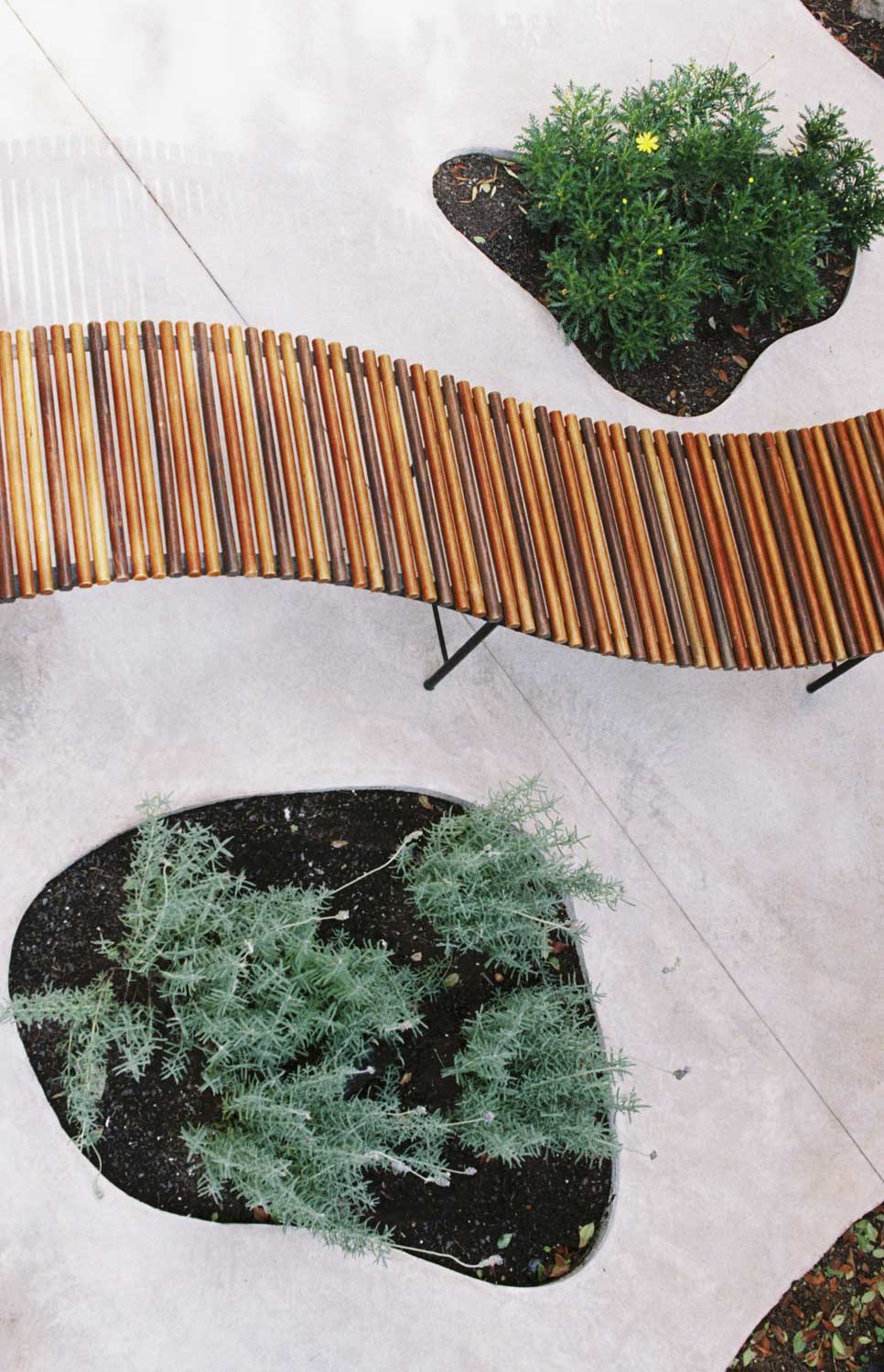
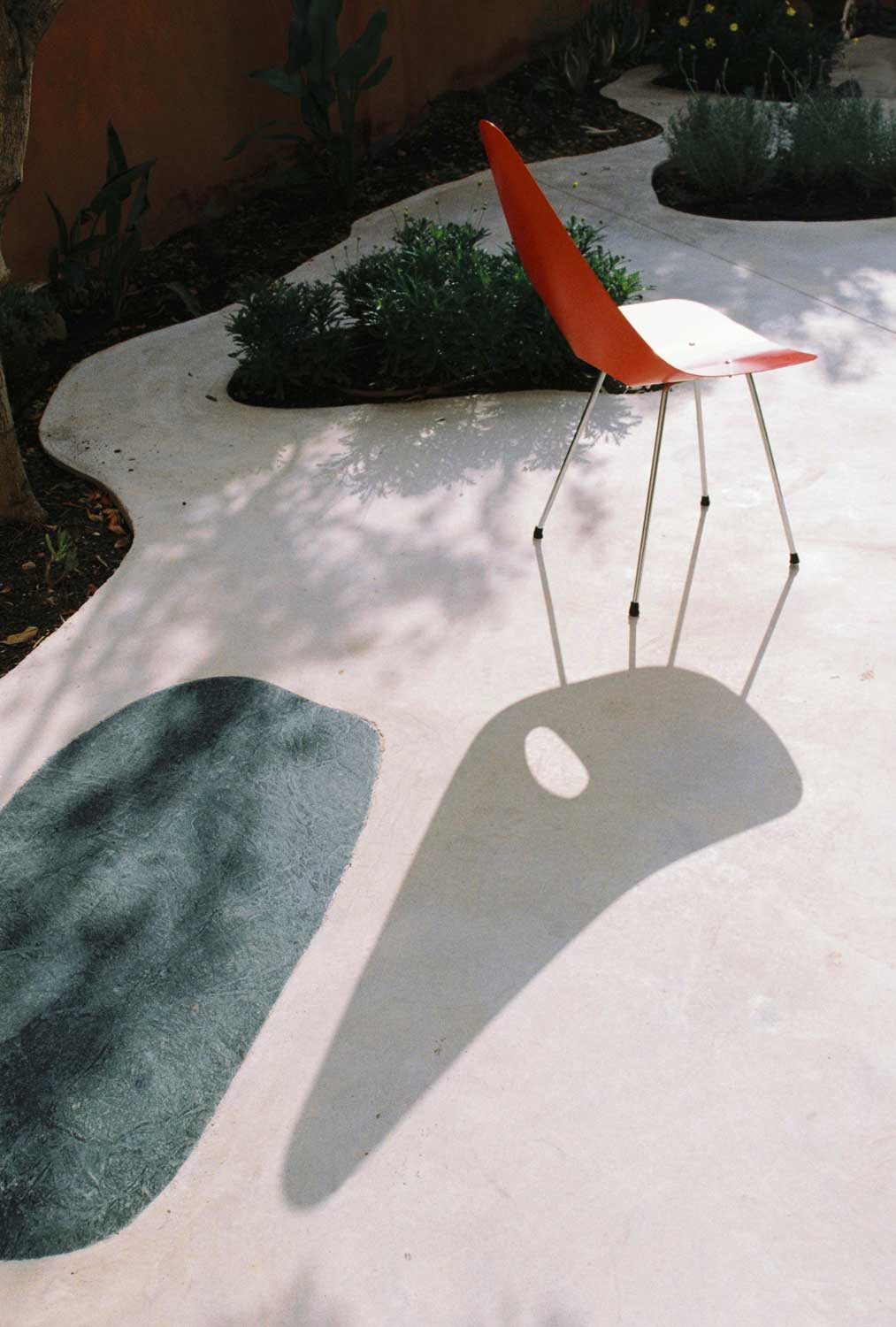
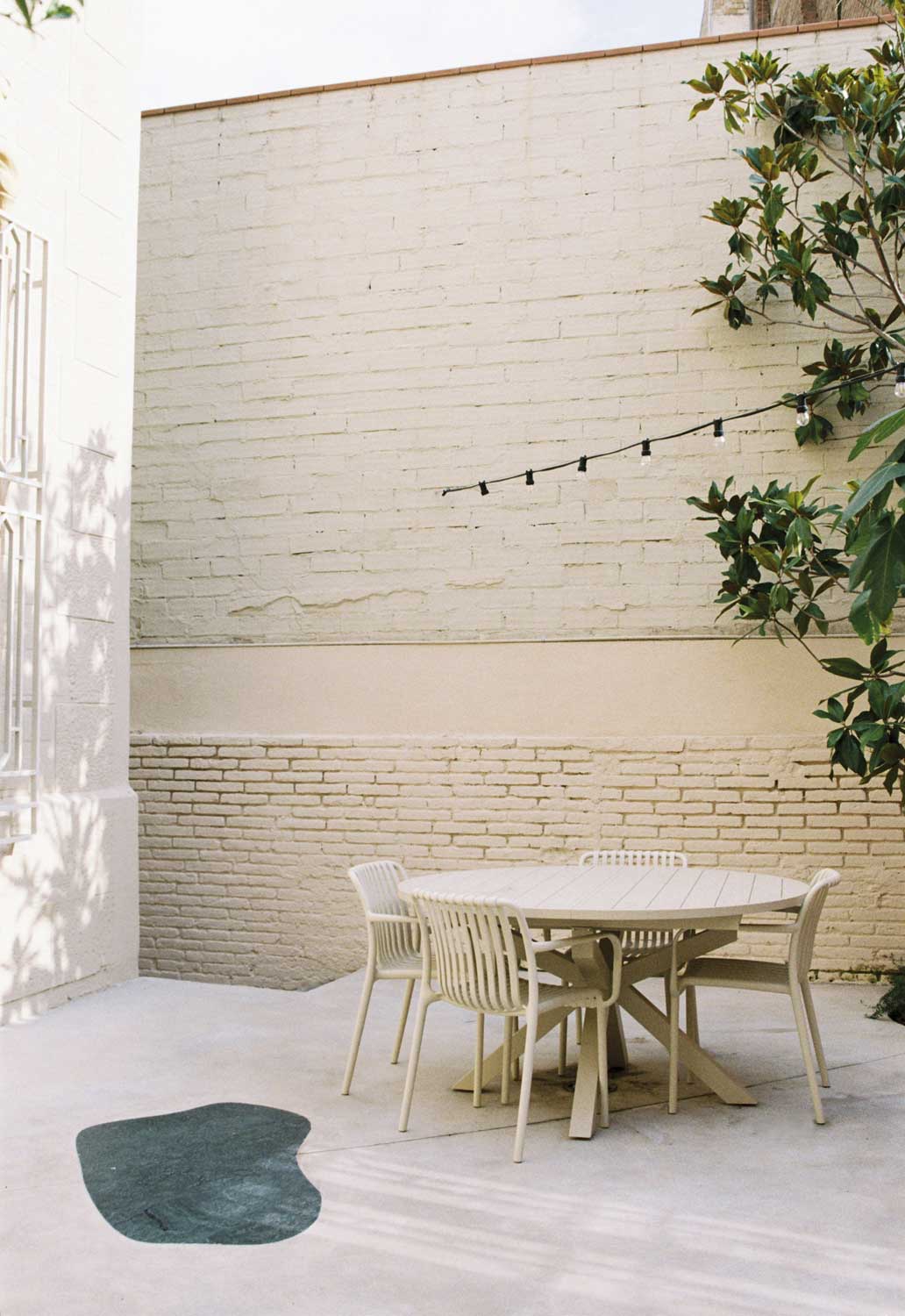
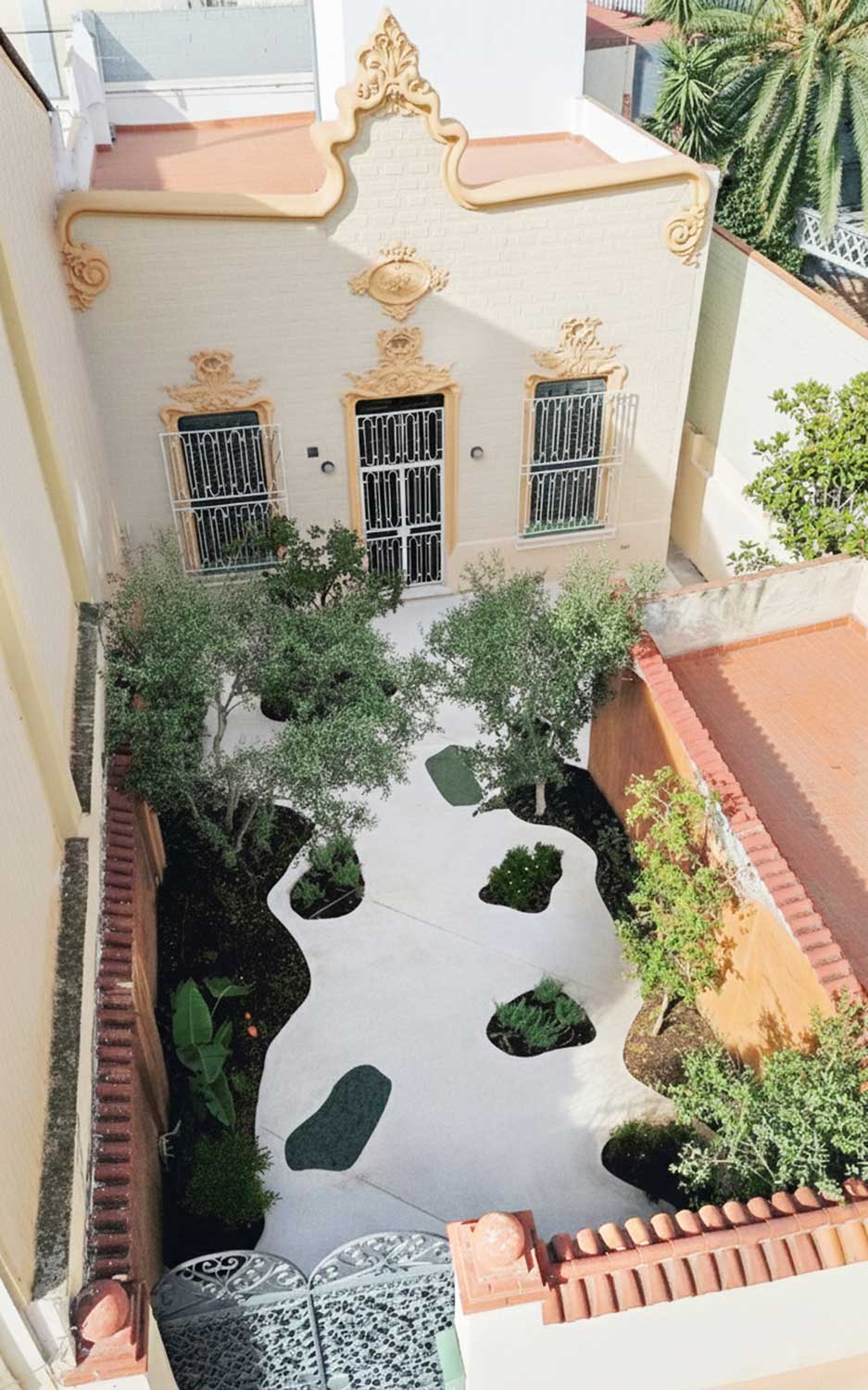
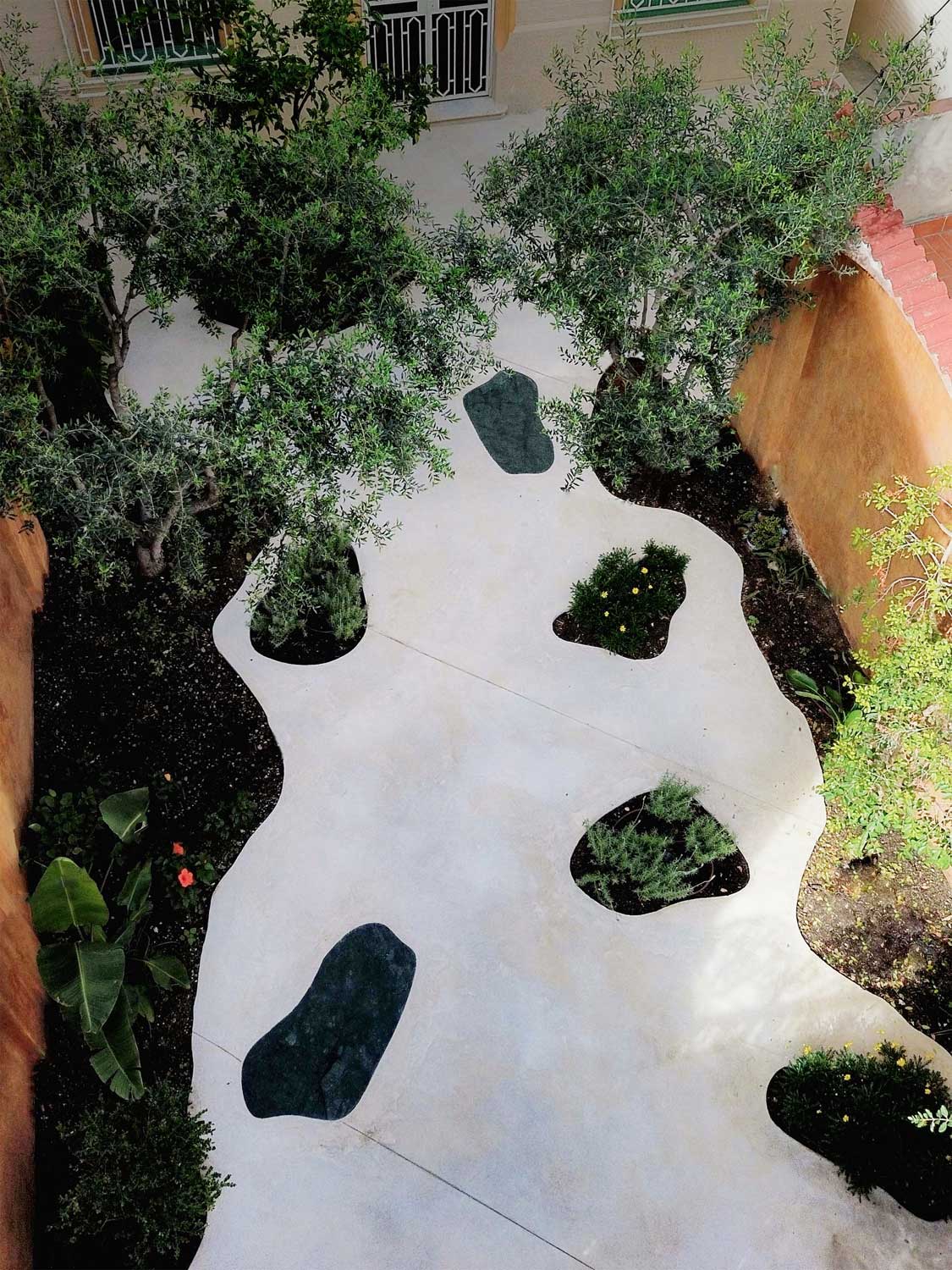
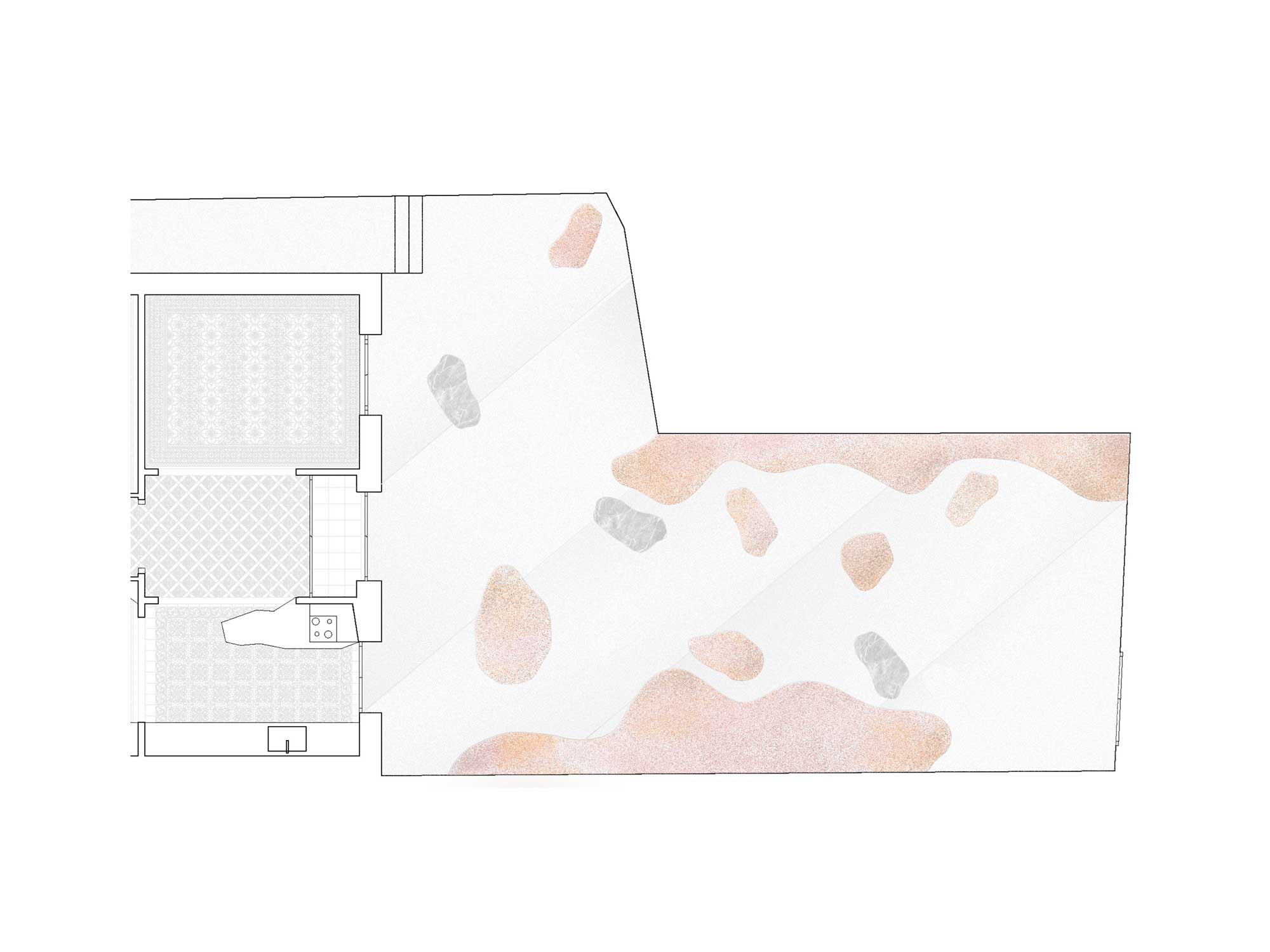
El proyecto asume esta condición y construye un espacio que puede leerse, vivirse y reinterpretarse como un gran juego infantil. La nueva terminación del suelo se concibe como una nube: una superficie continua, clara y ligeramente curvada, que parece suspenderse sobre el terreno. Incrustadas dentro de esta nube aparecen piezas de mármol verde, que reinterpretan las huellas del gigante que habita en las nubes, introduciendo una lectura narrativa y una escala imaginaria en el espacio.
La fachada de la casa, observada desde el jardín, adquiere también un nuevo papel. Ya no es solo el límite doméstico, sino que se lee como un castillo en las nubes: el castillo de Claudia. Un telón de fondo que refuerza el jardín como escenario, como lugar donde la vida cotidiana y la fantasía conviven.
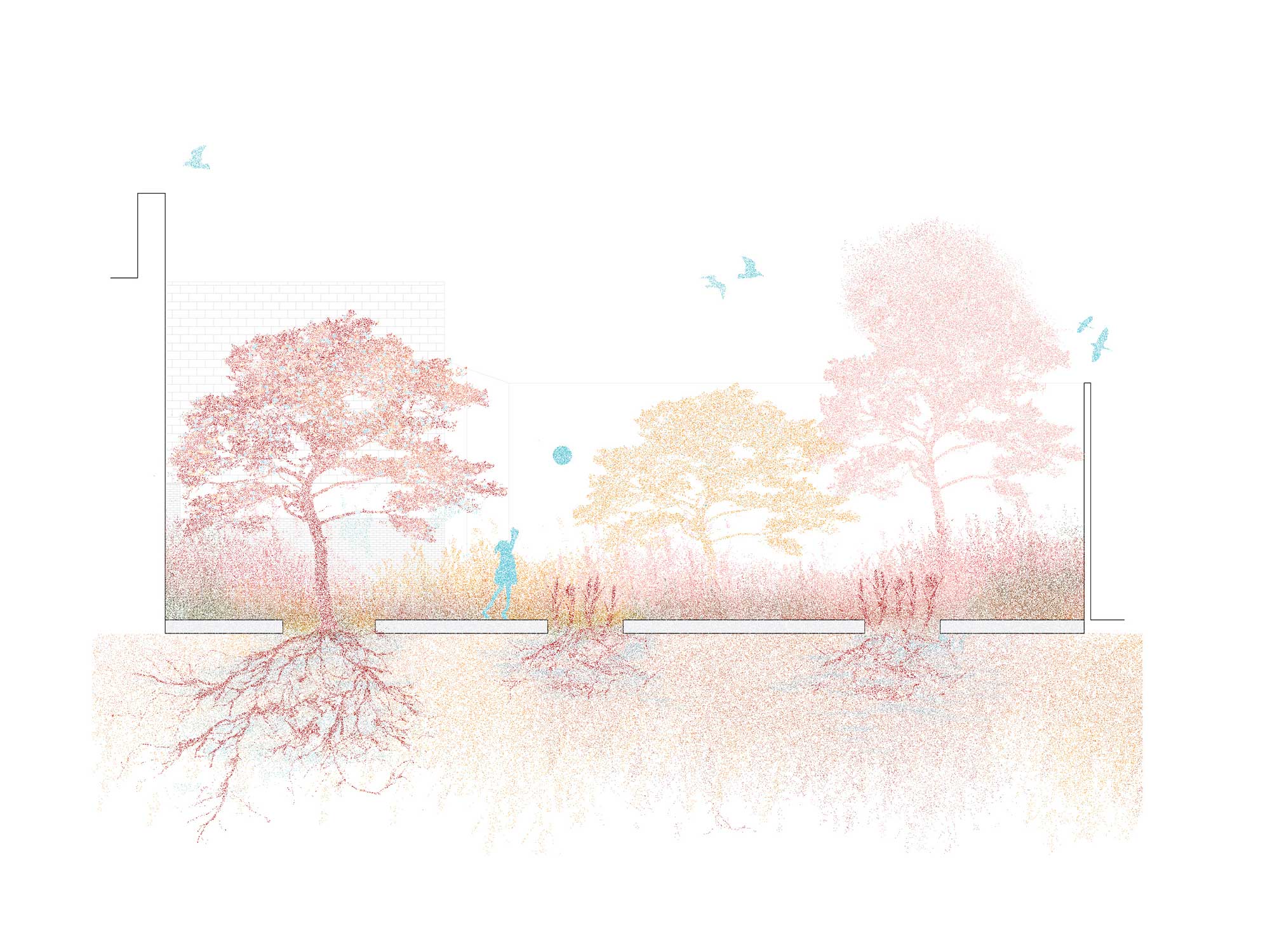
Más allá de esta primera capa simbólica, el proyecto se construye desde una mirada profundamente paisajística. El jardín no se concibe como una imagen cerrada, sino como un sistema vivo, en constante transformación, donde el paso del tiempo se convierte en un material más del proyecto. En este sentido, la propuesta dialoga con el pensamiento de Piet Oudolf, para quien el jardín no es un ejercicio de floración puntual, sino una estructura capaz de mantener interés, textura y belleza a lo largo de todo el año.
El estado previo del jardín mostraba una superficie completamente pavimentada, dura e impermeable. La intervención invierte esta lógica: el pavimento se retira, se fragmenta y se curva, permitiendo que la tierra vuelva a aparecer y que la vegetación recupere protagonismo. La permeabilidad del suelo se convierte así en una decisión tanto técnica como conceptual.
Las aberturas del pavimento definen islas de vegetación baja, formadas por especies aromáticas y mediterráneas, escogidas no por una floración espectacular, sino por su capacidad de mantener estructura, textura y presencia durante todas las estaciones.
Todos los árboles existentes se conservan íntegramente. Acebuches, naranjos y limoneros constituyen la estructura permanente del lugar, tanto física como emocional. El pavimento no les impone una geometría, sino que se adapta a ellos: se retira, se curva y los abraza. Como las habichuelas del cuento, el jardín arraiga en la tierra, pero mira hacia arriba, dejando que el tiempo y la vida hagan el resto.
-¿Quieres jugar conmigo en mi nuevo jardín?
Ficha técnica
Nombre: Jardín en las Nubes
Ubicación: Gràcia, Barcelona, España
Oficina de arquitectura: H3o architects
Proyectistas: Joan Gener, Adrià Orriols, Miquel Ruiz
Equipo: Damien Troilo, Celeste Francese
Tipo de proyecto: paisajismo
Art Direction: Marta Masiá Serrano
Constructor: Perelló Constructora
Superficie: 80 m2
Año del proyecto: 2026
Dron: Marc Huguet Viola
Fotografía: Anna Ruiz Planella
Instagram: @h3oarchitects
English version
Garden in the Clouds
-Dad, will you read Jack and the Beanstalk to me again?
And so it goes, almost every night. It is Claudia’s favorite story. Jack, a poor family, a bean planted in the ground, a stalk that grows up to the clouds, giants chasing him, the final race, the cut just in time… and in the end, everything turns out well.
-Will you read it to me again, please?
The renovation of the small front garden of this house in Gràcia, Barcelona, coincides with the birth of Claudia. The garden ceases to be merely an outdoor space and becomes also a place to play and grow: a setting for her first adventures. Jack and the Beanstalk, her favorite story, thus becomes the starting point of the project-not as a literal narrative, but as a symbolic universe capable of transforming the garden into a territory of everyday fantasy.
The project embraces this condition and constructs a space that can be read, experienced, and reinterpreted as a large children’s game. The new ground finish is conceived as a cloud: a continuous, light-colored, gently curved surface that seems to hover above the ground. Embedded within this cloud are pieces of green marble, reinterpreting the footprints of the giant who lives among the clouds, introducing a narrative reading and an imaginary scale into the space.
The façade of the house, as seen from the garden, also takes on a new role. It is no longer merely the domestic boundary, but is read as a castle in the clouds: Claudia’s castle. A backdrop that reinforces the garden as a stage, as a place where everyday life and fantasy coexist.
Beyond this initial symbolic layer, the project is built from a deeply landscape-oriented perspective. The garden is not conceived as a fixed image, but as a living system in constant transformation, where the passage of time becomes another material of the project. In this sense, the proposal engages in dialogue with the thinking of Piet Oudolf, for whom the garden is not an exercise in punctual flowering, but a structure capable of maintaining interest, texture, and beauty throughout the year.
The previous condition of the garden consisted of a completely paved, hard, impermeable surface. The intervention reverses this logic: the paving is removed, fragmented, and curved, allowing the soil to reappear and vegetation to regain prominence. Ground permeability thus becomes both a technical and a conceptual decision.
Openings in the paving define islands of low vegetation composed of aromatic and Mediterranean species, selected not for spectacular flowering, but for their ability to maintain structure, texture, and presence across all seasons.
All existing trees are fully preserved. Wild olive trees, orange trees, and lemon trees constitute the permanent structure of the place, both physically and emotionally. The paving does not impose a geometry upon them; instead, it adapts to them: it withdraws, curves, and embraces them. Like the bean in the story, the garden takes root in the earth but looks upward, letting time and life do the rest.
-Will you play with me in my new garden?